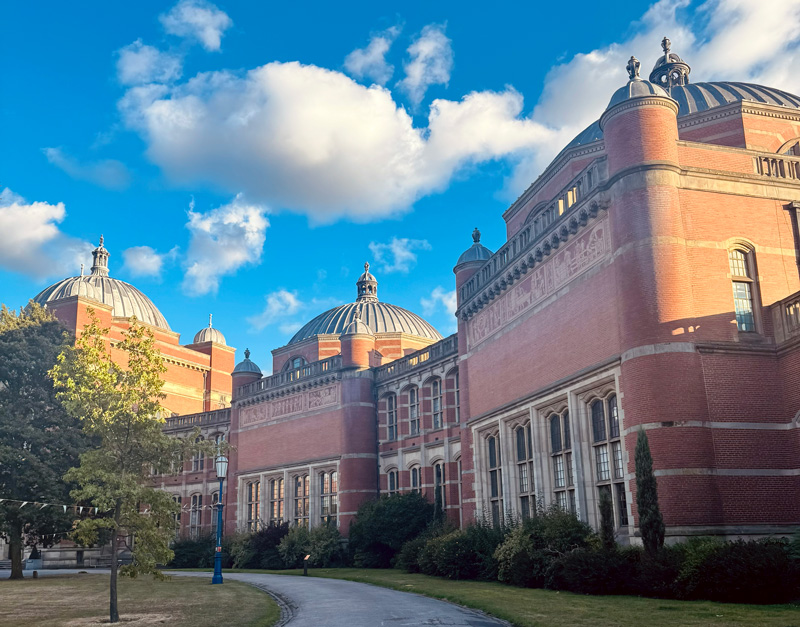
The Royal Geographical Society (with IBG) Annual International Conference took place at the University of Birmingham this year, running from 26 to 29 August 2025. Chaired by Professor Patricia Noxolo, the conference brought together more than 2,000 delegates from around the world, including geographers, researchers, practitioners and students. This year’s theme was ‘Geographies of Creativity / Creative Geography’, which sparked discussions about how creativity shapes the way people understand places, communities and environments. With over 400 sessions held across the four days, the programme ranged from creative methods and digital geographies to cultural landscapes, environmental change, indigenous knowledge systems and community-led research.
Loughborough University doctoral researcher Pegah Aftabi gave a presentation about her work during the Digital Creativity and Placemaking session of the conference. Her research explores how communities engage with heritage in their everyday lives and how their experiences can be recognised, mapped and shared with others through the use of digital tools. Pegah’s presentation highlighted the potential for digital platforms to make community perspectives more visible. By allowing people to share the places, practices and stories that matter to them, these tools open up opportunities for more inclusive conversations about what counts as heritage in a city.

Pegah also emphasised how this kind of digital work can support community-led planning, helping planners and policymakers move beyond official heritage listings to a better understanding of what residents value in their daily environments. Working with digital mapping in local communities isn’t without its challenges, Pegah acknowledged, citing people’s varying levels of digital literacy, differences in their access to technology and the need to be mindful of cultural sensitivities and privacy when collecting and sharing personal or community knowledge.
The presentation was followed by a panel discussion in which participants reflected on the role of digital creativity in placemaking. The conversation was lively and engaging, with ideas exchanged about how digital tools can support community participation and collaborative design. Pegah joined in with this discussion, sharing insights from her own research into how community-centred heritage and digital mapping can contribute to placemaking.
A number of other sessions and presentations were delivered during the conference by Impact Hub team members Dr. Taimaz Larimian, Mihyun Kim and Mohamed Shamroukh.