Categories
Blog Events Impact Scoping Project The Impact Hub TOWN Observatory

Strengthening international dialogue between UK and Brasil

Dr Cristina Goldschmidt Kiminami was invited to the Federal University of Rio de Janeiro, where she presented to Doctoral Researchers as part of a seminar on the Heritage Mapping scoping project.

Above: (1) Dr Rafael Winter contributing to the discussions on the presentation given by Dr G.Kiminami; (2) Dr G.Kiminami presenting at the Geography Department at the University of Rio de Janeiro (UFRJ).
Photo by Flavia Mattos and Rafael Winter.

The visit provided a valuable opportunity to share ideas, discuss emerging research, and explore the potential of Heritage Mapping through meaningful academic exchange. A particular highlight was the insightful conversation with Dr Rafael Winter , Dr Mônica Schlee, and Dr Flavia Mattos, whose perspectives made the visit especially enriching.

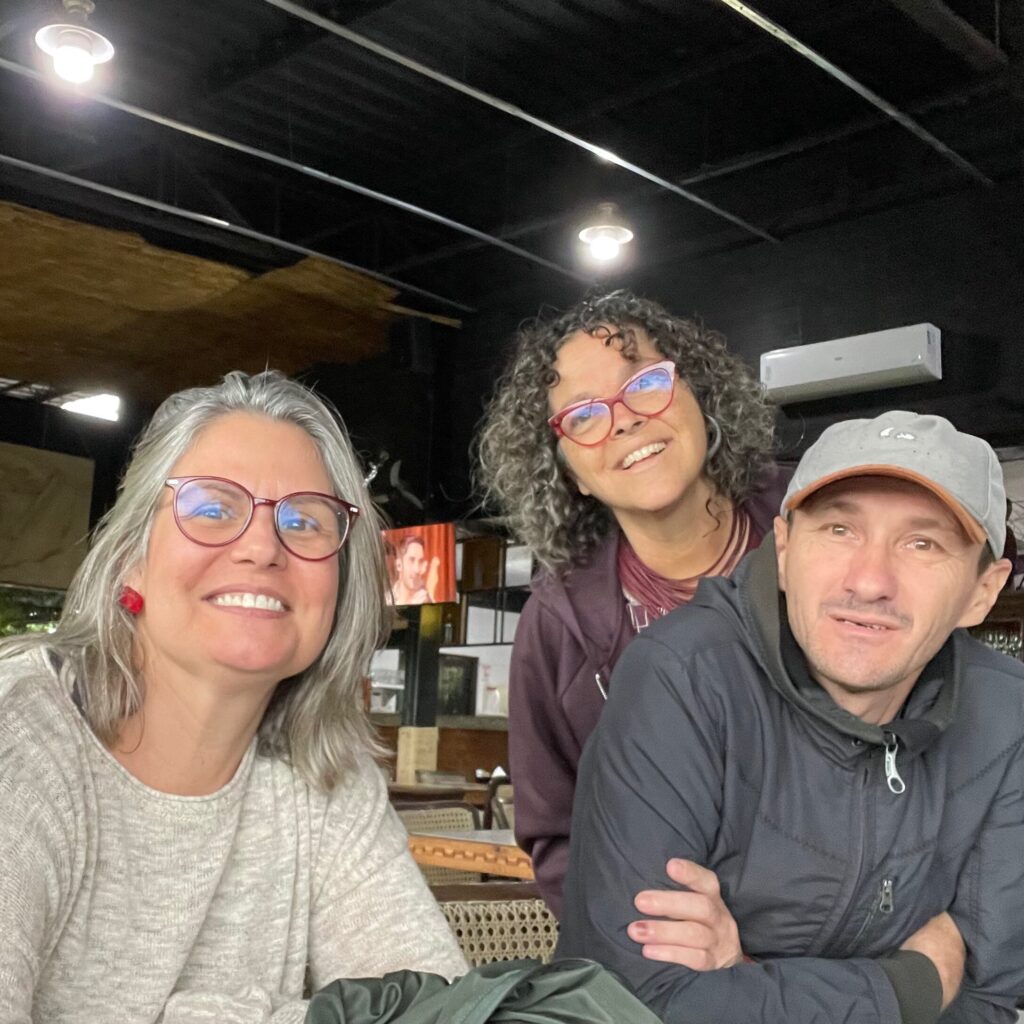
Above: (1) Dr Monica sharing a bit of her current work with the collective  APER (Friends of the Ecological Park of Rocinha); (2) from left to right, Dr Flavia Mattos, Severino (local from Rocinha and researcher), and Dr Monica Schlee behind.
Photos by Flavia Mattos.

These discussions are part of a broader, ongoing exchange between the TOWN Observatory and the respective UNESCO Chairs in Storytelling Education for Sustainability (Loughborough University) and Heritage and Cultural Landscape (Federal University of Rio de Janeiro), fostering connections, strengthening international collaboration, and creating opportunities to develop shared perspectives on heritage, research and knowledge production.

We look forward to continuing these conversations and building on the connections established through this important collaboration.

Categories
Exploratory project TOWN Observatory

The Para Project: a neighbourhood observatory for South Calcutta

Scheme XVB, Rash Behari Avenue, developed in the 1920s, Source: TBC

The Para Project proposes to develop a living virtual space and a physical exhibit space for photographs, oral narratives, architectural inferences, old documents, and memorabilia of south Kolkata neighbourhoods. The project is ambitious in scope, considering the number and diversity of south Kolkata neighbourhoods in terms of demographics, built heritage, and by extension, people’s history of migration and settlement.

Para Project will provide a robust documentation of urban history, lived spaces and experiences, and architecture of the specific period in early- to mid-twentieth century when the South Kolkata neighbourhoods came into existence and began thriving. This period reflects a very specific time in Kolkata’s modern history and is a living representation of a fast-changing urban landscape that calls for preservation, at least in the form of a ‘memory box’ of digital, physical, and archival material.

The project will focus on two areas.

1: The area bounded by Rash Behari Avenue to the north, S. P. Mukherjee Road to the west, Southern Avenue and Sarat Chatterjee Avenue to the south, and Gariahat Road to the east.

2: The area bounded by Rash Behari Avenue to the north, Kankulia Road to the south, Ballygunge Railway Station to the east, and Gariahat road to the west.

+ + +

Institutional partners

India: The Centre for Studies in Social Science, (CSSSC) and The Jadunath Bhavan Museum & Resource Centre (JBMRC)

United Kingdom: Loughborough University

+ + +

People

India

Mohor Sengupta, PhD, Freelance researcher, writer, and consultant

Tapati Guha-Thakurta, D.Phil., Honourable Professor of History, CSSSC

Rajat Ray, MA, Professor Emeritus, Guru Gobind Singh Indraprastha University, University School of Architecture and Planning

United Kingdom

Robert Harland, PhD, Professor of Urban Graphic Heritage, Loughborough University

Michael Wilson, PhD, Professor of Drama, UNESCO Chair in Storytelling Education for Sustainability, and Director of the Storytelling Academy, Loughborough University

+ + +

The project team examine the deteriorating Art Deco architecture in a South Kolkata neighbourhood in February 2026, stitching together stories that link past and present.

+ + +

Para: a Bengali term for close-knit neighbourhoods.

Categories
Blog TOWN Observatory

From typography to town: the development of Urban Graphic Heritage

The Typographic Landscape Research Network invited Professor Rob Harland from the School of Design and Creative Arts at Loughborough University to talk about his research exploring Urban Graphic Heritage on Monday 5 October. Typography and town are not usually discussed in the same breath, but this talk spanned the design continuum between them, and featured the creation of the Loughborough TOWN Observatory platform as a vehicle for storytelling as heritage interpretation.

Self portrait of the speaker

The abstract for the talk read as follows:

What new perspectives can graphic design contribute to design for urban heritage? This talk traces the origin of the question and the development of related research projects spanning several continents over the past decade. It will emphasise an anti-disciplinary approach to establishing the concept of urban graphic heritage and feature photo-documentation as a key research method.

The presentation traced the development of graphic design to graphic heritage, and the scale at which this may be analysed from micrographic, mesographic and macrographic perspectives. In support of this, collaboration with the United Kingdom National Commission for UNESCO regarding the creation of a ‘logical flow’ diagram was highlighted, to enhance the argument for a graphic design perspective on heritage interpretation. Several ‘heritage mapping’ projects were highlighted, with a focus on the Loughborough Art Deco trail. Held online, 34 attended from UK, US, France, India, Sri Lanka, Vietnam, China, Israel, New Zealand and Mexico.

…

Presentation slide outlining transition from graphic design to graphic heritage, featuring the Blackpool Comedy Carpet analysed at three levels.

…

‘Logical flow’ diagram to support the argument for a graphic design perspective on heritage interpretation. (See Harland et al. 2024)

…

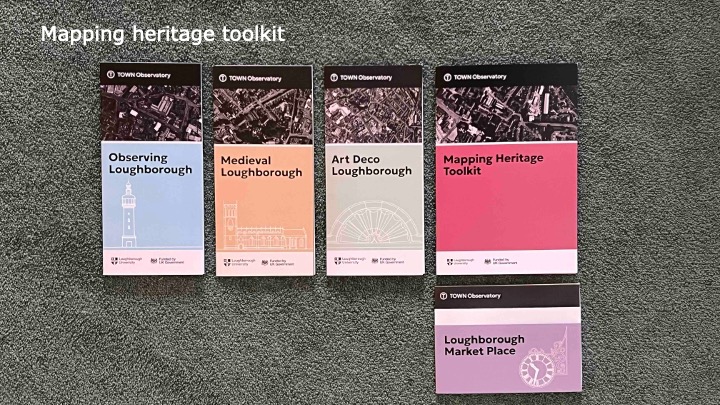
‘Heritage Mapping’ projects created by the TOWN Observatory.

…

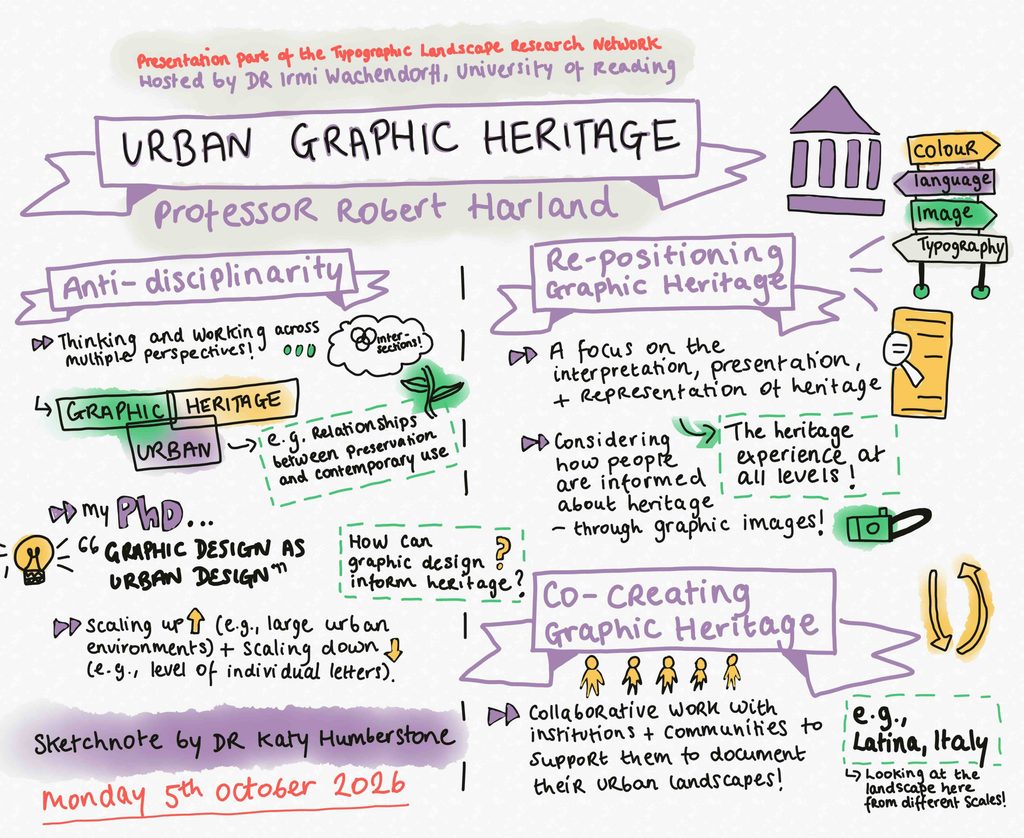
Visual notes by Dr Katy Humberstone who attended the talk

…

The Typographic Landscape Research Network is an interdisciplinary forum for researchers interested in typography as social practice in urban space. Convened by Dr Irmi Wachendorff in the Department of Typography & Graphic Communication at the University of Reading, it brings together scholars from typography, sociolinguistics, anthropology and design history to explore how people use letterforms in public space to perform identities, signal belonging, contest power and transform places, looking at all forms of written language from multilingual signage to self-authorised stickers, made by professionals and laypeople alike. Its monthly online seminar series offers a regular space to exchange methods, share work in progress, and think across disciplinary boundaries.

References: Harland, R. G., Bridge, J., Nash, M., & Rabagliati, M. (2024). Utilising Graphic Heritage for Heritage Interpretation: A Case Report on Testing the Applicability of Graphic Heritage as a Development Tool for UNESCO Heritage Designations. Heritage & Society, 17(1), 117–143. https://doi.org/10.1080/2159032X.2023.2248580

Categories
Blog TOWN Observatory

Promoting careers in the built environment professions

The TOWN Observatory collaborated with the Leicester Urban Observatory to deliver sessions to school pupils about career choices across the built environment professions.

On Tuesday 6 October, 2026, 30 Year Ten pupils from Moat Community College and 12 Year Twelve Geography young people from City of Leicester College enjoyed a morning of walks and talks on urbanism related concepts in Leicester’s cultural quarter.

Sixth form pupils and Head of Geography, John Van Wyk, from City of Leicester College with Dr Robert Harland from Loughborough University in attendance at a session on employment opportunities for built environment professionals.

Ismail Dale, Historic England’s Local Heritage Education Manager for the Heritage Schools Programme provided walking tours of several heritage landmarks, whilst Professor Robert Harland from Loughborough University’s School of Design and Creative Arts provided a talk about career opportunities in the built environment. The sessions were arranged by Justin Webber, Leicester City Council’s Historic Environment Team Leader.

Professional roles in urban design.

Acknowledgements: Special thanks to Chris Slowe, Programme Coordinator at LCB Depot.

The event was organised through collaboration between the Loughborough TOWN Observatory and Leicester Urban Observatory.
Categories
Blog Impact Loughborough Stories Scoping Project The Impact Hub TOWN Observatory

TO at the Spatial Humanities conference 2026

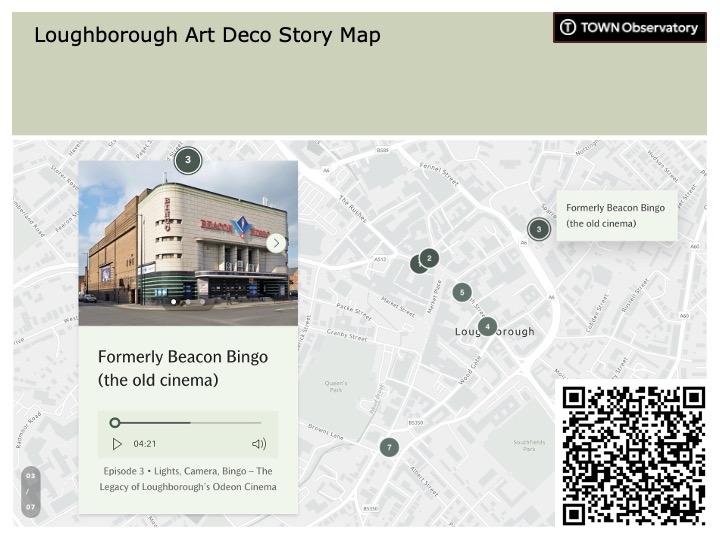
Last week, 24th of September, Dr Goldschmidt Kiminami presented a paper co-authored with Professor Harland at the Spatial Humanities Conference 2026, held at the University of Minho in Braga, Portugal. The paper, “Participatory Mapping of Art Deco Architecture through AI-Generated Podcast”, looks at how audio storytelling built with AI tools can help people take part in heritage mapping of Art Deco Loughborough buildings. A project developed with the Loughborough Library Local Studies Volunteer Group (LLLSVG).

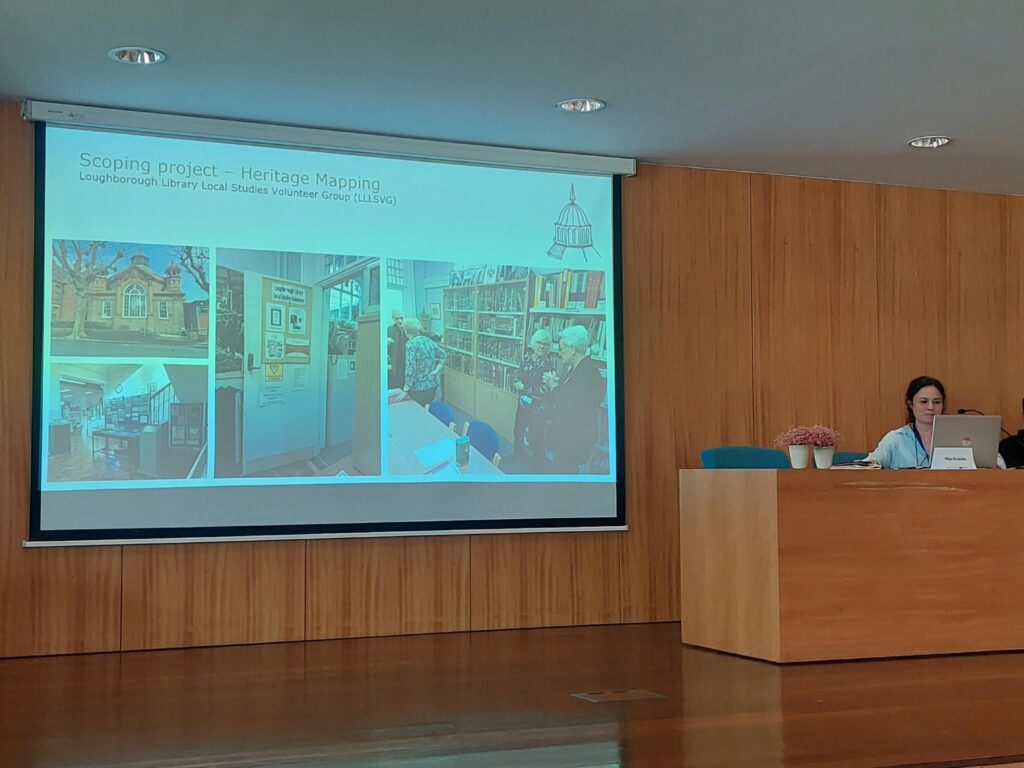
Dr Kiminami is presenting the Mapping Heritage scoping project at the Spatial Humanities Conference 2026, developed with the Loughborough Library Local Studies Volunteer Group (LLLSVG).

This year’s conference focused on Artificial Intelligence and Geotechnologies for Human Experiences. Its main aim was to explore  how geospatial technologies, approaches, and methods can add to knowledge, both within the digital humanities and beyond. We’re pleased to see this work shared with an international audience of researchers working at the meeting point of geography, technology and the humanities. 

Related links
Heritage Mapping
Art Deco Story Map
Empowering the Loughborough Library Local Studies Volunteer Group with AI and Audio Stories

Categories
Blog Impact Loughborough Stories PhD The Impact Hub TOWN Observatory

European Urban Research Association Annual Conference (EURA) 2026, Venice, Italy

EURA 2026 conference signage in Campo San Rocco, Venice, with the Church of San Rocco in the background

From 17–20 June 2026, the European Urban Research Association (EURA) Annual Conference was held at Università Iuav di Venezia in Venice, Italy. As part of the conference, Pegah Aftabi, PhD researcher at Loughborough University, presented her research on community-centred approaches to urban heritage.

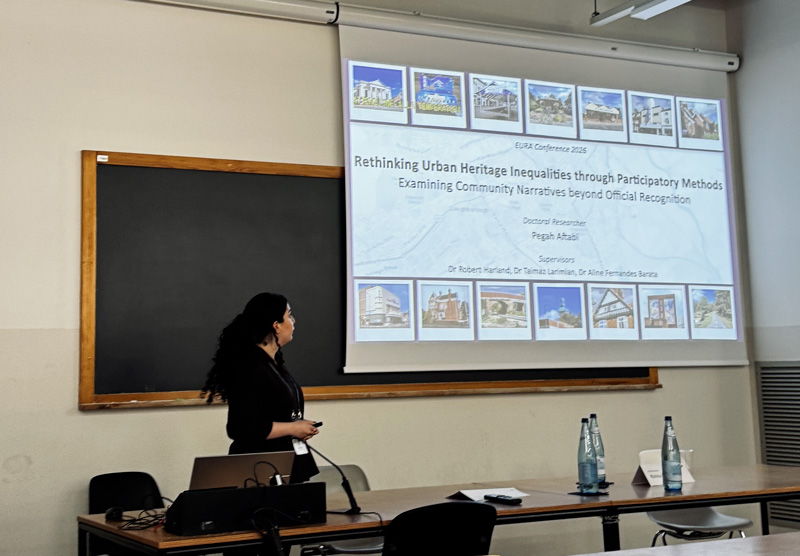
Her paper, “Rethinking Urban Heritage Inequalities through Participatory Methods: Examining Community Narratives beyond Official Recognition,” was presented as part of her PhD research in the session “Heritage under Overtourism: Reframing the Management of Change in Historic Urban Landscapes,” chaired by Anna Marson and Monica Calcagno.

The session explored how understandings of heritage are changing in response to contemporary social and economic pressures. Particular attention was given to the shift from heritage defined mainly through institutional recognition towards more dynamic processes of heritage-making shaped by citizens and communities. These discussions raised important questions about grassroots heritage practices, citizen-led preservation, and the ways in which community participation can broaden and democratise understandings of cultural value.

Pegah Aftabi presenting her PhD research at the Cotonificio Veneziano, Università Iuav di Venezia, during the EURA 2026 Annual Conference

Pegah’s research closely engages with these questions. Her PhD examines how communities identify, value and represent urban heritage, particularly where locally meaningful places, practices and narratives fall outside formal systems of heritage recognition. Through participatory methods, the research considers how community knowledge can contribute to more inclusive approaches to identifying, mapping and representing urban heritage.

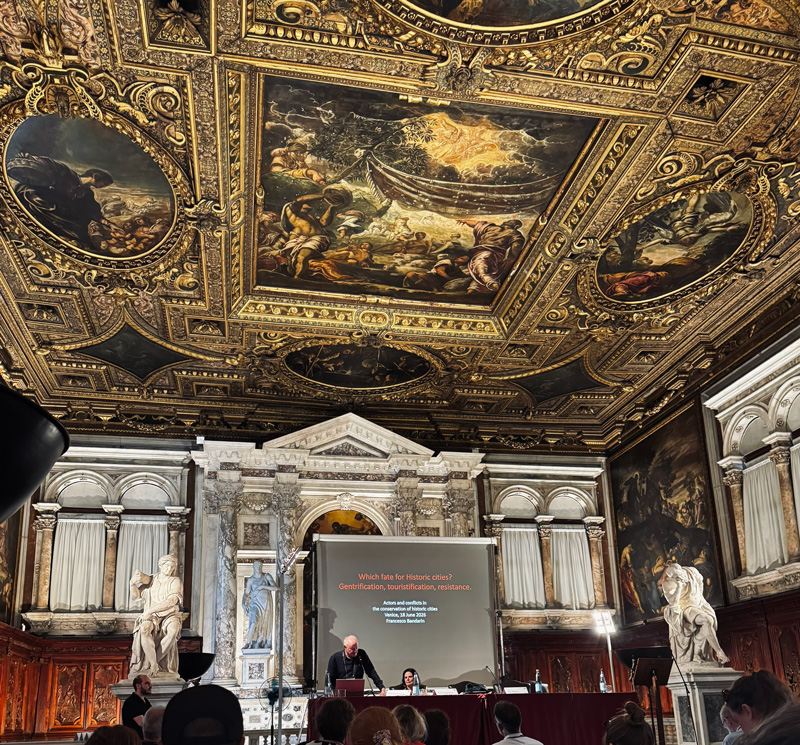
The conference also included two plenary sessions featuring keynote contributions from Patrick Le Galès, Jennifer Robinson, Francesco Bandarin and Maria Gravari-Barbas. Their discussions placed questions of heritage within wider debates around urban governance, inequality, tourism and the management of change in cities.

Keynote session on historic urban landscapes in the Sala Capitolare, Scuola Grande di San Rocco, during the EURA 2026 Annual Conference, Venice

Across the conference, a recurring theme was the central role of communities in shaping how urban heritage is understood and sustained. Pegah’s research similarly argues that community narratives, memories and everyday practices should be recognised as important forms of heritage knowledge, with the potential to inform how historic urban environments are interpreted and managed.

The presentation formed part of the ongoing development of Pegah’s PhD research at Loughborough University, supported by her supervisory team and The Impact Hub project.

Categories
Blog Events Impact Loughborough Stories Loughborough University Scoping Project The Impact Hub TOWN Observatory

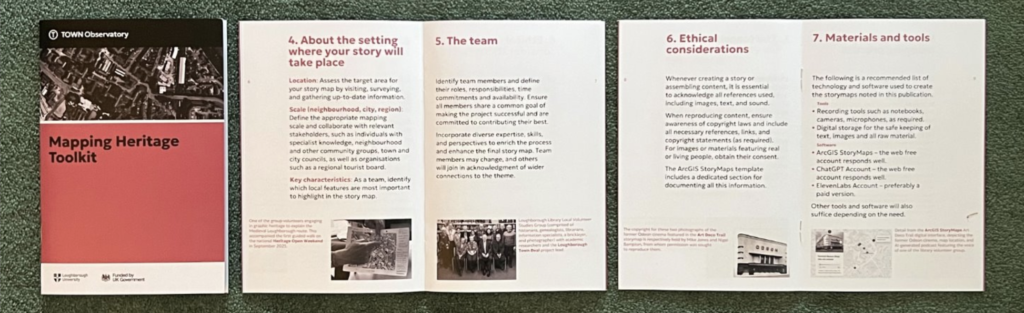
Mapping Heritage Toolkit: officially launched

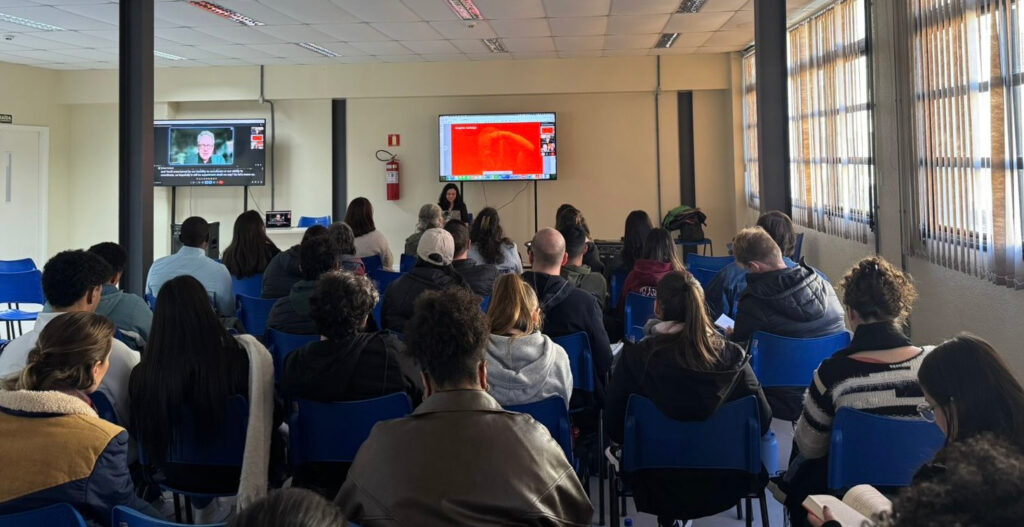
On Tuesday, 21 July, we launched the Mapping Heritage Toolkit with an online workshop that drew interest from 100 participants from more than 10 countries.

The toolkit is for anyone who loves local history, leads a community group, or wants to explore how maps and storytelling come together. It guides users through 12 simple steps to co-creating a story map.

It’s the culmination of 18 months work between Loughborough University researchers based in the School of Design and Creative Arts, and the Loughborough Library Local Studies Volunteer Group.

We were joined by guest contributors Dr Firat Batmaz and Dr Sara Saravi from the Centre for AI in Education, Department of Computer Science at Loughborough University, who added valuable insight to the session about ethics and generative AI.

Sharon Gray and David Kirkby, representing the volunteer group, also contributed with their experience and perspectives on being part of the project.

The toolkit is now live! Click on the image below to download it.

Watch the workshop recording immediately below.

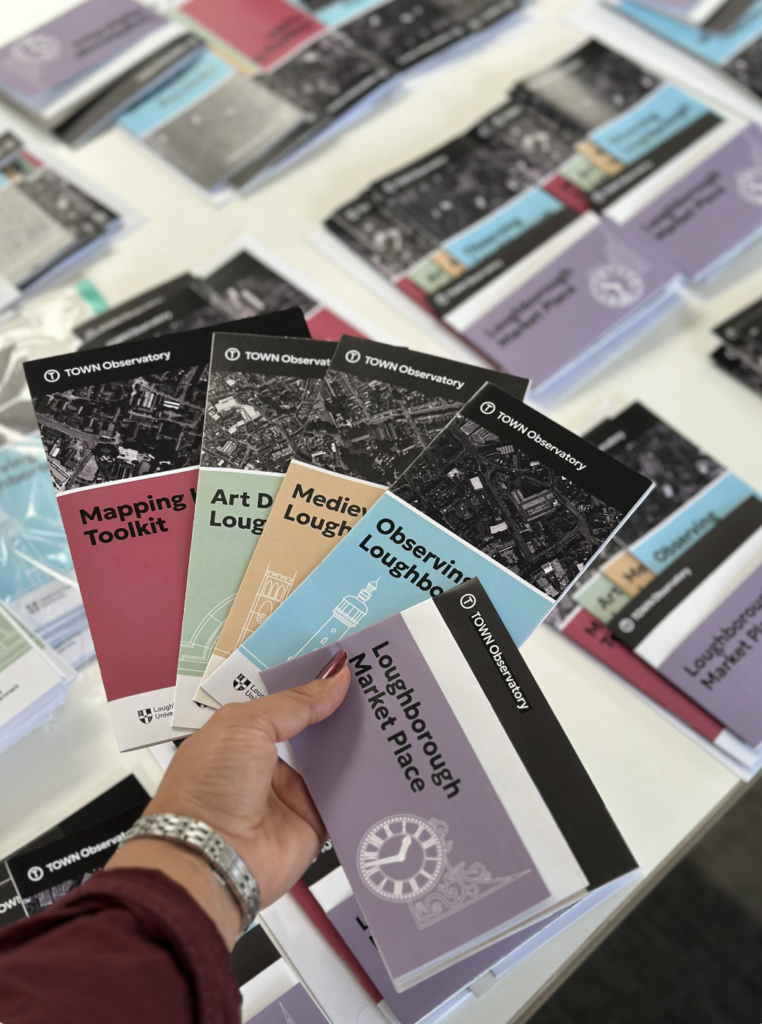
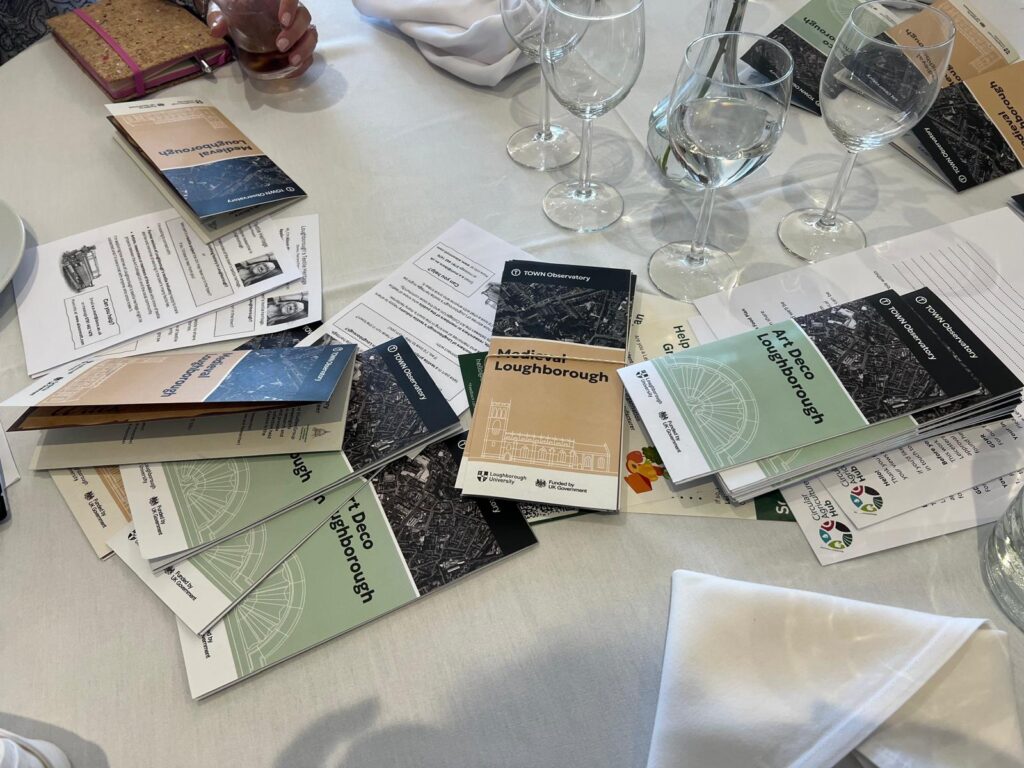
The toolkit and the three supporting leaflets that informed its development (see below) were posted to participants who requested them through our feedback survey.

To download the supporting leaflets, follow these links:

1. Medieval Loughborough

2. Art Deco Loughborough

3. Market Place Loughborough

.

Organising team

Categories
Blog Impact Loughborough Stories Scoping Project TOWN Observatory

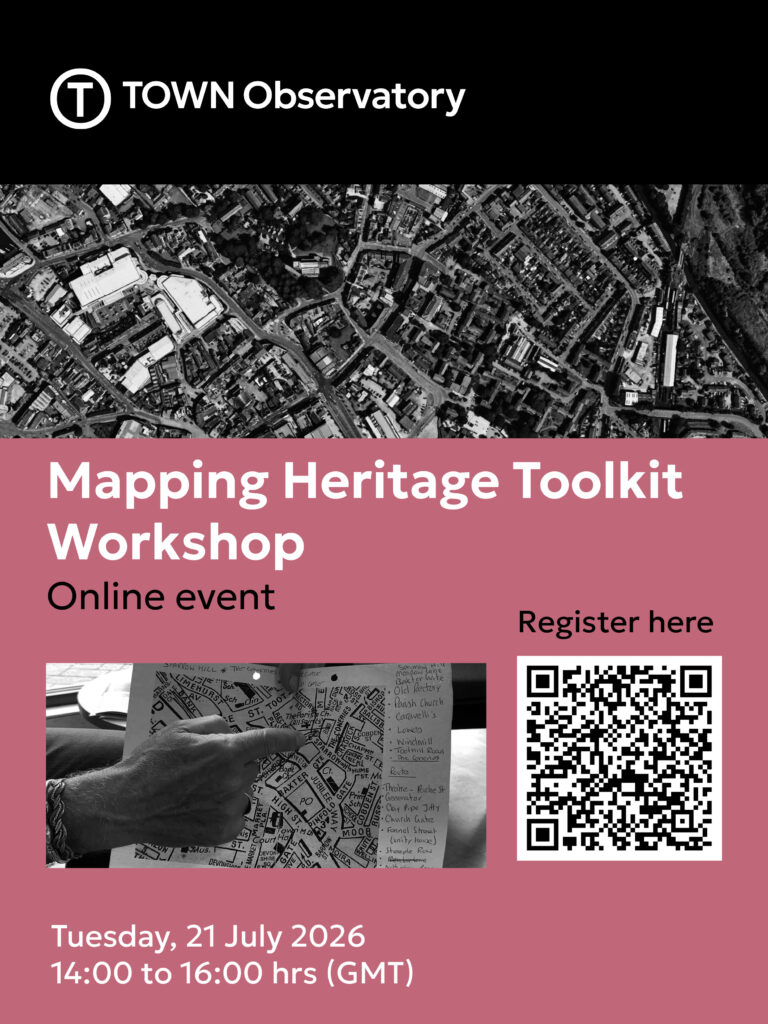
Mapping Heritage Toolkit Workshop

The Mapping Heritage Toolkit Workshop on Tuesday, 21 July, marks the official launch and introduction of the toolkit. If you enjoy local history, lead a community group, or just want to explore how maps and storytelling work together, this toolkit provides a guide through 12 simple steps to co-creating a story map.

The steps were developed by the TOWN Observatory and the Loughborough Library Local Studies Volunteer Group (LLLSVG), drawing on real experience of collaboration to build a story map from the beginning. Each step includes practical examples from LLLSVG projects concerning the Medieval Loughborough trail, Art Deco trail, and the Market Place, to provide insight into how ideas work in practice.

The toolkit presents a clear structure, providing one approach to creating a story map. Each step highlights key points for consideration in the synthesis of local knowledge, analogue resources, idea development, and creative execution using digital platforms.

For details scan the QR code below or register here.

Organising team
Dr Robert G. Harland
Dr Cristina A. Goldschmidt Kiminami
Pegah Aftabi
Greta Chen

Categories
Blog Events Scoping Project The Impact Hub TOWN Observatory

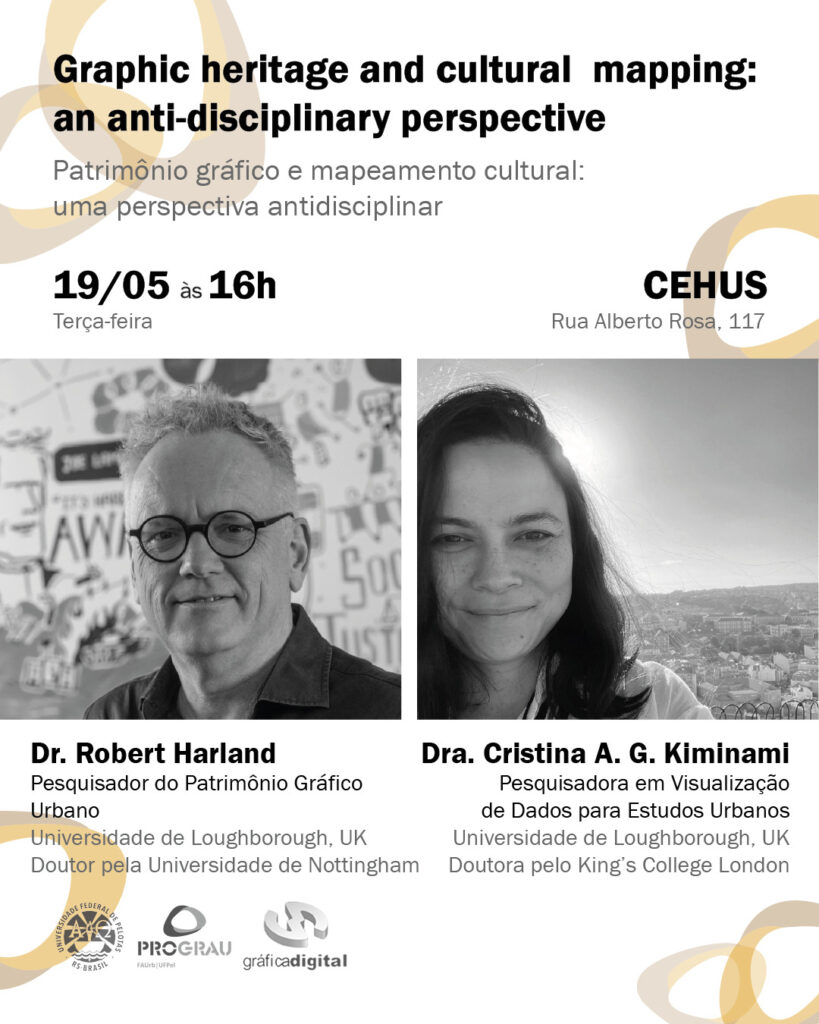
Graphic heritage and cultural mapping: an anti-disciplinary perspective

Photo of the hybrid presentation, Dr Robert Harland presenting online from the UK and Dr Cristina Kiminami presenting in person.

On 19 May, the Federal University of Pelotas in Rio Grande do Sul, Brazil hosted a presentation titled “Graphic Heritage and Cultural Mapping: an Anti-Disciplinary Perspective,” delivered by Dr Robert Harland and Dr Cristina A. G. Kiminami. Organised by the Specialisation Course in Digital Graphics and the Prograu Postgraduate Program in Architecture and Urbanism, the event attracted approximately 50 attendees.

The presentation provided new perspectives on the intersections of graphic heritage and cultural mapping, highlighting the significance of anti-disciplinary approaches in examining these topics. Dr. Harland and Dr. Kiminami facilitated active discussions and promoted the exchange of ideas, contributing to a productive session. They supported their argument by sharing an interpretation of anti-discplinary as:

Good scholarship must involve a tension between ‘discipline’ and ‘anti-discipline’ therefore. My starting point is that one of the most fruitfulways of maintaining this tension is through deep immersion in a discipline, combined with theconstant subjecting of knowledge deriving fromthe discipline to that developed in others (Harriss, 2002).

Participants commended the event for its innovative approach and the opportunity to engage with experts in the field. The presentation was considered successful and demonstrated the TOWN Observatory’s commitment to promoting dialogue and collaboration in digital graphics, heritage studies, and urbanism.

Acknowledgements: with thanks to Dr Tássia Vasconselos, lecturer in Architecture and Urbanism and coordinator of the Specialisation Course in Digital Graphics.

Harriss, J. (2002) ‘The case for cross-disciplinary approaches in international development’, World Development, 30(3), pp. 487–496.

Categories
Blog Events Impact Loughborough University Scoping Project TOWN Observatory

Art Deco Trail pesented at the Loughborough Heritage Forum

The development of Loughborough’s fabulous Art Deco Trail is the the latest collaboration between researchers at Loughborough University and the Loughborough Library Local Studies Volunteer Group (LLLSVG). The project was shared with members of the Loughborough Heritage Forum on 29 April 2026.

Above: Lougborough’s Art Deco Trail map – Click on the map to download the full leaflet.

Having attended the Forum several times since 2024, the TOWN Observatory was invited to become a permanent member. Chaired by Kathy Phillips, from the Loughborough Library Local Studies Volunteer Group, the Forum meets three times a year. Each in attendance is provided with the opportunity to share their heritage interests and activities, and the meetings are minuted.

Top: Chairperson Kathy Phillips from LLLSVG introducing the meeting of the Loughborough Heritage Forum. Middle: David Kirkby, and Christine Harris absorbed in discussion about the Art Deco Trail leaflet. Bottom: Leaflets about Art Deco Loughborough and Medieval Loughborough.

Sponsored by the Loughborough Building Society, the Forum provides opportunity to connect regularly with some of Loughborough’s main heritage providers, as well as several independent contributors who bring diverse perspectives. Many attendees are well known to each other.

Loughborough Heritage Forum members

All Saints with Holy Trinity Loughborough Parish Church

Artspace Loughborough

Beaumanor Hall

Charnwood Arts;

Charnwood Borough Council

Culture Leicestershire

Friends of Charnwood Museum

Friends of Garendon Park

Go Leicestershire

Loughborough Archaeological and Historical Society

Loughborough Building Society

Loughborough Carillon Tower and War Memorial Museum Trust

Loughborough Grammar School

Loughborough Library

Loughborough Library Local Studies Volunteer Group

Loughborough Building Society

Love Loughborough

Lynne about Loughborough

Taylor’s Bellfoundry Trust

The Generator

The Rectory Wildlife Gardeners

Rainbows

Sock Gallery

Victoria County History Trust