Categories
Blog Impact Loughborough Stories Scoping Project TOWN Observatory

Mapping Heritage Toolkit Workshop

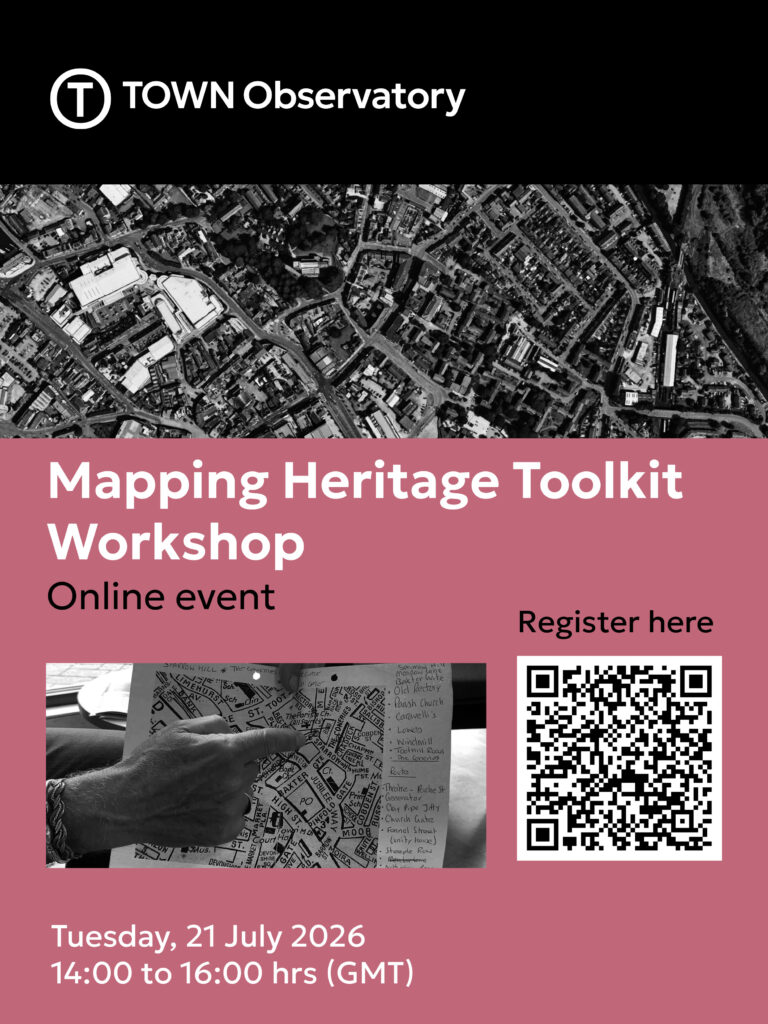
The Mapping Heritage Toolkit Workshop on Tuesday, 21 July, marks the official launch and introduction of the toolkit. If you enjoy local history, lead a community group, or just want to explore how maps and storytelling work together, this toolkit provides a guide through 12 simple steps to co-creating a story map.

The steps were developed by the TOWN Observatory and the Loughborough Library Local Studies Volunteer Group (LLLSVG), drawing on real experience of collaboration to build a story map from the beginning. Each step includes practical examples from LLLSVG projects concerning the Medieval Loughborough trail, Art Deco trail, and the Market Place, to provide insight into how ideas work in practice.

The toolkit presents a clear structure, providing one approach to creating a story map. Each step highlights key points for consideration in the synthesis of local knowledge, analogue resources, idea development, and creative execution using digital platforms.

For details scan the QR code below or register here.
Organising team
Dr Robert G. Harland
Dr Cristina A. Goldschmidt Kiminami
Pegah Aftabi
Greta Chen
Categories
Blog Events Loughborough Stories Scoping Project TOWN Observatory

Storytelling with Maps webinar

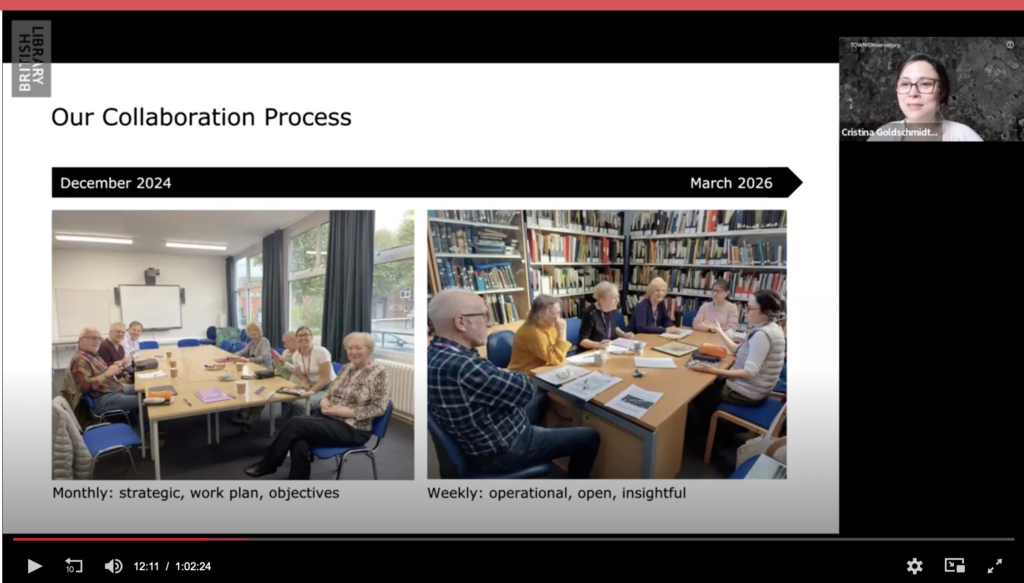
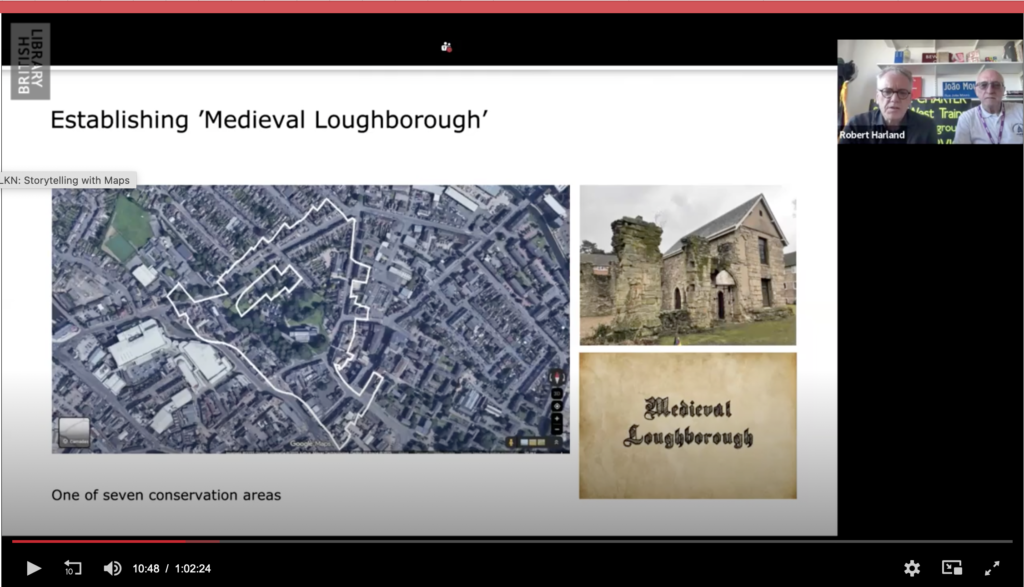
On 18th March, 2026, the Living Knowledge Network – British Library hosted Dr. Cristina Kiminami and Dr. Robert Harland from Loughborough University, who presented their Heritage Mapping project. In collaboration with the Loughborough Library Local Studies Volunteer Group (LLLSVG), the project explored the potential for using the ArcGIS StoryMaps digital platform to combine stories, interactive maps, videos, photos and local history in an engaging experience that makes history easy and accessible for all.

Images from the webinar, from left to right: (1) Dr Robert Harland introduces the creation of the Medieval Loughborough project; (2) Dr Cristina A. G. Kiminami explains how the collaboration worked, (3) David Kirkby (right) from LLLSVG answering questions from the audience from the volunteer group’s perspective.

This relationship shows how local history and archives can reach more people through open dialogue, co-creation and the development of digital literacy. The webinar shared valuable ideas for local studies librarians, archivists, volunteers and anyone interested in urban heritage, revealing how storytelling and community involvement can bring history to life when universities and local community groups work together.

Watch the full recording of the presentation here.

Acknowledgements: with thanks to Krisztina Lackoi and Zuzzanna Needham for the wonderful opportunity and to David Kirkby for representing the amazing LLLSVG team.

Categories
Blog Loughborough Stories TOWN Observatory

StoryMaps Workshop with the Loughborough Library Local Studies Volunteer Group

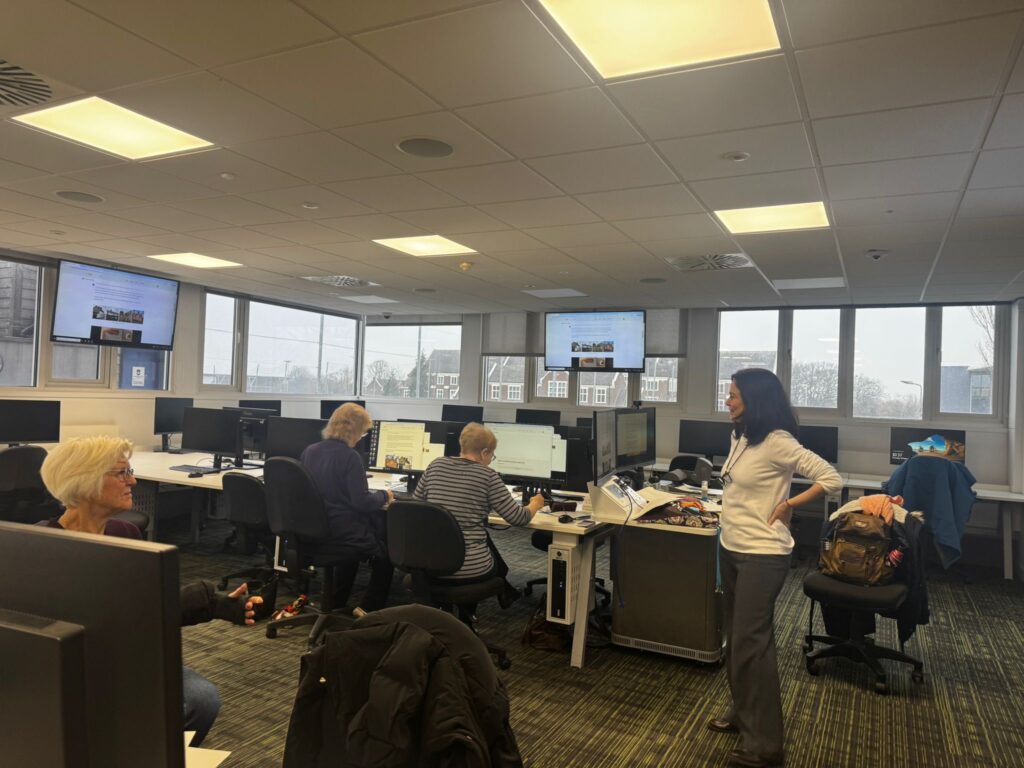
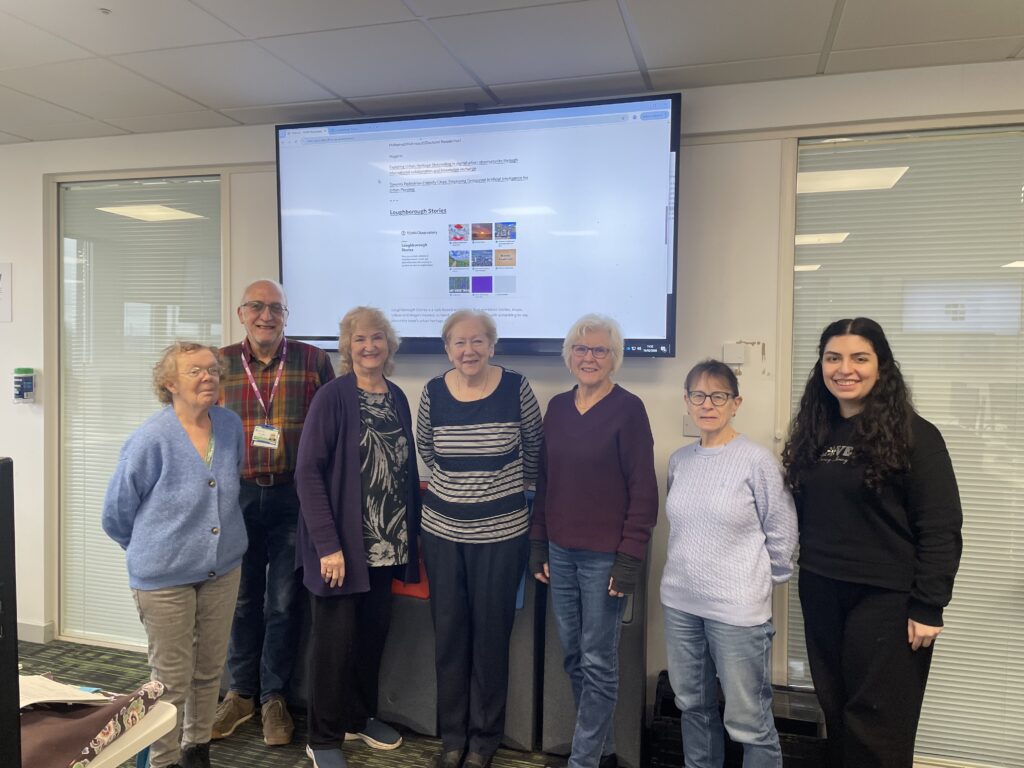
The photo above shows the participants and Dr Cristina G Kiminami during the StoryMaps workshop.

This morning at Loughborough University, the Loughborough Library Local Studies Volunteer Group (LLLSVG) took part in a hands-on workshop led by Dr Cristina G. Kiminami, with assistance from Pegah Aftabi. The session focused on ArcGIS StoryMaps, a digital platform for making interactive, map-based stories.

The LLLSVG and the TOWN Observatory have worked closely together since January 2025, with excellent results. The recent StoryMaps workshop was part of ongoing activity to support the volunteers to develop new digital skills.

The group learned the basics of the ArcGIS StoryMaps platform and how it can be used to share Loughborough’s history in interesting new ways. They each learned how to upload images, videos and audio, and how to create stories about the local area. Everyone was enthusiastic and keen to see what digital storytelling can do.

Learning how to use StoryMaps gives the Local Studies volunteers a new set of skills for sharing their historical research with the public, ensuring Loughborough’s heritage stories are preserved and go on to be re-shared into the future.

The workshop was another great example of the successful partnership between the TOWN Observatory and the Loughborough Library Local Studies Volunteer Group. Further drop-in sessions with the group are scheduled to happen soon!

Categories
Blog Loughborough Stories PhD The Impact Hub TOWN Observatory

RGS-IBG Annual International Conference 2025, Birmingham

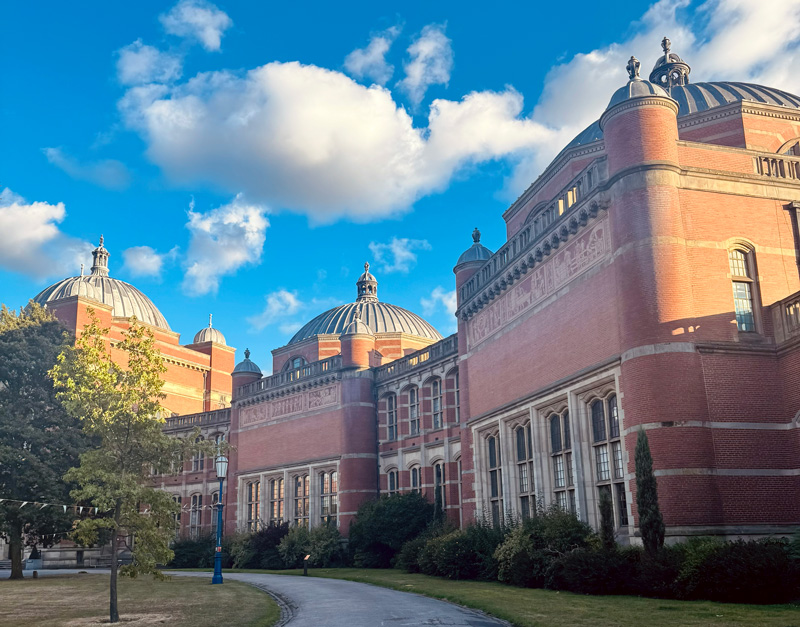
The University of Birmingham campus, host of the RGS-IBG Annual International Conference 2025

The Royal Geographical Society (with IBG) Annual International Conference took place at the University of Birmingham this year, running from 26 to 29 August 2025. Chaired by Professor Patricia Noxolo, the conference brought together more than 2,000 delegates from around the world, including geographers, researchers, practitioners and students. This year’s theme was ‘Geographies of Creativity / Creative Geography’, which sparked discussions about how creativity shapes the way people understand places, communities and environments. With over 400 sessions held across the four days, the programme ranged from creative methods and digital geographies to cultural landscapes, environmental change, indigenous knowledge systems and community-led research.

Loughborough University doctoral researcher Pegah Aftabi gave a presentation about her work during the Digital Creativity and Placemaking session of the conference. Her research explores how communities engage with heritage in their everyday lives and how their experiences can be recognised, mapped and shared with others through the use of digital tools. Pegah’s presentation highlighted the potential for digital platforms to make community perspectives more visible. By allowing people to share the places, practices and stories that matter to them, these tools open up opportunities for more inclusive conversations about what counts as heritage in a city.

Pegah Aftabi presenting about placemaking through digital narratives at the RGS 2025

Pegah also emphasised how this kind of digital work can support community-led planning, helping planners and policymakers move beyond official heritage listings to a better understanding of what residents value in their daily environments. Working with digital mapping in local communities isn’t without its challenges, Pegah acknowledged, citing people’s varying levels of digital literacy, differences in their access to technology and the need to be mindful of cultural sensitivities and privacy when collecting and sharing personal or community knowledge.

The presentation was followed by a panel discussion in which participants reflected on the role of digital creativity in placemaking. The conversation was lively and engaging, with ideas exchanged about how digital tools can support community participation and collaborative design. Pegah joined in with this discussion, sharing insights from her own research into how community-centred heritage and digital mapping can contribute to placemaking.

A number of other sessions and presentations were delivered during the conference by Impact Hub team members Dr. Taimaz Larimian, Mihyun Kim and Mohamed Shamroukh.

Categories
Blog Loughborough Stories PhD TOWN Observatory

Creative Photography and Mapping Workshops in Loughborough

As part of her PhD project, Pegah Aftabi organised a series of creative photography and mapping workshops at John Storer House in Loughborough. The workshops aimed to explore how local communities perceive and define heritage in their everyday environments.

A total of 20 local residents participated in the sessions, which combined creative and participatory methods to document places of personal and collective significance. Using a mobile application, participants photographed meaningful locations across the town and shared short stories explaining their importance.

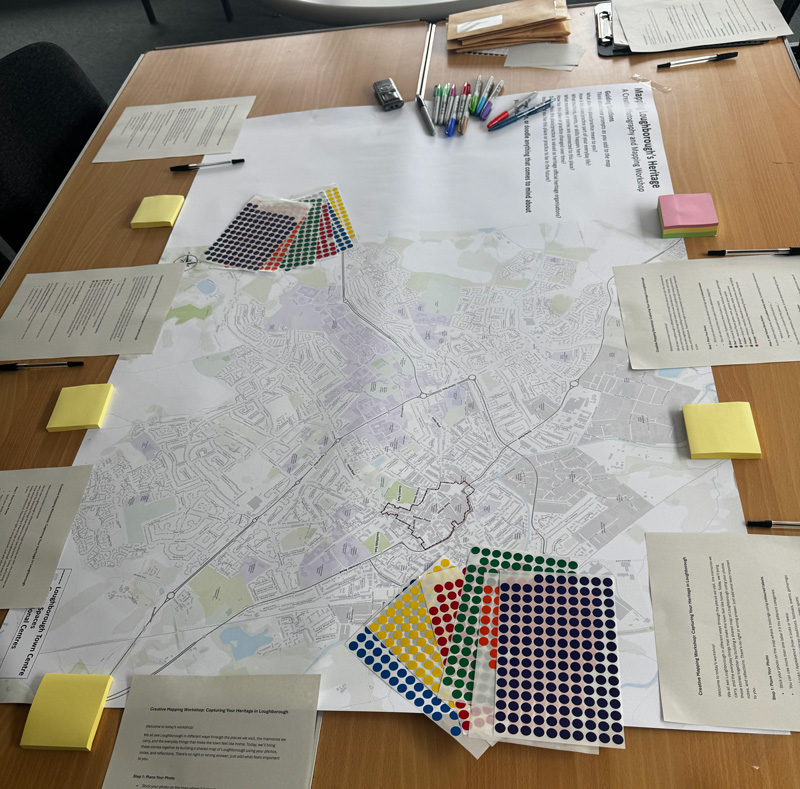
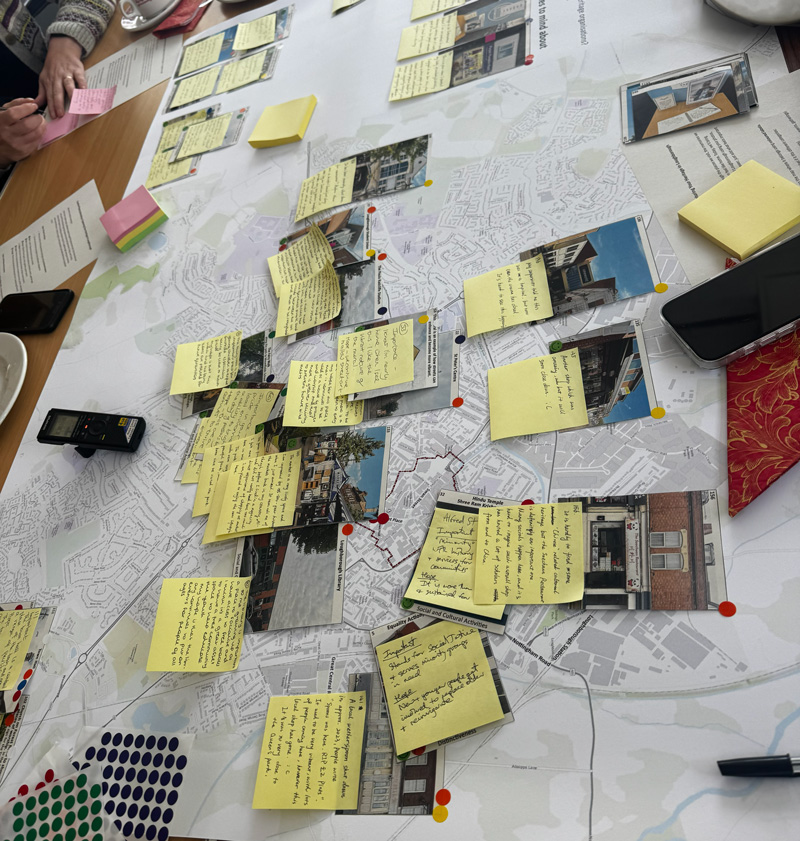
During the workshops, participants also used colour-coded labels to categorise different types of heritage, such as built heritage (buildings, public spaces, streets, and landmarks), natural heritage (green spaces, landscapes and natural settings), and sociocultural practices (social activities, cultural events, and community meet-up points). The classification process allowed participants to visually organise their inputs and visually map their connections to different places in Loughborough. This activity also created opportunities for participants to meet, discuss, and exchange perspectives on what makes Loughborough special to its residents.

The photos above present part of the maps developed collaboratively using participants’ photos and stories

The workshop series was followed by a feedback exercise to evaluate participants’ experiences and reflect on the process as a collective learning exercise. Insights from this session helped assess the workshop’s effectiveness in encouraging dialogue, collaboration, and a shared understanding of urban heritage in Loughborough.

The collected photographs, stories, and mapped data in this workshop will contribute to a digital map of community-centred heritage in Loughborough. These findings will inform the next stage of Pegah’s research on community-centred approaches to urban heritage and planning.

Find out more about this PhD Project here.

Categories
Blog Events Impact Loughborough Stories Loughborough University Scoping Project The Impact Hub TOWN Observatory

Empowering the Loughborough Library Local Studies Volunteer Group with AI and Audio Stories

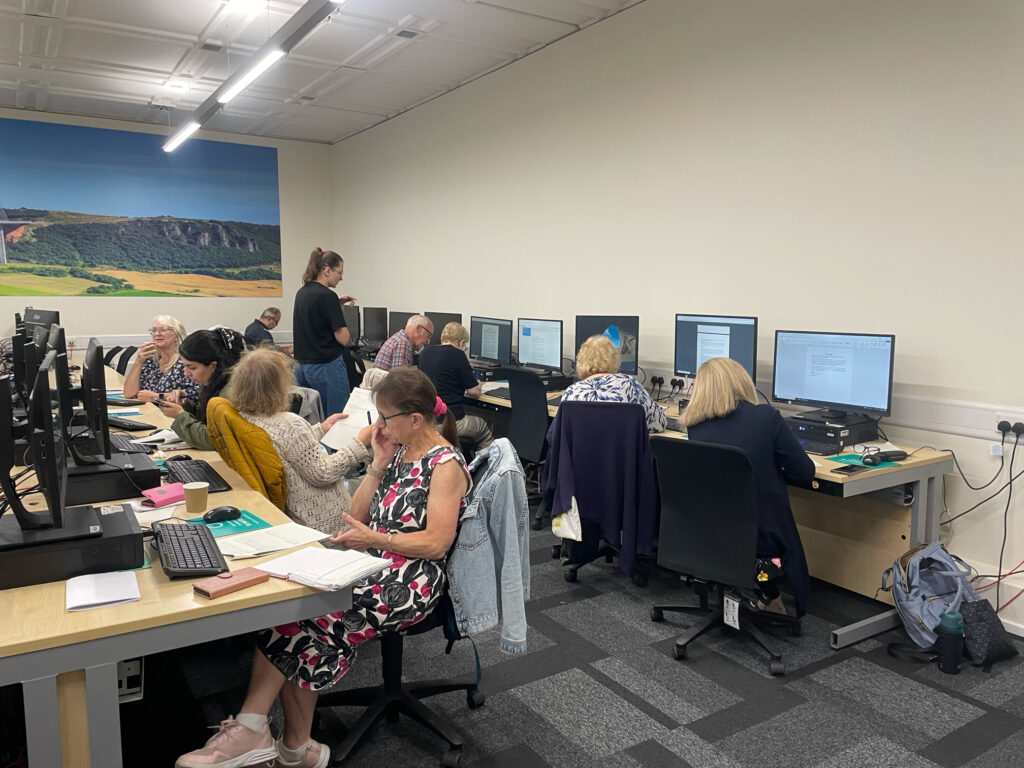
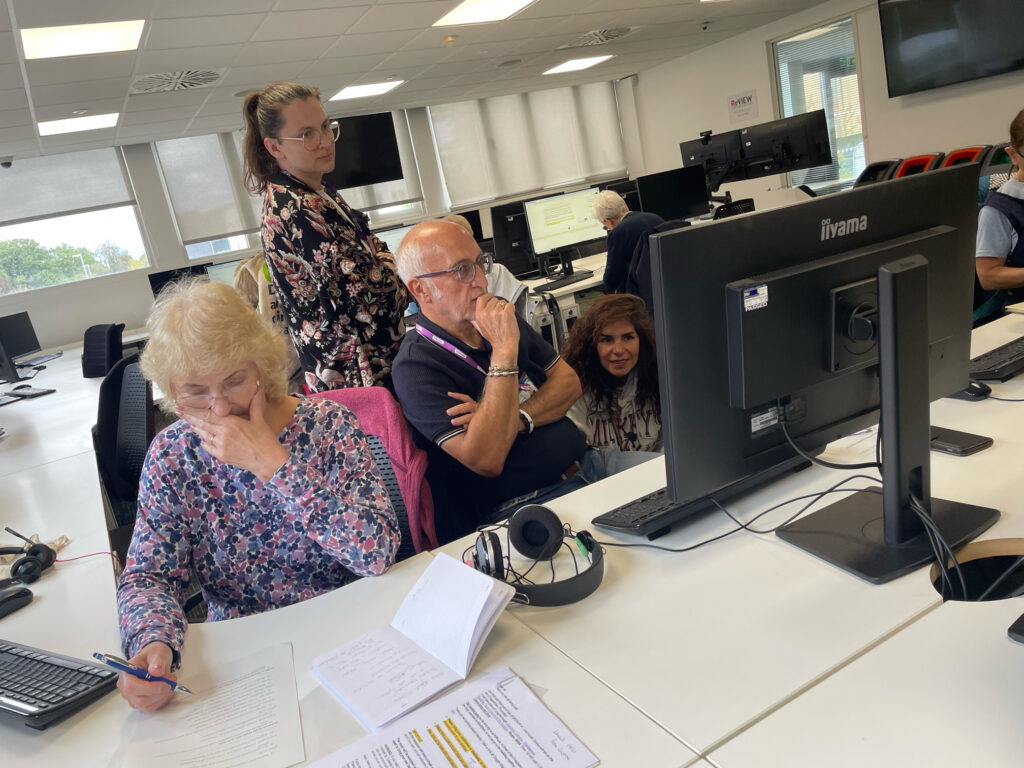
The photo above shows the participants and the instructor, Acka, on the first day of the workshop.

As part of the development of the Heritage Stories Scoping Project, the Loughborough Library Local Studies Volunteer Group (LLLSVG) has shown a keen interest in becoming more autonomous and enhancing their software skills. Inspired by the success of StoryMaps created in collaboration with the TOWN Observatory team, the group expressed a desire to learn new digital storytelling techniques. Recognising this enthusiasm, the TOWN Observatory has actively supported their goals, starting with a tailored 3-session workshop focused on creating AI-generated podcasts and audio stories.

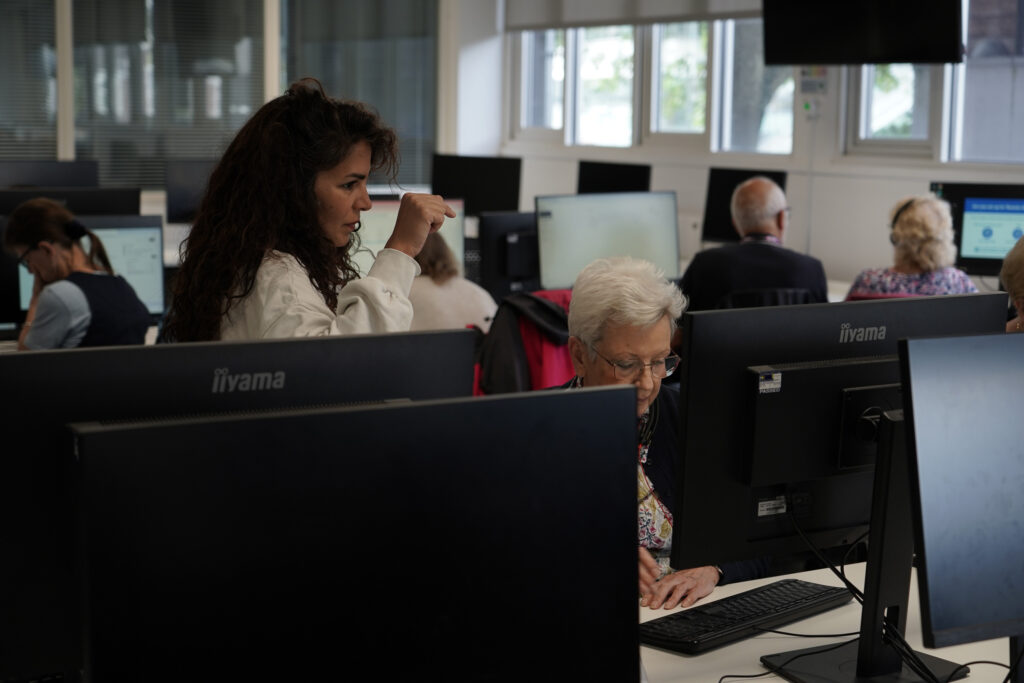
The photo above shows Dr Sara Saravi clarifying questions of one of the participants during the second day of the workshop.

Led by instructor Acka Kruszyc, the workshop brought together 9 participants eager to explore AI-driven storytelling. Over three sessions, they learned how to craft scripts from their own researched and fact-checked texts, and how to use AI voices to bring their stories to life. The involvement of experts, Dr Firat Batmaz and Dr Sara Saravi from the Department of Computer Science added valuable technical guidance, ensuring a comprehensive learning experience. The outcomes of the workshop were highly successful.

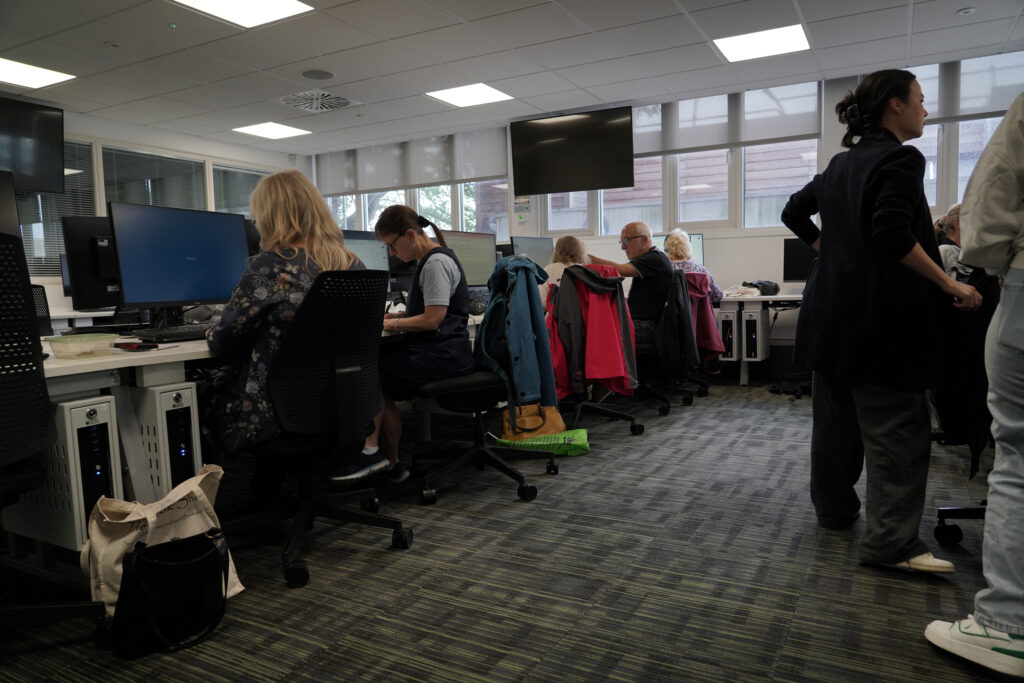
Above (read left to right): (1) Dr Sara Saravi and Acka Kruczyk listening to the audio stories created by a participant. (2) Participants engaging with AI tools to create their audio stories. (3) Participants working on their audio stories with Dr Cristina Goldschmidt Kiminami providing guidance and support throughout the session.

The session concluded participants motivated and excited about the countless possibilities that AI and audio storytelling present for their future projects. This milestone not only equipped the LLLSVG with new skills but also opened the door to innovative ways of engaging their activities through storytelling and digital media.

Categories
Blog Loughborough Stories PhD TOWN Observatory

The European Urban Research Association Annual Conference 2025 (EURA), Bristol

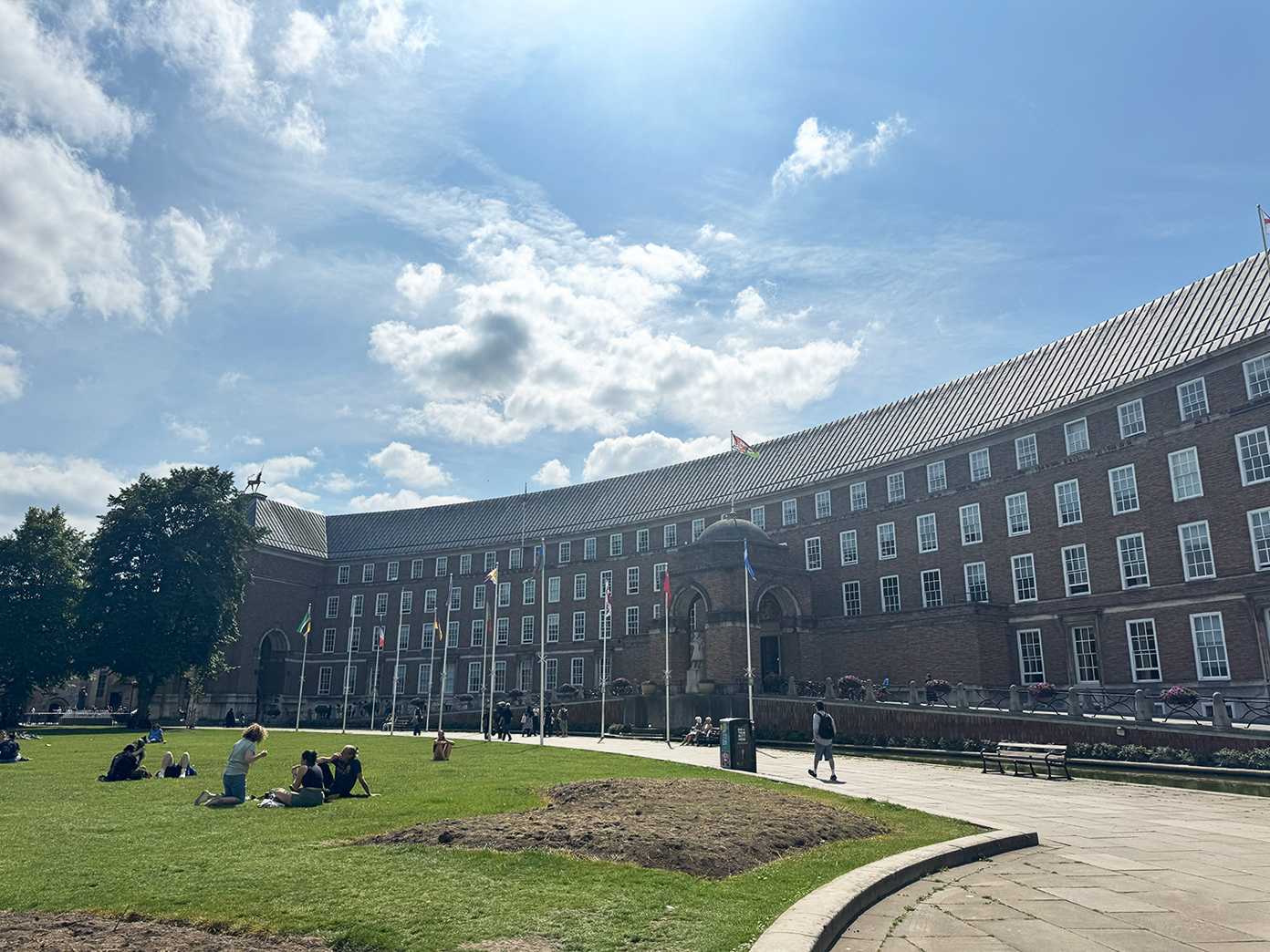
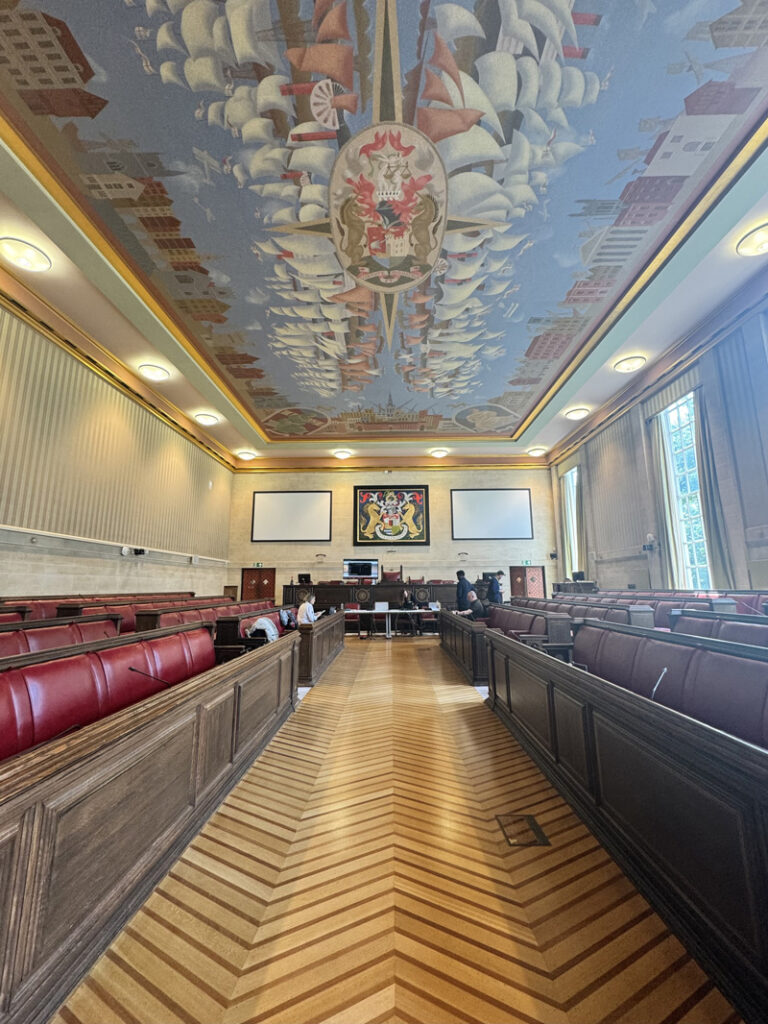
The Conference Venue, Bristol City Hall

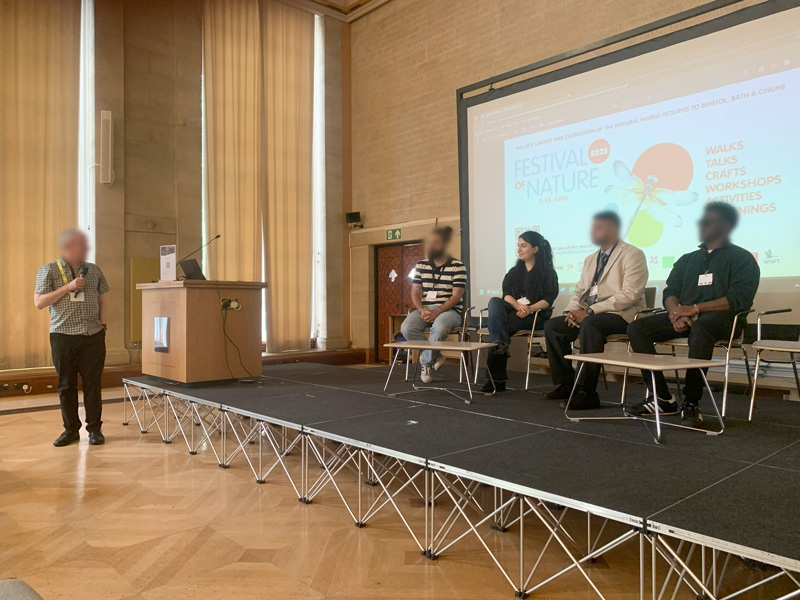
The EURA 2025 Conference, hosted by the Centre for Sustainable Planning and Environments at the University of the West of England (UWE), took place at the iconic Bristol City Hall in June 2025. The overall theme of the conference was Creating Healthy and Sustainable Cities and included nine thematic tracks, alongside mobile workshops and study tours that offered participants the chance to engage with local activists and explore innovative urban developments in Bristol and surrounding areas.   

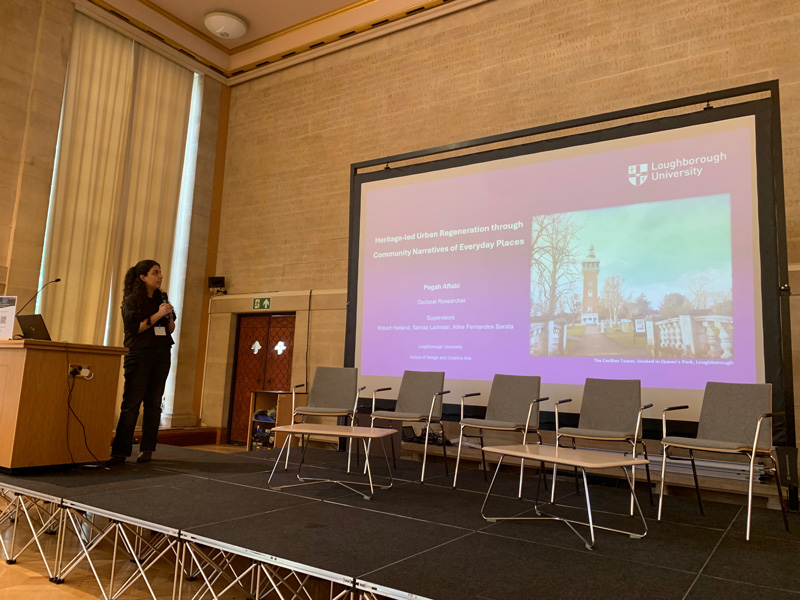
In Track 2, Regenerating the City, Pegah Aftabi presented her paper titled “Heritage-led Urban Regeneration through Community Narratives of Everyday Places,” developed as part of her PhD research at Loughborough University under the supervision of Dr Robert Harland, Dr Taimaz Larimian, and Dr Aline Fernandes Barata.

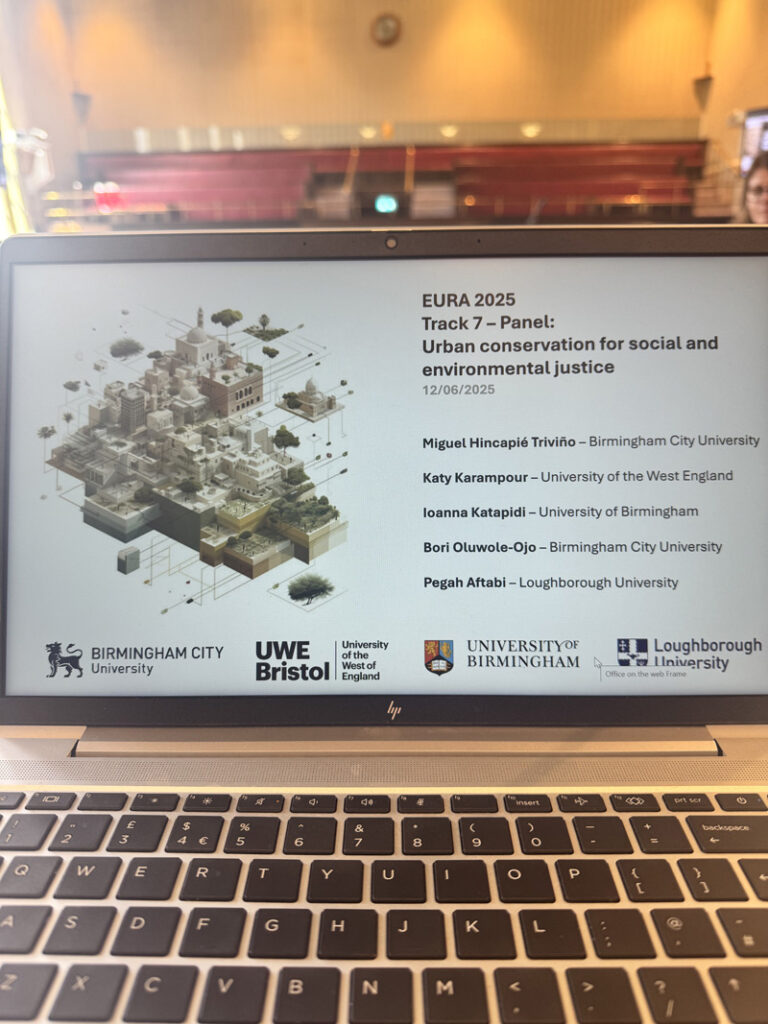
Pegah was also invited as a panelist in the pre-organised panel “Urban Conservation for Social and Environmental Justice,” alongside academics from Birmingham City University, UWE Bristol, and the University of Birmingham, representing Loughborough University and the TOWN Observatory platforms. The panel explored three critical questions, including: How can urban conservation advance justice by amplifying local experiences? What methodologies can capture plural perspectives in managing our shared past? How might conservation serve as a catalyst for social reflection rather than reinforcing cultural hierarchies? The discussion underscored the importance of inclusive and participatory approaches to urban conservation and highlighted the role of community narratives in shaping more equitable and reflective planning decisions.