Categories
Blog Events Scoping Project The Impact Hub TOWN Observatory

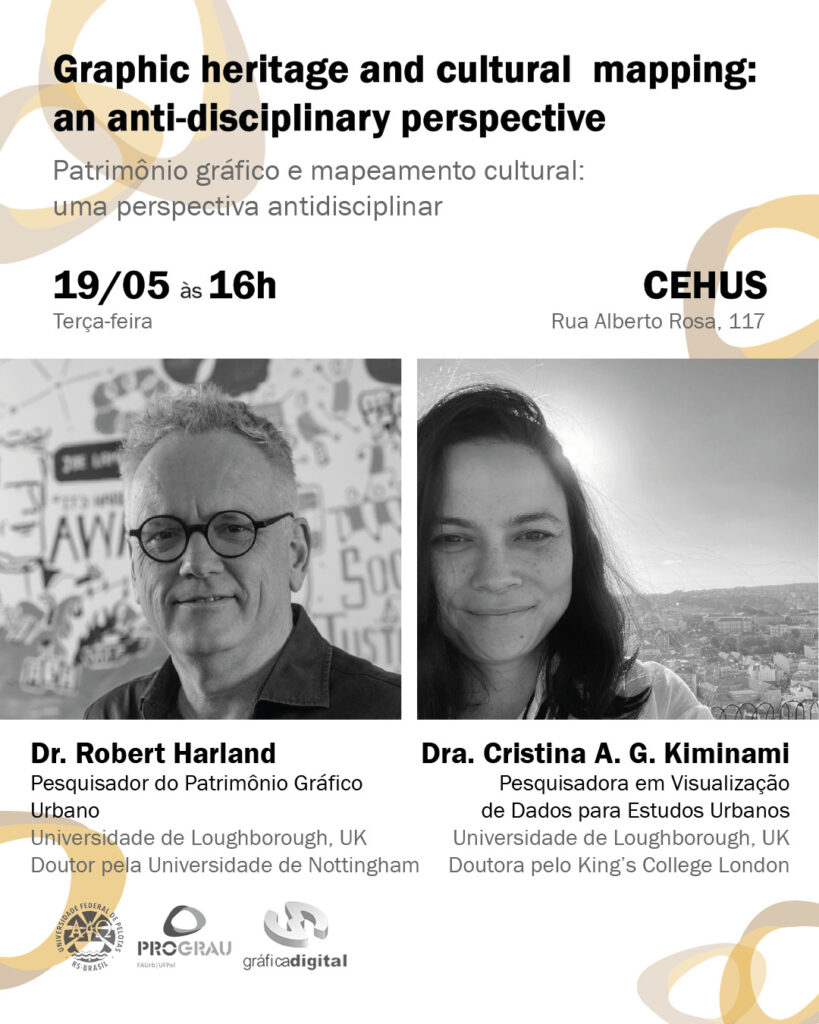
Graphic heritage and cultural mapping: an anti-disciplinary perspective

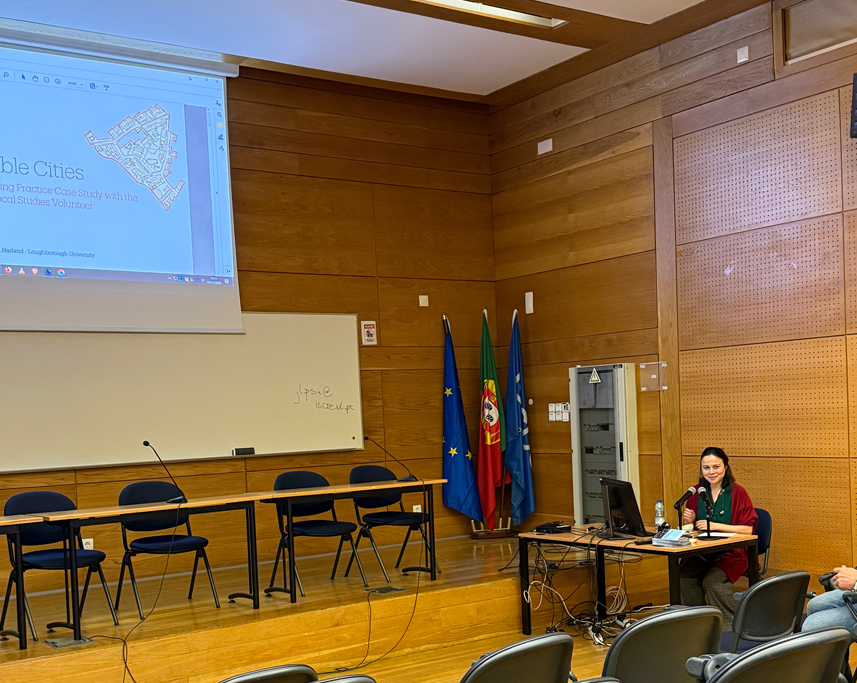
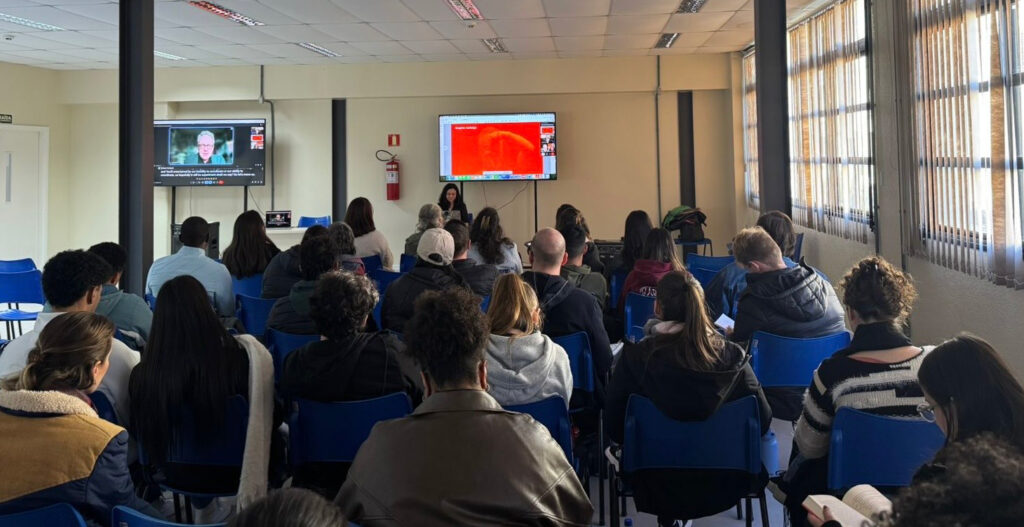
Photo of the hybrid presentation, Dr Robert Harland presenting online from the UK and Dr Cristina Kiminami presenting in person.

On 19 May, the Federal University of Pelotas in Rio Grande do Sul, Brazil hosted a presentation titled “Graphic Heritage and Cultural Mapping: an Anti-Disciplinary Perspective,” delivered by Dr Robert Harland and Dr Cristina A. G. Kiminami. Organised by the Specialisation Course in Digital Graphics and the Prograu Postgraduate Program in Architecture and Urbanism, the event attracted approximately 50 attendees.

The presentation provided new perspectives on the intersections of graphic heritage and cultural mapping, highlighting the significance of anti-disciplinary approaches in examining these topics. Dr. Harland and Dr. Kiminami facilitated active discussions and promoted the exchange of ideas, contributing to a productive session. They supported their argument by sharing an interpretation of anti-discplinary as:

Good scholarship must involve a tension between ‘discipline’ and ‘anti-discipline’ therefore. My starting point is that one of the most fruitfulways of maintaining this tension is through deep immersion in a discipline, combined with theconstant subjecting of knowledge deriving fromthe discipline to that developed in others (Harriss, 2002).

Participants commended the event for its innovative approach and the opportunity to engage with experts in the field. The presentation was considered successful and demonstrated the TOWN Observatory’s commitment to promoting dialogue and collaboration in digital graphics, heritage studies, and urbanism.
Acknowledgements: with thanks to Dr Tássia Vasconselos, lecturer in Architecture and Urbanism and coordinator of the Specialisation Course in Digital Graphics.

Harriss, J. (2002) ‘The case for cross-disciplinary approaches in international development’, World Development, 30(3), pp. 487–496.
Categories
Blog Events Impact Loughborough University The Impact Hub TOWN Observatory

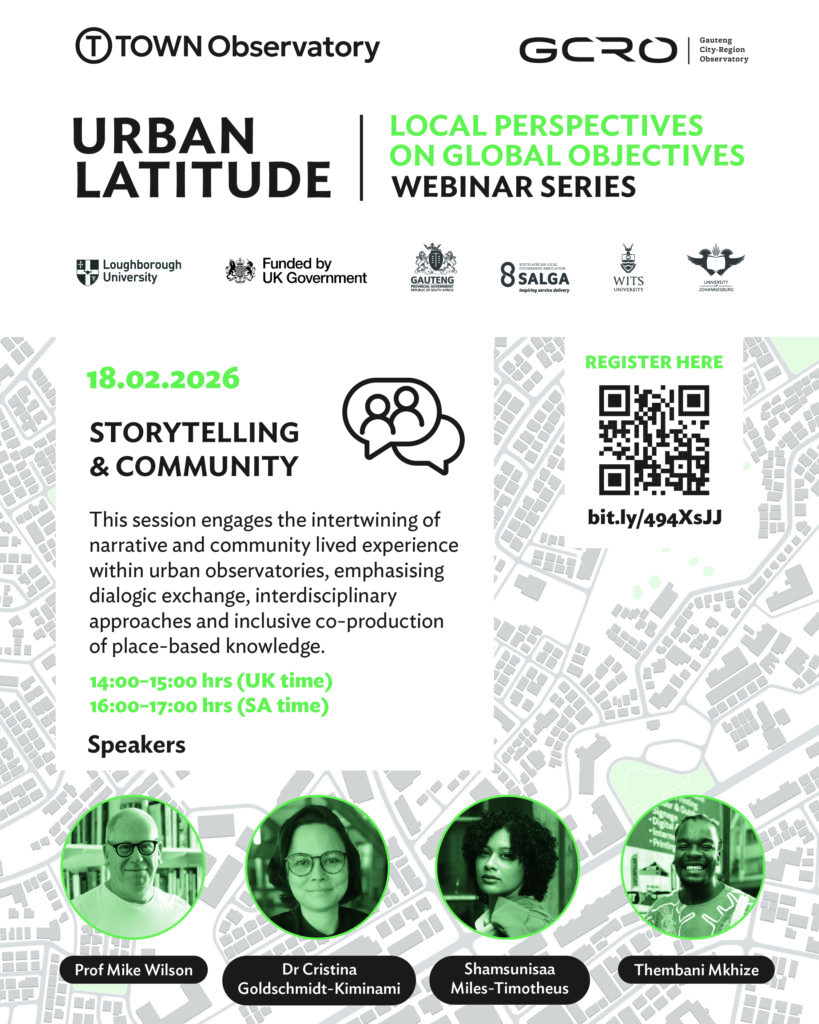
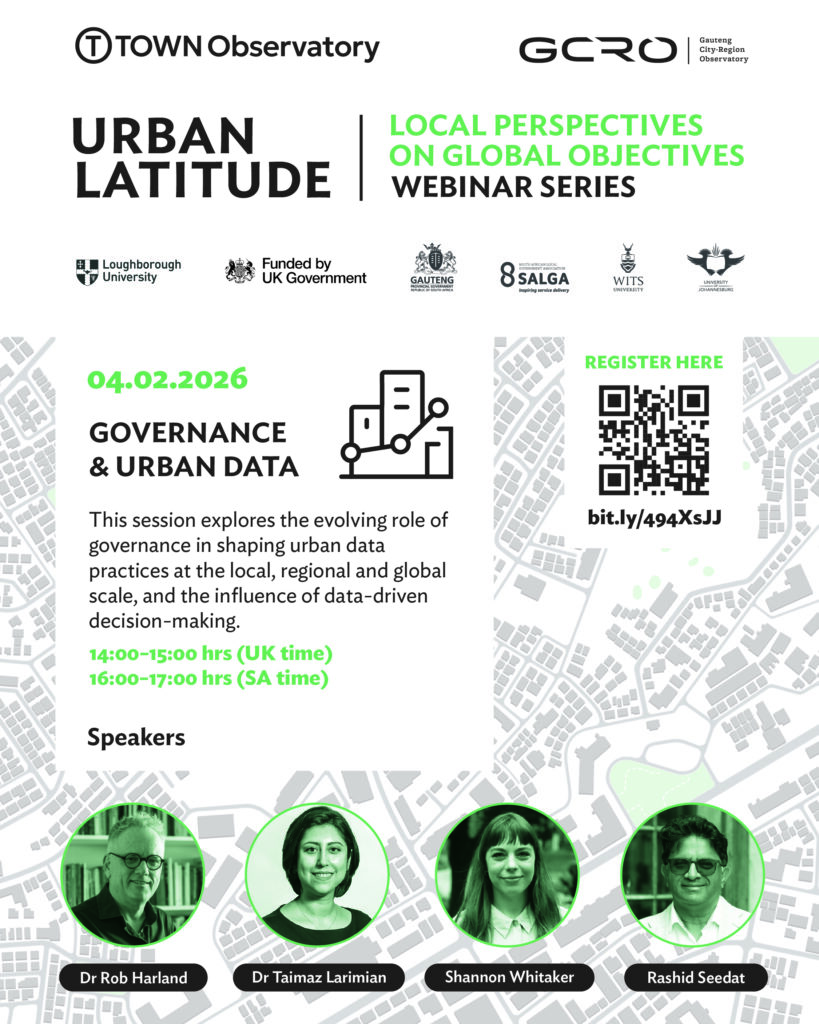
Urban Latitude: Local Perspectives on Global Objectives

Webinar week 1

Webinar week 2

Webinar week 3

Categories
Blog Events Impact The Impact Hub TOWN Observatory

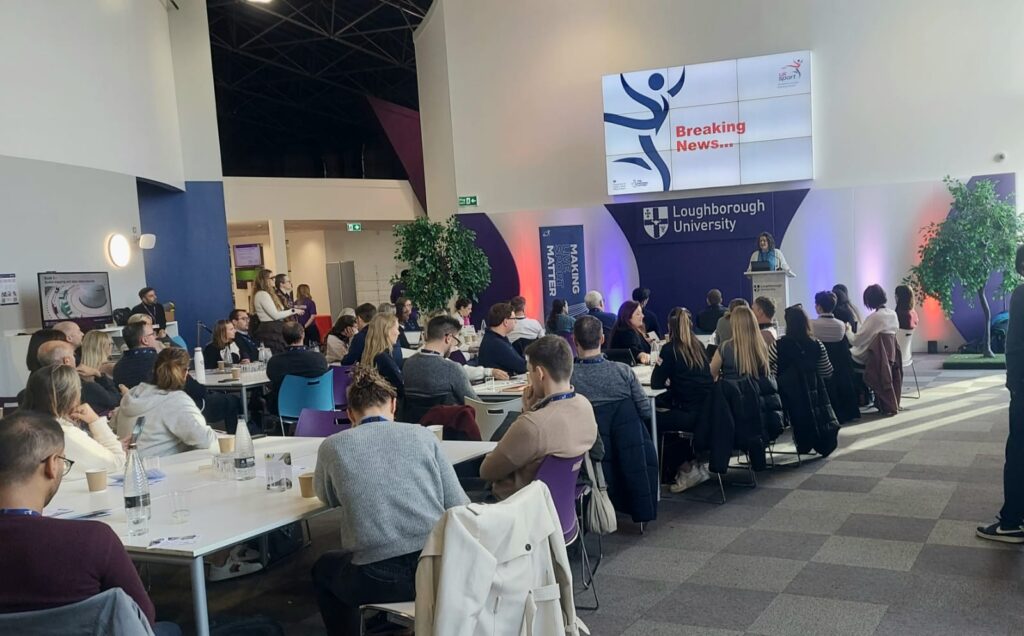
Loughborough University Researchers Present Urban Analytics Solutions at UK Sport Event Managers Workshop

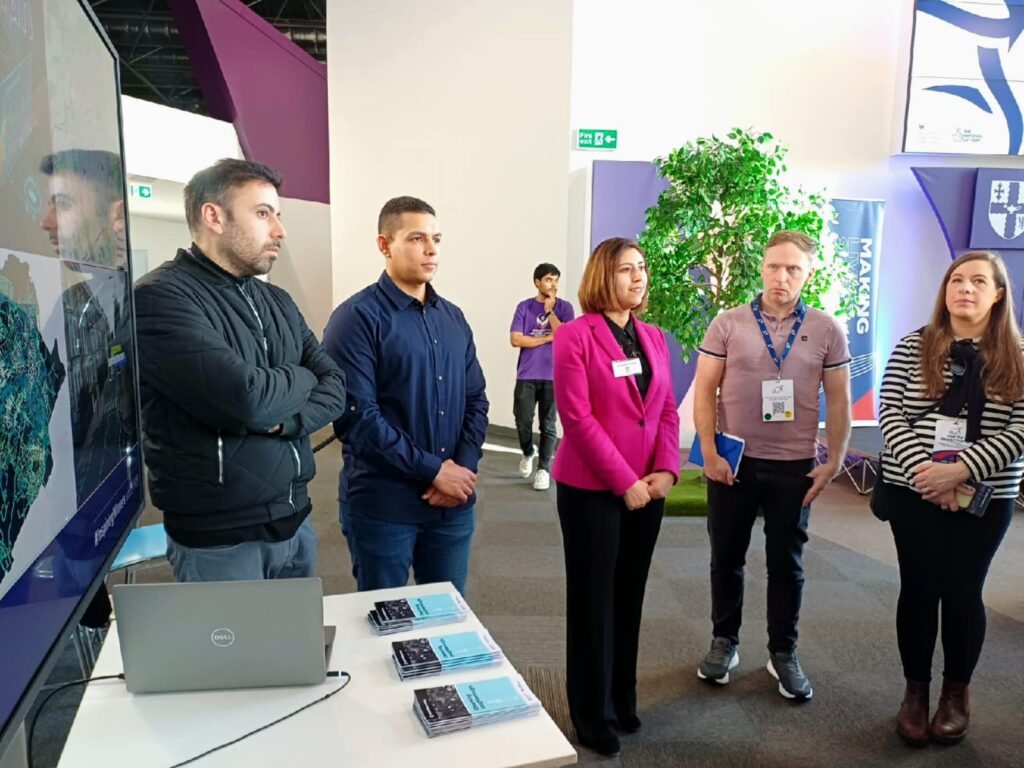
Four researchers from Loughborough University’s Impact Hub delivered a series of presentations at the UK Sport Event Managers Workshop recently, showcasing the innovative application of geospatial analytics and artificial intelligence for urban planning and decision-making.
Dr Taimaz Larimian, along with Mohamed Shamroukh, Mihyun Kim and Dr Mohammad Forghani, presented twelve sessions to delegates from across UK sports and national governing bodies, demonstrating key platforms developed by the Impact Hub: the Town Observatory, Colouring Britain, and Loughborough in Motion.

Research Applications

Their presentations focused on the integration of large-scale geospatial data with machine learning, deep learning and computer vision technologies, showing how the platforms enable urban stakeholders to:

  • Support evidence-based decision-making processes
  • Enhance emergency response coordination
  • Optimise resource allocation strategies
  • Analyse current urban behavioural patterns
  • Forecast future urban development trends

The team’s research generated a lot of interest from attendees, with delegates identifying numerous potential applications within the sports and events sector. One participant described the work as ‘mind blowing,’ reflecting the strong reception of an interdisciplinary approach to urban analytics.

Distinguished Speakers

The event also featured presentations by Professor Nick Jennings CB FRS FREng and Professor Georgina Cosma, who discussed the responsible integration of artificial intelligence across multiple domains and the role of university research in advancing the safe implementation of AI.

Acknowledgements

The team would like to thank Verity Postlethwaite for organising the event and facilitating this valuable exchange between academic researchers and sports sector professionals.

The work for the presentations was conducted under the supervision of Dr Asya Natapov and Dr Taimaz Larimian, with contributions from Impact Hub team members Dr Rob Harland, Dr Falli Palaiologou, Dr Aline Fernandes, Dr Cristina A. Goldschmidt Kiminami, Dr John Weightman and Pegah Aftabi.

Categories
Blog Loughborough Stories PhD The Impact Hub TOWN Observatory

RGS-IBG Annual International Conference 2025, Birmingham

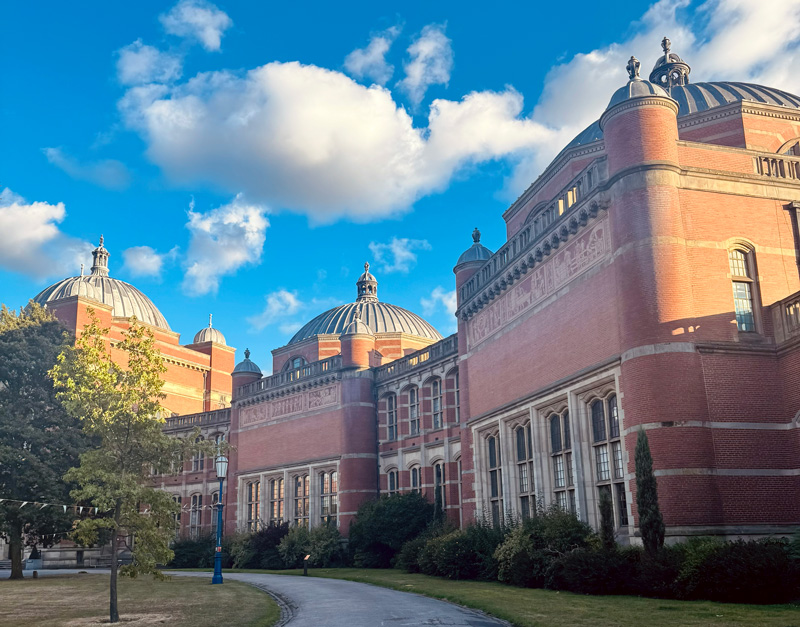
The University of Birmingham campus, host of the RGS-IBG Annual International Conference 2025

The Royal Geographical Society (with IBG) Annual International Conference took place at the University of Birmingham this year, running from 26 to 29 August 2025. Chaired by Professor Patricia Noxolo, the conference brought together more than 2,000 delegates from around the world, including geographers, researchers, practitioners and students. This year’s theme was ‘Geographies of Creativity / Creative Geography’, which sparked discussions about how creativity shapes the way people understand places, communities and environments. With over 400 sessions held across the four days, the programme ranged from creative methods and digital geographies to cultural landscapes, environmental change, indigenous knowledge systems and community-led research.

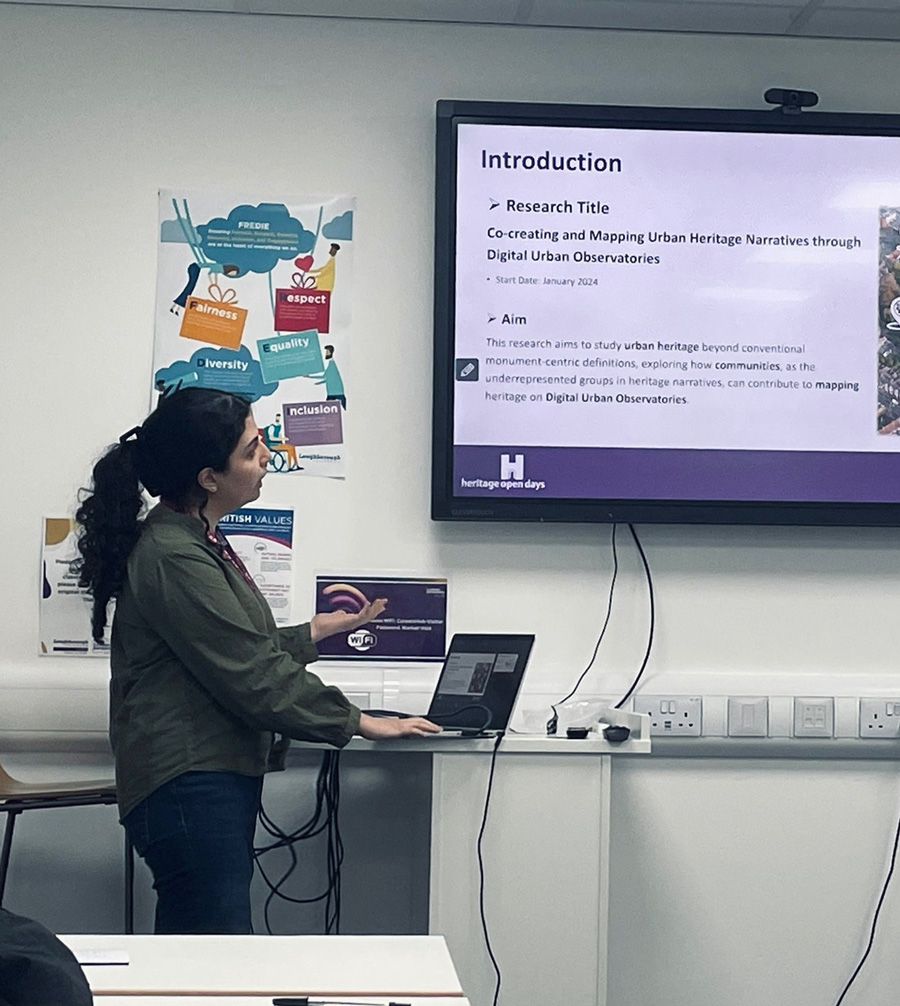
Loughborough University doctoral researcher Pegah Aftabi gave a presentation about her work during the Digital Creativity and Placemaking session of the conference. Her research explores how communities engage with heritage in their everyday lives and how their experiences can be recognised, mapped and shared with others through the use of digital tools. Pegah’s presentation highlighted the potential for digital platforms to make community perspectives more visible. By allowing people to share the places, practices and stories that matter to them, these tools open up opportunities for more inclusive conversations about what counts as heritage in a city.

Pegah Aftabi presenting about placemaking through digital narratives at the RGS 2025

Pegah also emphasised how this kind of digital work can support community-led planning, helping planners and policymakers move beyond official heritage listings to a better understanding of what residents value in their daily environments. Working with digital mapping in local communities isn’t without its challenges, Pegah acknowledged, citing people’s varying levels of digital literacy, differences in their access to technology and the need to be mindful of cultural sensitivities and privacy when collecting and sharing personal or community knowledge.

The presentation was followed by a panel discussion in which participants reflected on the role of digital creativity in placemaking. The conversation was lively and engaging, with ideas exchanged about how digital tools can support community participation and collaborative design. Pegah joined in with this discussion, sharing insights from her own research into how community-centred heritage and digital mapping can contribute to placemaking.

A number of other sessions and presentations were delivered during the conference by Impact Hub team members Dr. Taimaz Larimian, Mihyun Kim and Mohamed Shamroukh.

Categories
Events Impact The Impact Hub TOWN Observatory

Phase 3

March 2025 until March 2026

July 2025
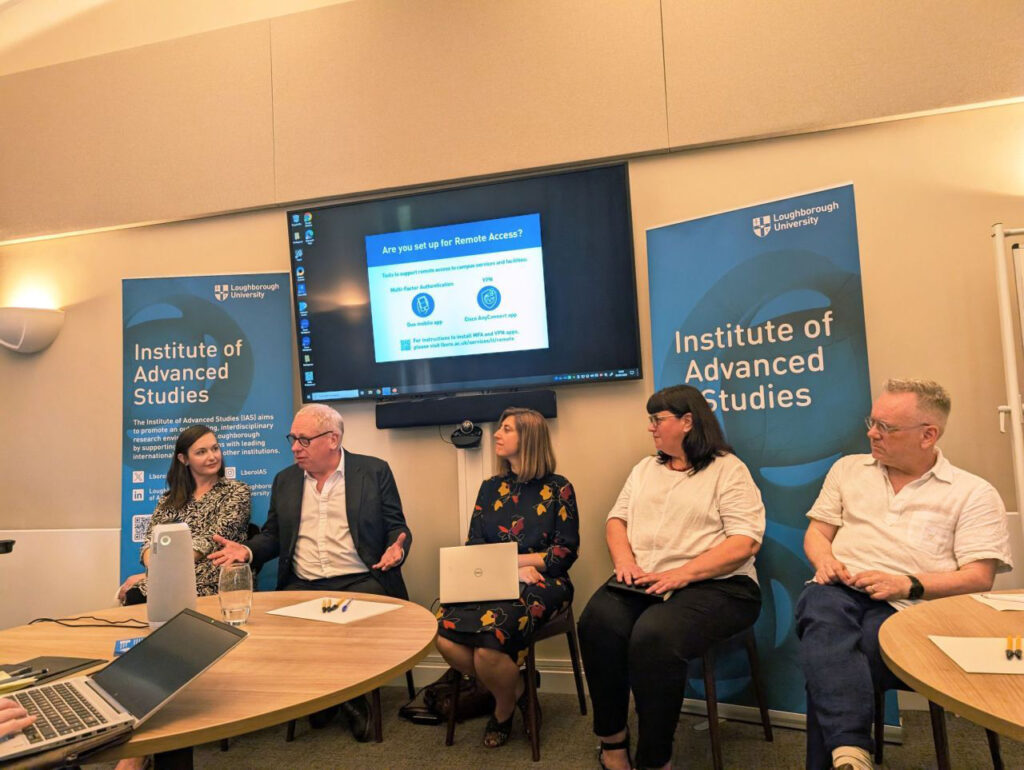
Advisory Group Meeting, Loughborough University

Categories
Events Impact The Impact Hub TOWN Observatory

Phase 2

January 2024 until February 2025

April 2024
Attendance at an event on Cultural Heritage and the Just City, University of Sheffield

May and June 2024
Online interviews with stakeholders

July 2024
Participation in the Design Sprint of the Branching Out project, University of York

September 2024
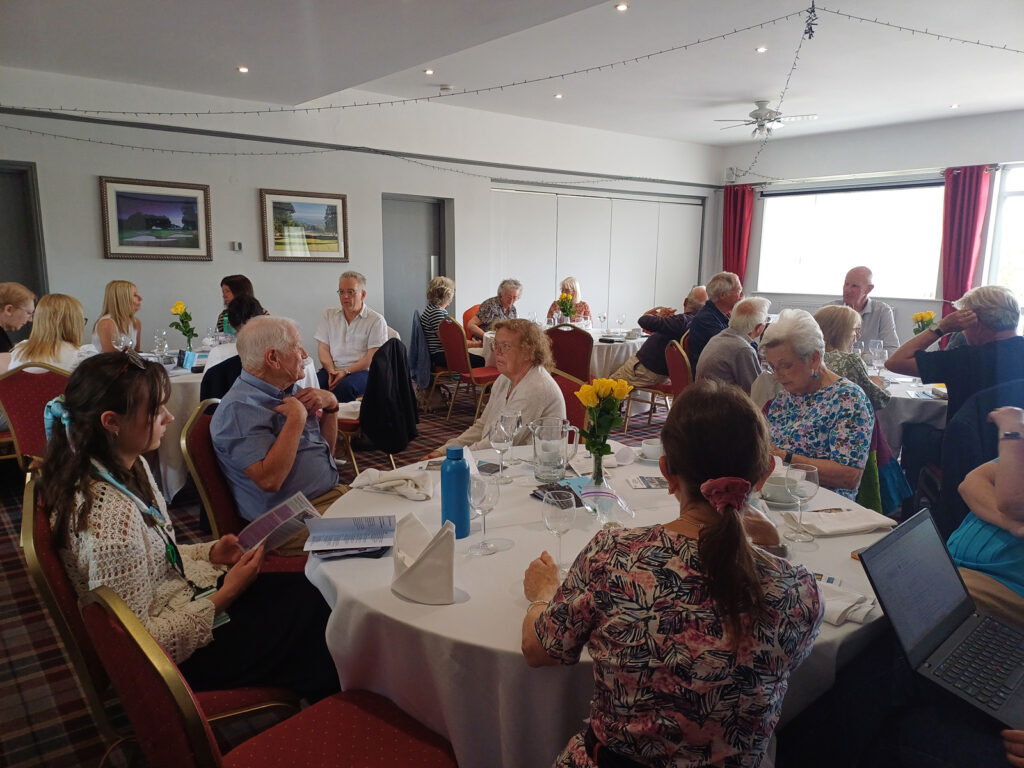
Presentation on The Impact Hub at the Loughborough Heritage Forum, Loughborough Golf Club

November 2024
Presentation at the ICOMOS Scientific Symposium, Ouro Preto, Brazil

Categories
Blog Events Impact Loughborough Stories Loughborough University Scoping Project The Impact Hub TOWN Observatory

Empowering the Loughborough Library Local Studies Volunteer Group with AI and Audio Stories

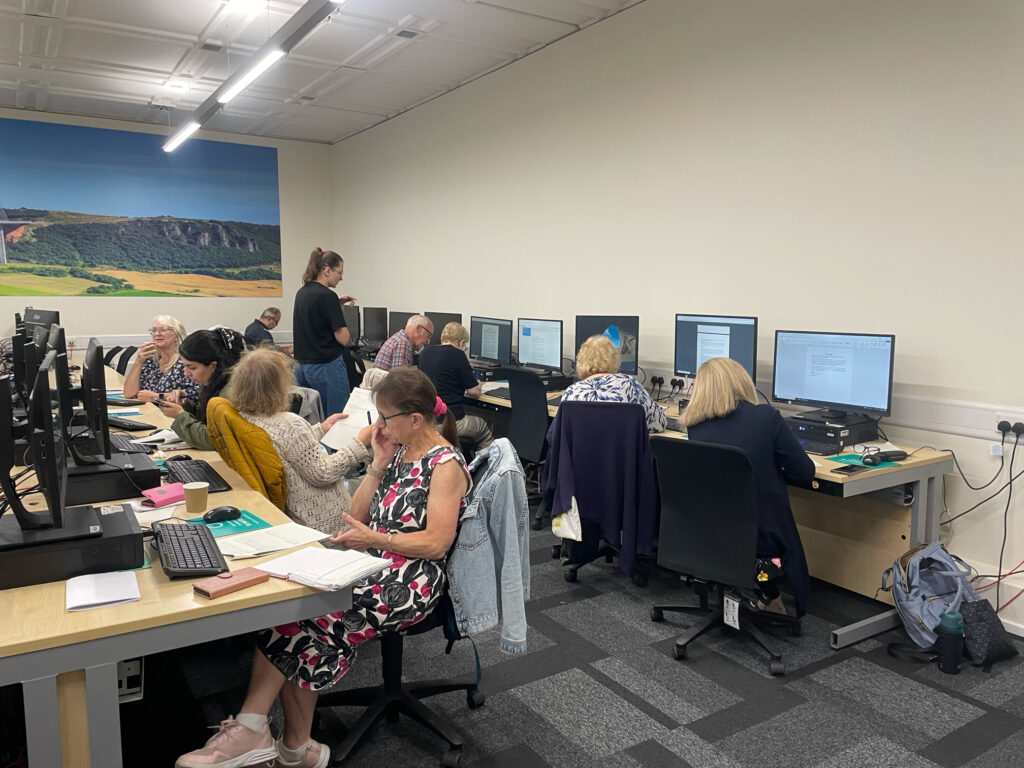
The photo above shows the participants and the instructor, Acka, on the first day of the workshop.

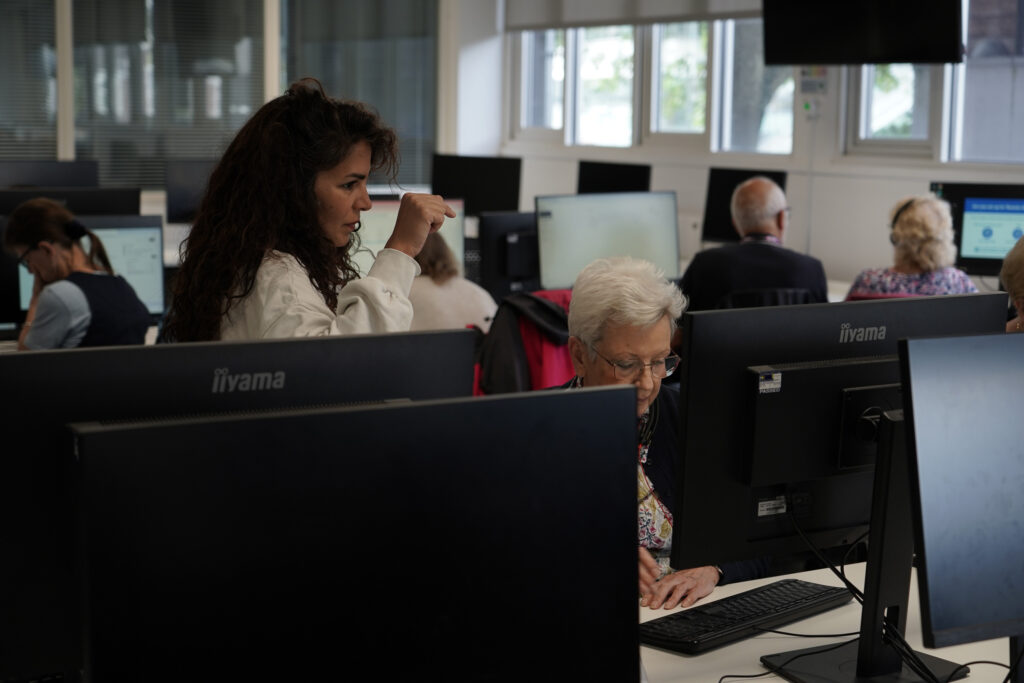
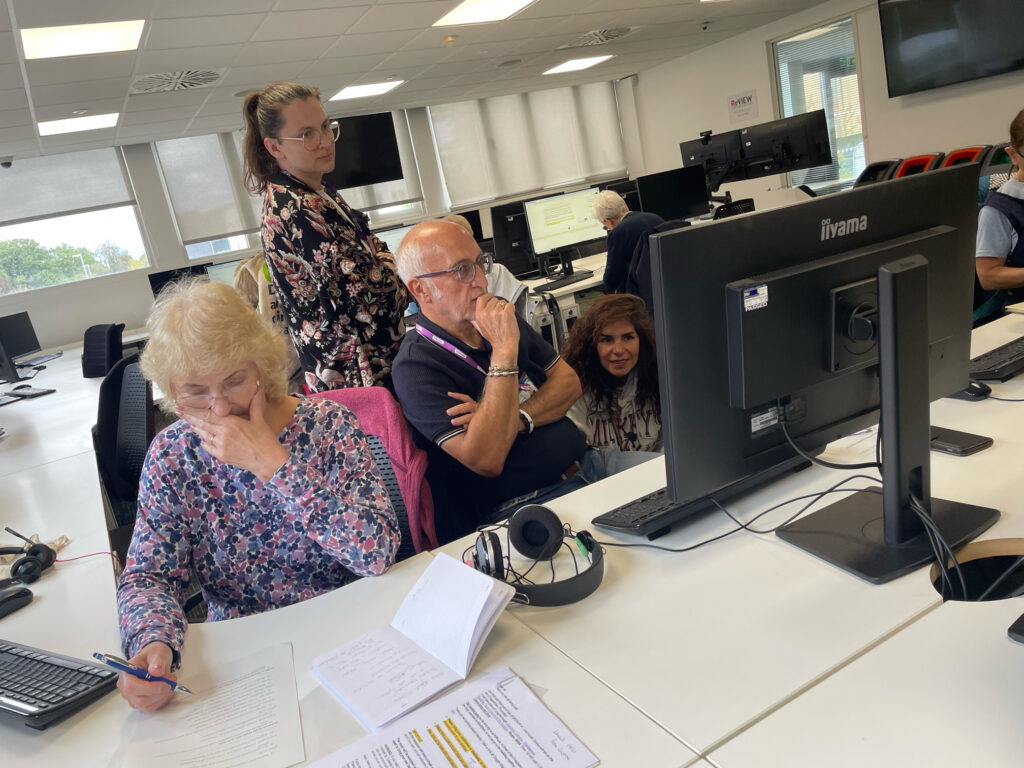
As part of the development of the Heritage Stories Scoping Project, the Loughborough Library Local Studies Volunteer Group (LLLSVG) has shown a keen interest in becoming more autonomous and enhancing their software skills. Inspired by the success of StoryMaps created in collaboration with the TOWN Observatory team, the group expressed a desire to learn new digital storytelling techniques. Recognising this enthusiasm, the TOWN Observatory has actively supported their goals, starting with a tailored 3-session workshop focused on creating AI-generated podcasts and audio stories.

The photo above shows Dr Sara Saravi clarifying questions of one of the participants during the second day of the workshop.

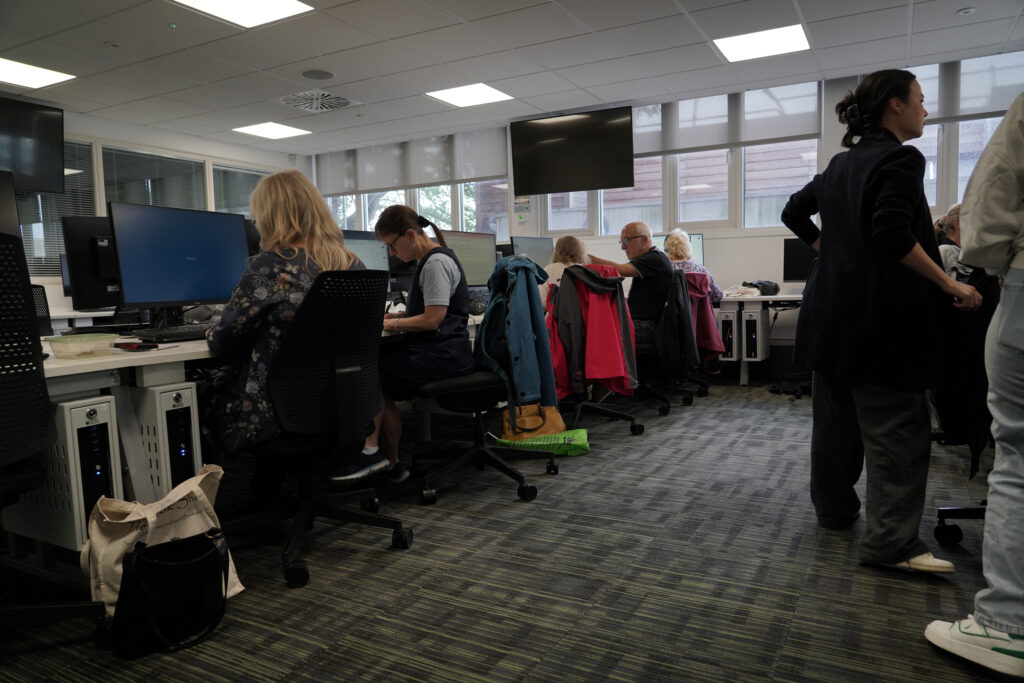
Led by instructor Acka Kruszyc, the workshop brought together 9 participants eager to explore AI-driven storytelling. Over three sessions, they learned how to craft scripts from their own researched and fact-checked texts, and how to use AI voices to bring their stories to life. The involvement of experts, Dr Firat Batmaz and Dr Sara Saravi from the Department of Computer Science added valuable technical guidance, ensuring a comprehensive learning experience. The outcomes of the workshop were highly successful.

Above (read left to right): (1) Dr Sara Saravi and Acka Kruczyk listening to the audio stories created by a participant. (2) Participants engaging with AI tools to create their audio stories. (3) Participants working on their audio stories with Dr Cristina Goldschmidt Kiminami providing guidance and support throughout the session.

The session concluded participants motivated and excited about the countless possibilities that AI and audio storytelling present for their future projects. This milestone not only equipped the LLLSVG with new skills but also opened the door to innovative ways of engaging their activities through storytelling and digital media.

Categories
Blog Events Impact Loughborough University The Impact Hub TOWN Observatory

TOWN Observatory at the Loughborough Heritage Open Weekend

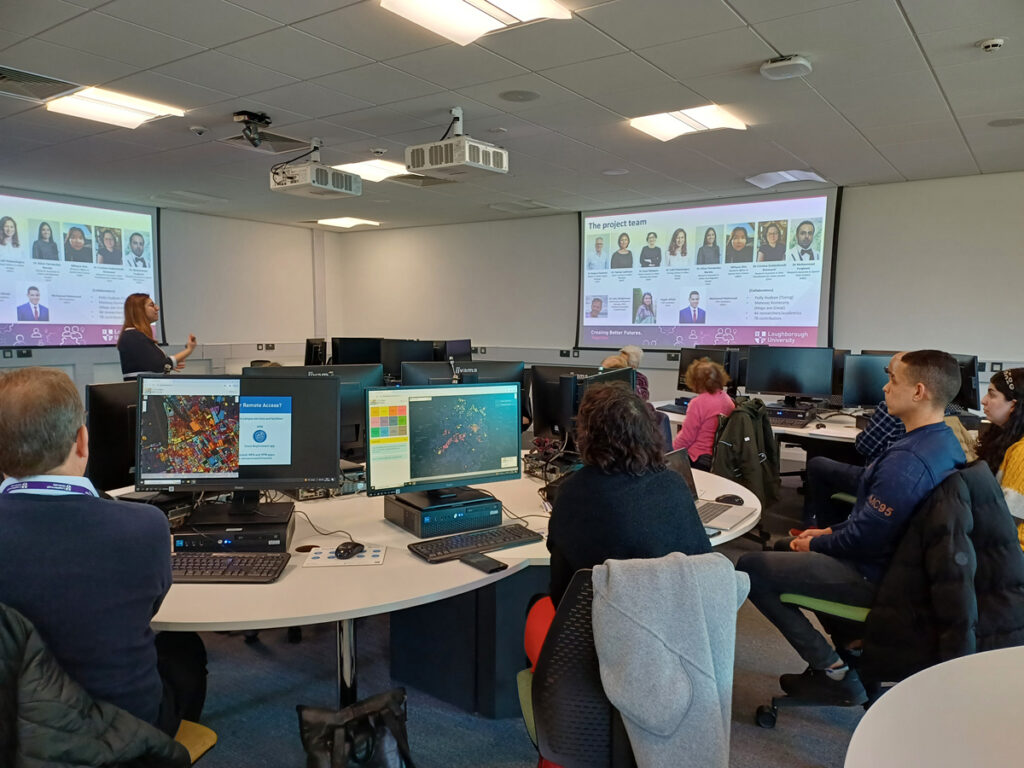
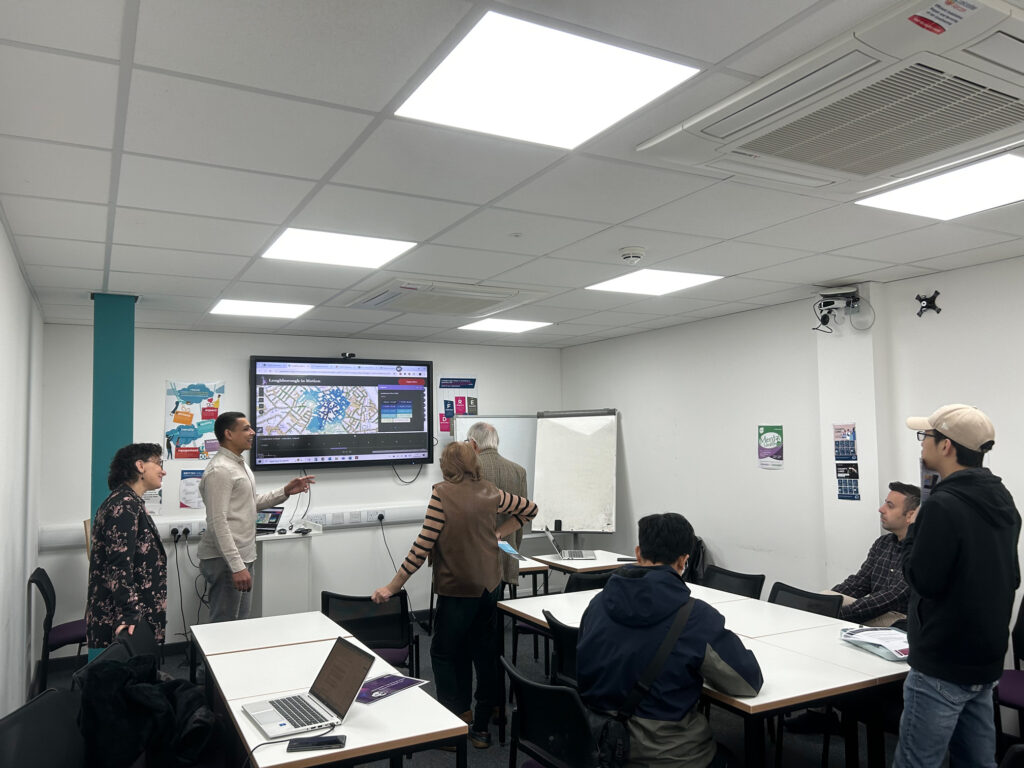
The TOWN Observatory (TO) participated in the Loughborough Heritage Open Weekend held on September 20th and 21st. During the event, the team was based at the Careers and Enterprise Hub, where they showcased the TO project and shared updates on its latest developments.

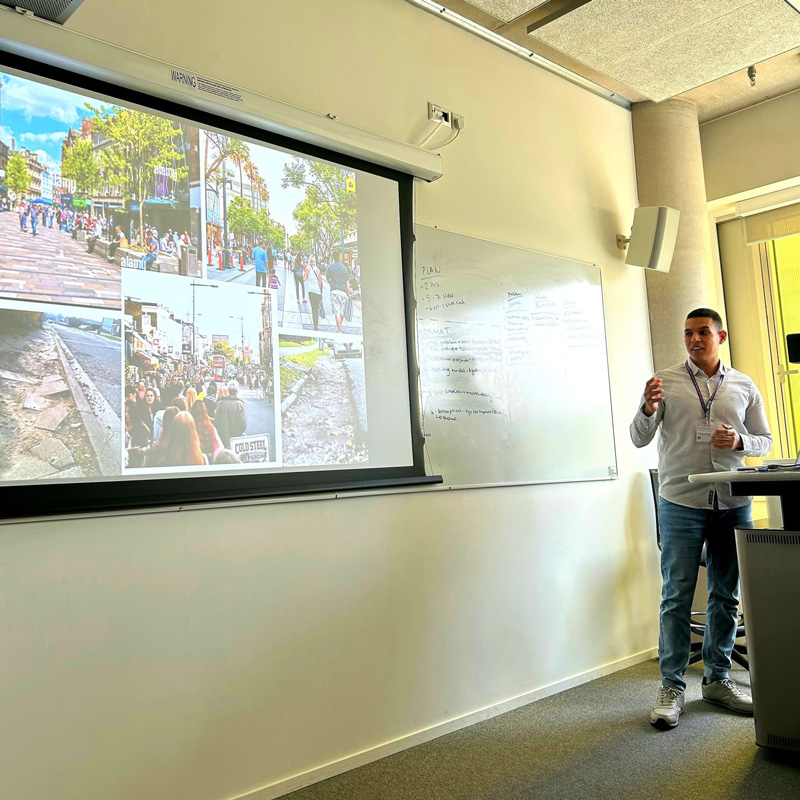
Throughout the weekend, the team offered presentations to the public, highlighting ongoing research and inviting visitors to engage in friendly conversations about the advancements and community involvement associated with the observatory.

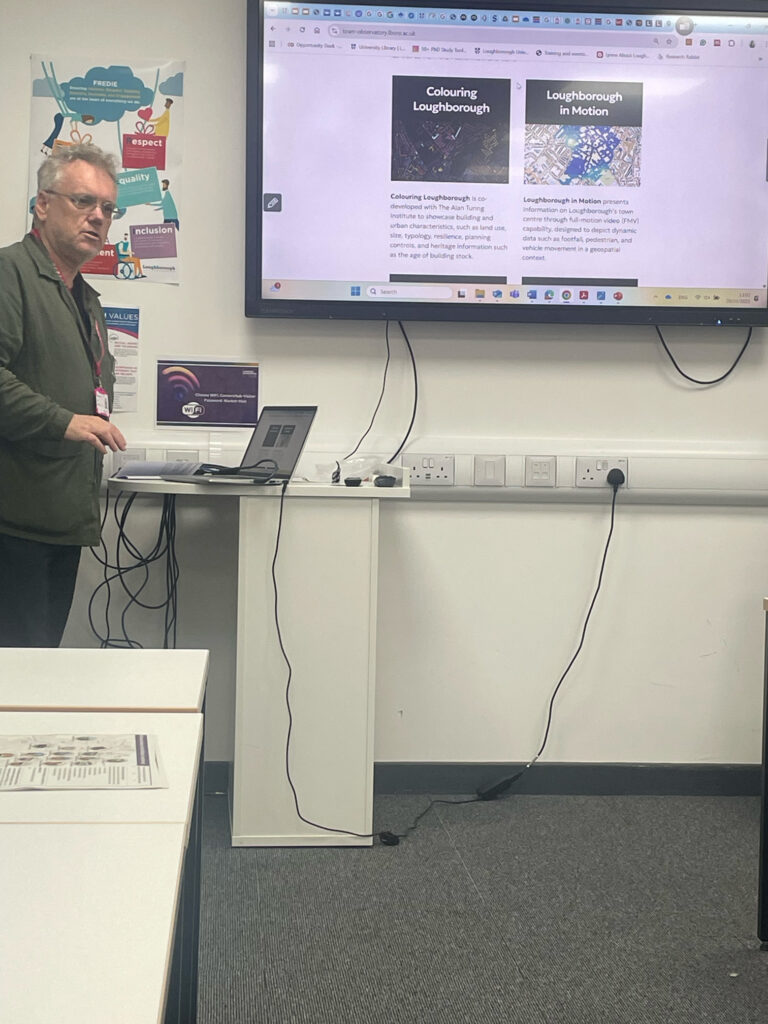
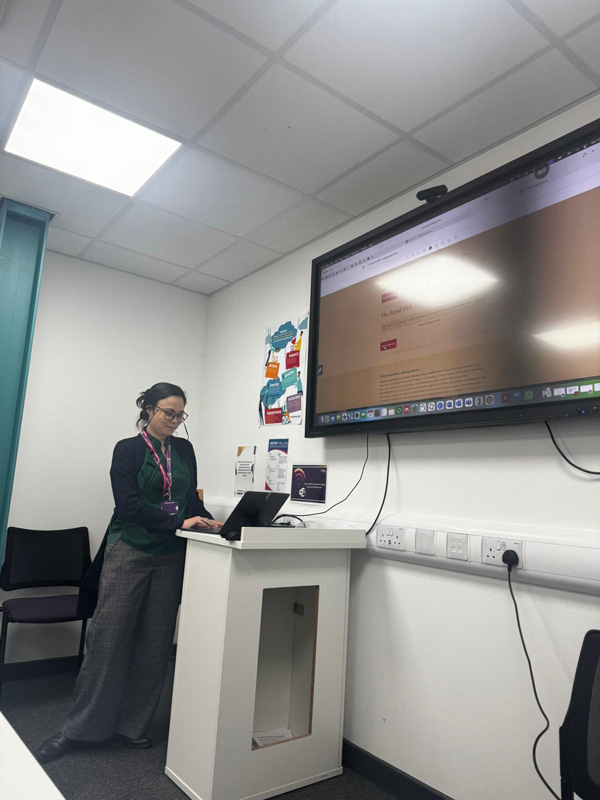
Above (read left to right): (1) Dr Robert Harland presenting the TOWN Observatory; (2) Dr Cristina A G Kiminami presenting the Loughborough Stories platform; (3) Pegah Aftabi presenting about a recent survey on co-creating heritage in Loughborough.

During the event, on Saturday, the TO presented the Loughborough Stories platform, featuring the new Medieval Loughborough initiative undertaken in partnership with the Loughborough Library Local Studies Volunteer Group (LLLSVG). The Heritage Open Weekend also featured an inaugural Medieval Loughborough Walk promoted and hosted by LLLSVG. Following this, the Colouring Loughborough team also shared their work and was available for walk in sessions.

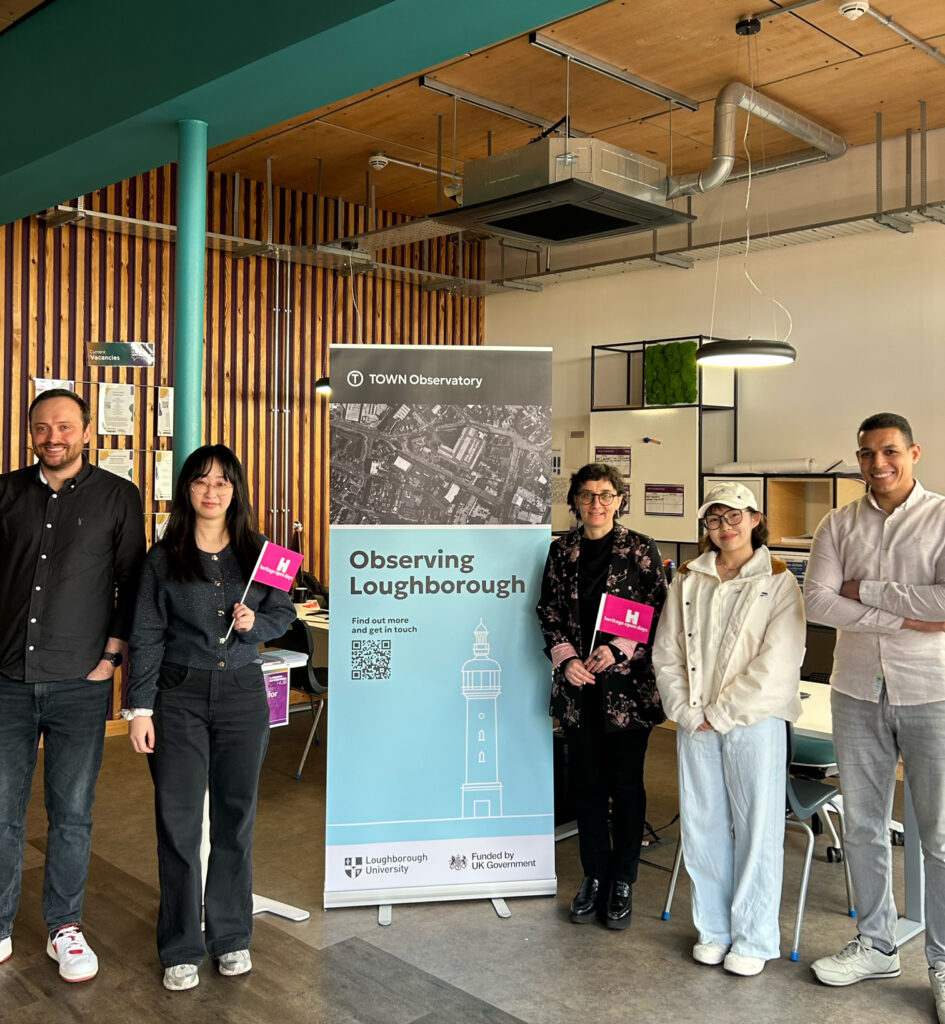
(4) Mihyun Kim, Pegah Aftabi, Dr Cristina A G Kiminami, and Dr Robert Harland at the Careers and Enterprise Hub ready to welcome the public on Saturday

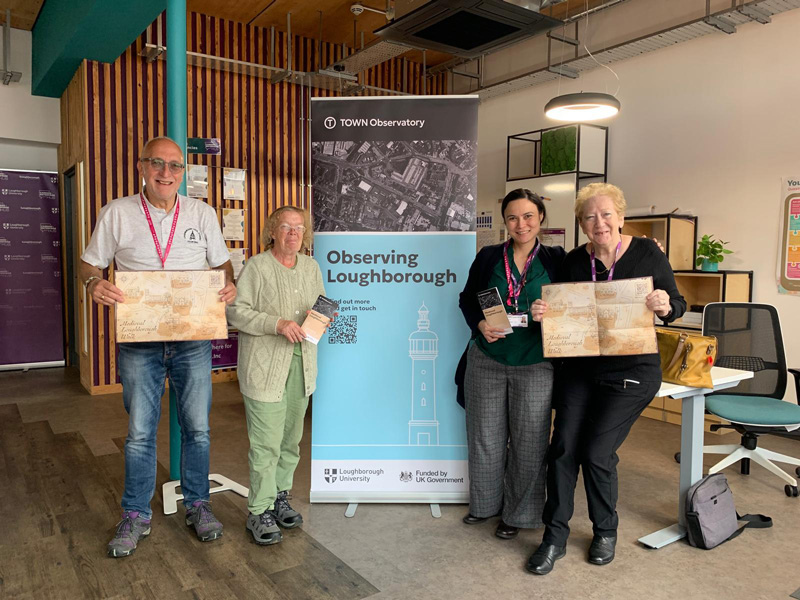
Above (read left to right): (5) David Kirkby, Christina Harris, and Sharon Gray from the LLLSVG team visiting the TOWN Observatory. (6) TOWN Observatory leaflets (including a map) available to the public. (7) The Medieval Loughborough Walk promoted and hosted by LLLSVG

The event also provided the opportunity to showcase innovative PhD research and early findings through interactive mapping activities with the public and ongoing collaborators.

Above (8 and 9): The interactive mapping activity conducted by Pegah Aftabi at the Heritage Open Weekend. This session involved an investigation of communities interactions with listed buildings in Loughborough.

On Sunday, other members of the TOWN Observatory team were present. The main highlights were the sharing of the Loughborough in Motion and Chat Loughborough platforms. Several other doctoral researchers also showcased their work.

Above (read left to right): (10) Matt Beenchey, Tong Chen, Dr Asya Natapov, Wenjie Chen, Mohamed Shamroukh, (11) The TOWN Observatory team presenting the Loughborough in Motion Platform.

Acknowledgements: Thanks to Jill Vincent, Pete Hitchings, Bhavna Patel and John Weightman for their support in facilitating this activity.

Categories
Blog Loughborough in Motion The Impact Hub TOWN Observatory

Computational Urban Planning and Urban Management Conference 2025 (CUPUM)

The 19th International Conference on Computational Urban Planning and Urban Management (CUPUM) was hosted by the Bartlett Centre for Advanced Spatial Analysis (CASA) at UCL from 23 to 27 June 2025.

The conference featured more than 480 presentations and posters, showcasing an impressive breadth of research. A particular highlight was Professor Michael Batty’s keynote on the role of AI in urban planning and design, which provided valuable insights for future research directions. Alongside the formal sessions, workshops and networking events offered excellent opportunities to exchange ideas and explore collaborations.

At CUPUM 2025, the workshop “Visual Intelligence and Urban Perception” was co-led by several facilitators, including Dr. Asaya Natapov and Dr. Mohammad Forghani from the Impact Hub team.

Visual Intelligence and Urban Perception workshops led by Dr Asaya Natapov and Dr. Mohammad Forghani from the Impact Hub team

The session introduced a custom QGIS plugin, POI VizNet, developed for visibility network analysis, and explored how visual accessibility and perceptual connectivity in urban environments can be quantified using spatial data, image analysis, and graph theory. Participants engaged in hands-on exercises with sample datasets to generate visibility networks, calculate centrality measures, and interpret patterns of visual isolation and prominence. The workshop fostered valuable discussions on the role of visibility in shaping urban experience and on how visual intelligence tools can support more inclusive and human-centred planning.

Furhtermore, Mohamed Shamroukh participated in CUPUM 2025, the leading international conference on Computational Urban Planning and Urban Management. He presented his paper “Spatio-temporal analysis of pedestrian activity in Loughborough using Wi-Fi data”, co-authored with Asya Natapov and Taimaz Larimian, in a session chaired by Duncan Wilson (UCL CASA).

Mohamed Shamroukh presenting his research “Spatio-temporal analysis of pedestrian activity in Loughborough using Wi-Fi data” at CUPUM 2025
Categories
Blog Impact PhD The Impact Hub TOWN Observatory

DC Summer Showcase 2025, Loughborough University

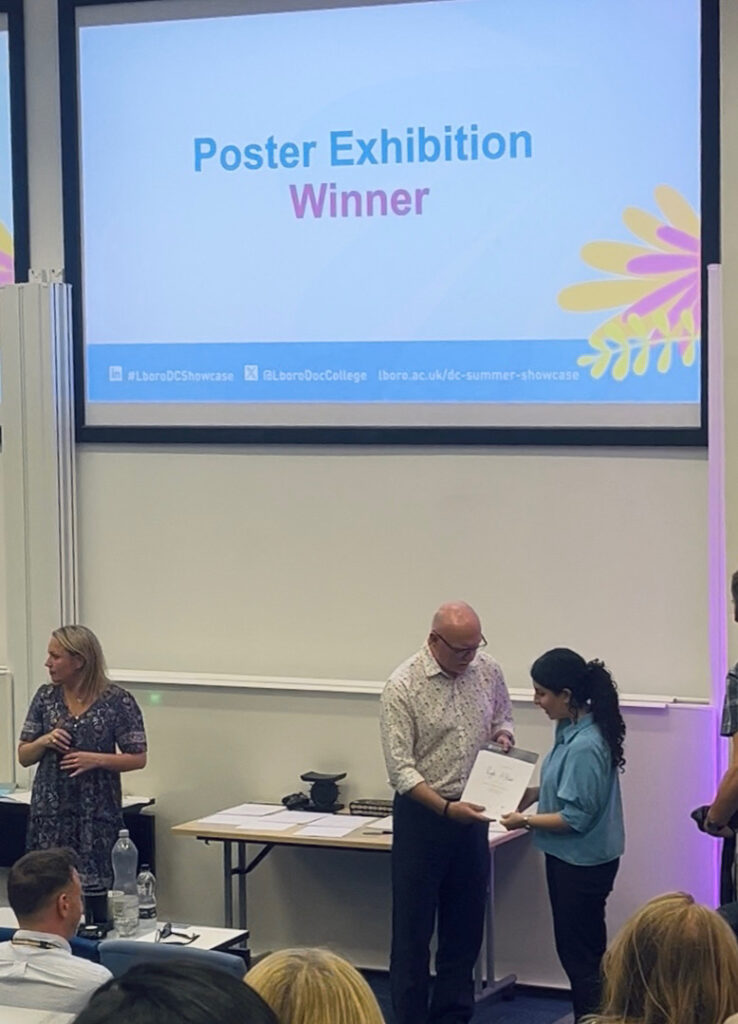
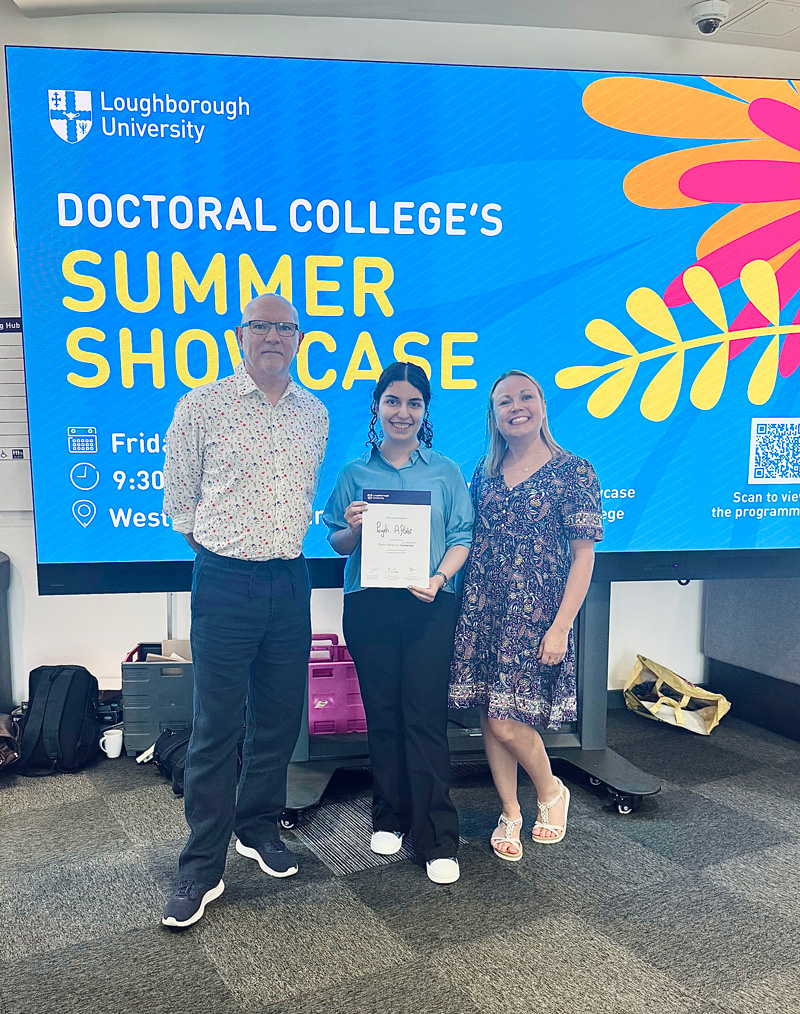
The Doctoral College’s Summer Showcase 2025 took place at Loughborough University on June 20th. This event was organised and held by Professor Steve Christie, Dr Katryna Kalawsky, and the Enhanced Academic Practice team at Loughborough University to celebrate the work of doctoral researchers. It featured several categories that encouraged researchers to present their work in creative and accessible formats. TOWN Observatory doctoral researchers, Pegah Aftabi and Mohamed Shamroukh, presented their projects at the session and were honoured with awards for their outstanding work.

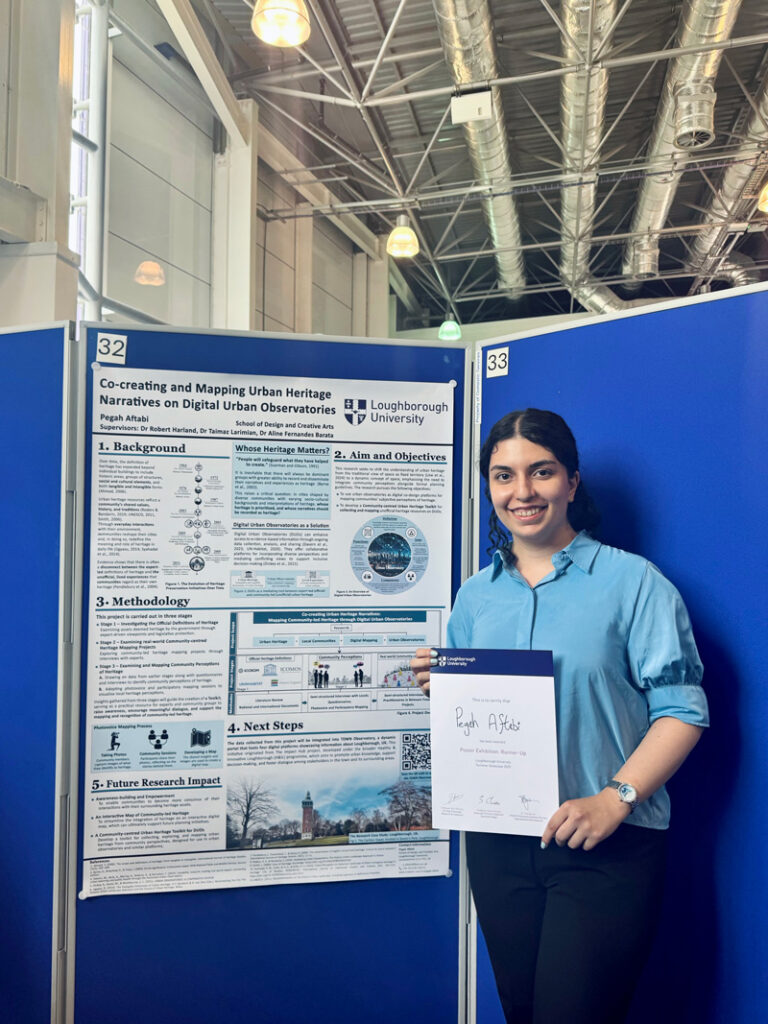
At this even the poster presented by Pegah Aftabi was selected by the judging panel as the winner of the Poster Exhibition at the Doctoral College’s Summer Showcase, chosen from 67 posters presented at the event.

Mohamed Shamroukh presented his poster at the event and won the social media award selected by the audience. He also presented this poster at the SABCE Research Symposium at Loughborough University and won the People’s Choice Award.