
As part of her PhD project, Pegah Aftabi organised a series of creative photography and mapping workshops at John Storer House in Loughborough. The workshops aimed to explore how local communities perceive and define heritage in their everyday environments.
A total of 20 local residents participated in the sessions, which combined creative and participatory methods to document places of personal and collective significance. Using a mobile application, participants photographed meaningful locations across the town and shared short stories explaining their importance.
During the workshops, participants also used colour-coded labels to categorise different types of heritage, such as built heritage (buildings, public spaces, streets, and landmarks), natural heritage (green spaces, landscapes and natural settings), and sociocultural practices (social activities, cultural events, and community meet-up points). The classification process allowed participants to visually organise their inputs and visually map their connections to different places in Loughborough. This activity also created opportunities for participants to meet, discuss, and exchange perspectives on what makes Loughborough special to its residents.

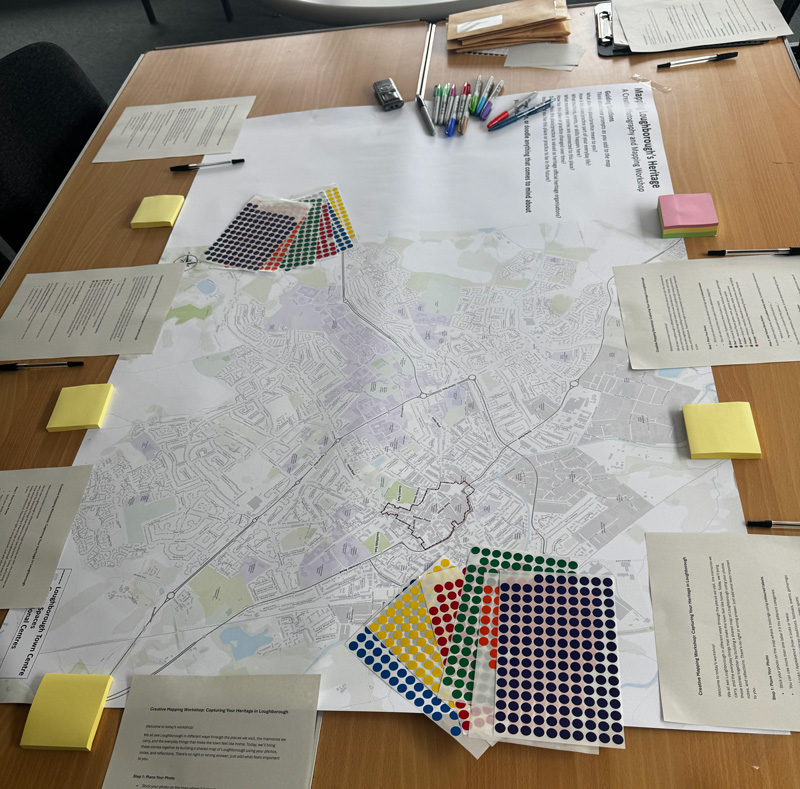
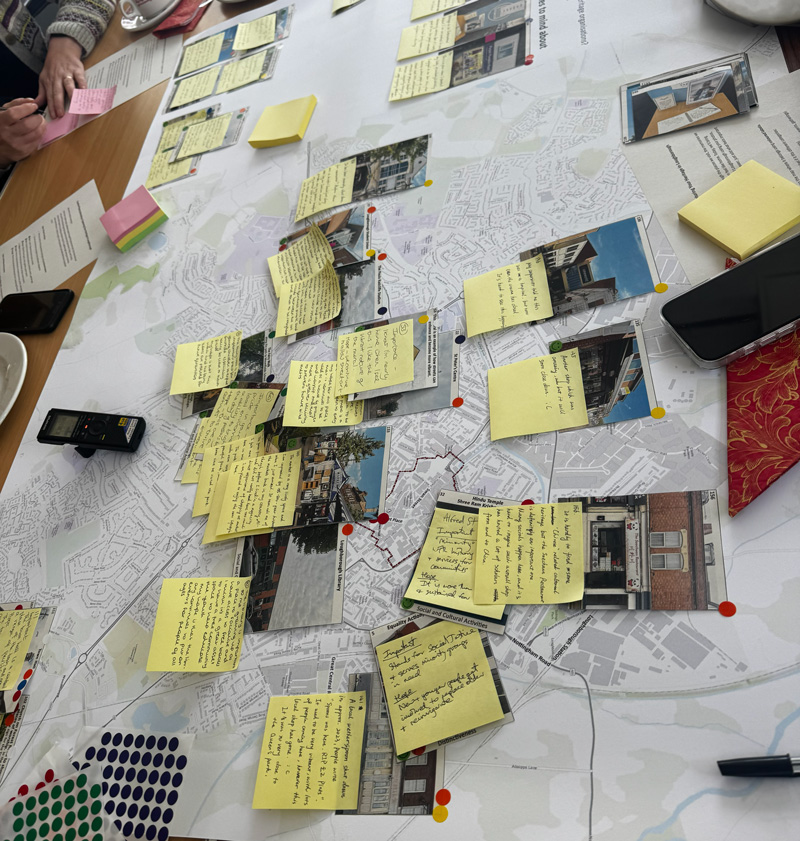
The photos above present part of the maps developed collaboratively using participants’ photos and stories
The workshop series was followed by a feedback exercise to evaluate participants’ experiences and reflect on the process as a collective learning exercise. Insights from this session helped assess the workshop’s effectiveness in encouraging dialogue, collaboration, and a shared understanding of urban heritage in Loughborough.
The collected photographs, stories, and mapped data in this workshop will contribute to a digital map of community-centred heritage in Loughborough. These findings will inform the next stage of Pegah’s research on community-centred approaches to urban heritage and planning.
Find out more about this PhD Project here.