
From 17–20 June 2026, the European Urban Research Association (EURA) Annual Conference was held at Università Iuav di Venezia in Venice, Italy. As part of the conference, Pegah Aftabi, PhD researcher at Loughborough University, presented her research on community-centred approaches to urban heritage.
Her paper, “Rethinking Urban Heritage Inequalities through Participatory Methods: Examining Community Narratives beyond Official Recognition,” was presented as part of her PhD research in the session “Heritage under Overtourism: Reframing the Management of Change in Historic Urban Landscapes,” chaired by Anna Marson and Monica Calcagno.
The session explored how understandings of heritage are changing in response to contemporary social and economic pressures. Particular attention was given to the shift from heritage defined mainly through institutional recognition towards more dynamic processes of heritage-making shaped by citizens and communities. These discussions raised important questions about grassroots heritage practices, citizen-led preservation, and the ways in which community participation can broaden and democratise understandings of cultural value.
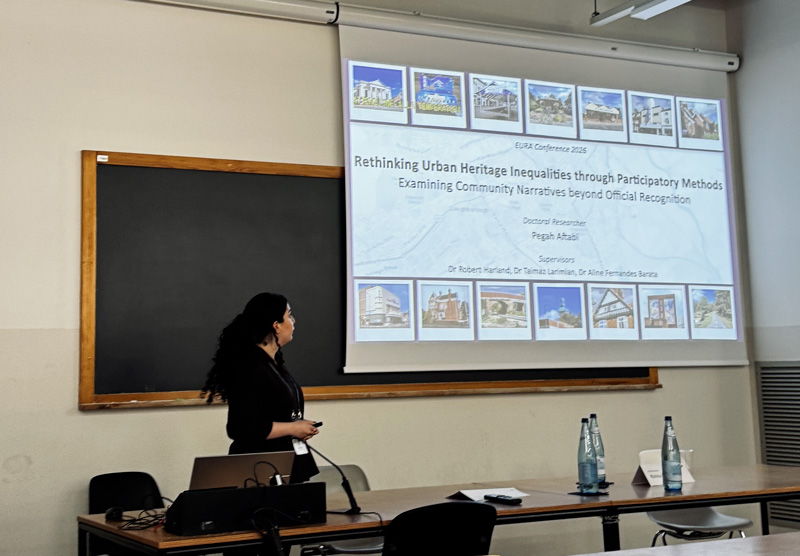
Pegah’s research closely engages with these questions. Her PhD examines how communities identify, value and represent urban heritage, particularly where locally meaningful places, practices and narratives fall outside formal systems of heritage recognition. Through participatory methods, the research considers how community knowledge can contribute to more inclusive approaches to identifying, mapping and representing urban heritage.
The conference also included two plenary sessions featuring keynote contributions from Patrick Le Galès, Jennifer Robinson, Francesco Bandarin and Maria Gravari-Barbas. Their discussions placed questions of heritage within wider debates around urban governance, inequality, tourism and the management of change in cities.
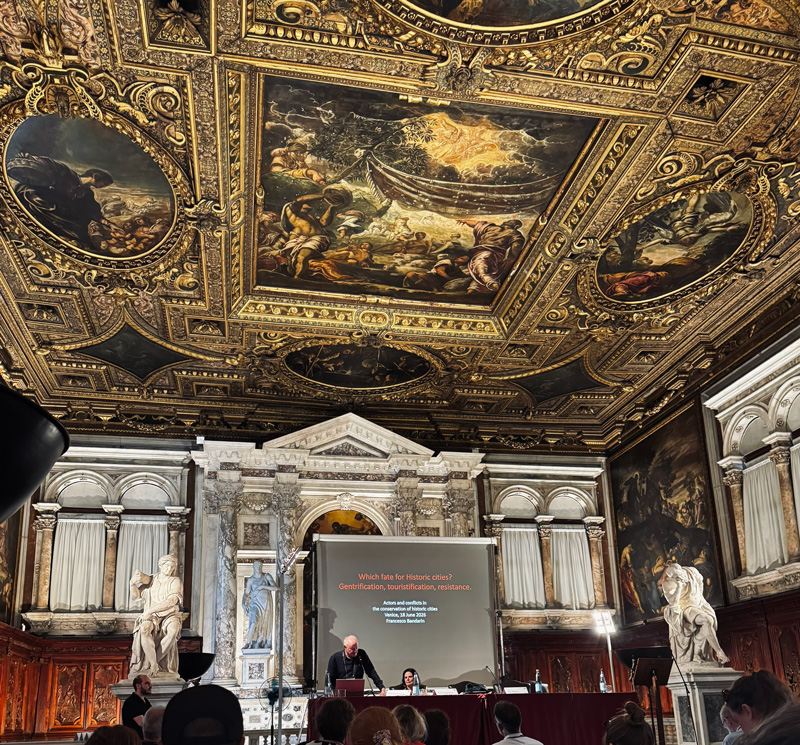
Across the conference, a recurring theme was the central role of communities in shaping how urban heritage is understood and sustained. Pegah’s research similarly argues that community narratives, memories and everyday practices should be recognised as important forms of heritage knowledge, with the potential to inform how historic urban environments are interpreted and managed.
The presentation formed part of the ongoing development of Pegah’s PhD research at Loughborough University, supported by her supervisory team and The Impact Hub project.