
As part of Loughborough University’s ongoing contribution to the Civic Universities Partnership on Arts, Culture and Heritage, a morning event was held on Thursday 10 April 2025 at Loughborough University, School of Design and Creative Arts. This session brought together academics and researchers to share insights into the role of the arts, culture, and heritage within research, education, and civic engagement.
The event began at 09:30 with welcome refreshments, offering an opportunity for networking before the formal programme started at 10:00. Dr Robert Harland started the session by welcoming the audience and providing an overview of the event. The first presenter of the day was Professor Emily Keightley who opened the session by articulating the university’s commitment to vibrant and inclusive communities. Following this, Dr Sam Edwards presented on Heritage, Diplomacy, and Transatlantic Relations: Experiences and Challenges. The third presentation was delivered by Dr Brendan Lawson, whose work examines Using Numbers to Report on Immigration. In the next presentation, Helen Young, from the university’s Library Services, addressed institutional efforts to increase access to our library and archives. Doctoral researcher Pegah Aftabi then presented her research under the title Co-creating Urban Heritage Narratives in Loughborough. Her work explores how heritage can be conceptualised and represented through the lived experiences of local communities, particularly in urban contexts. Finally, Dr Lucy Lopez, Curator of Radar, offered a unique perspective from within the university’s contemporary art programme.

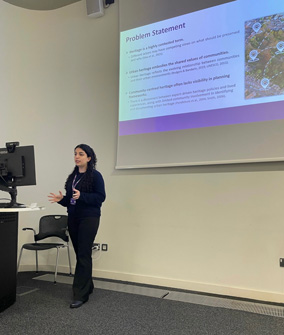
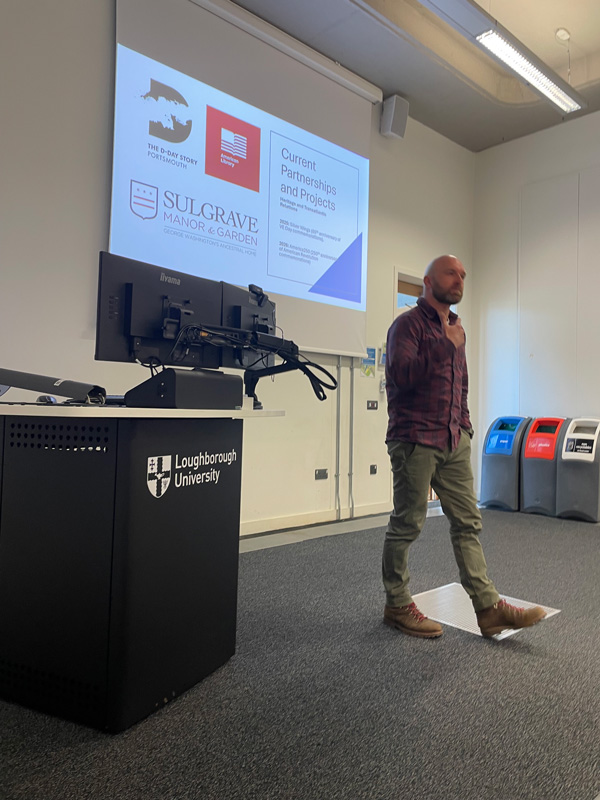

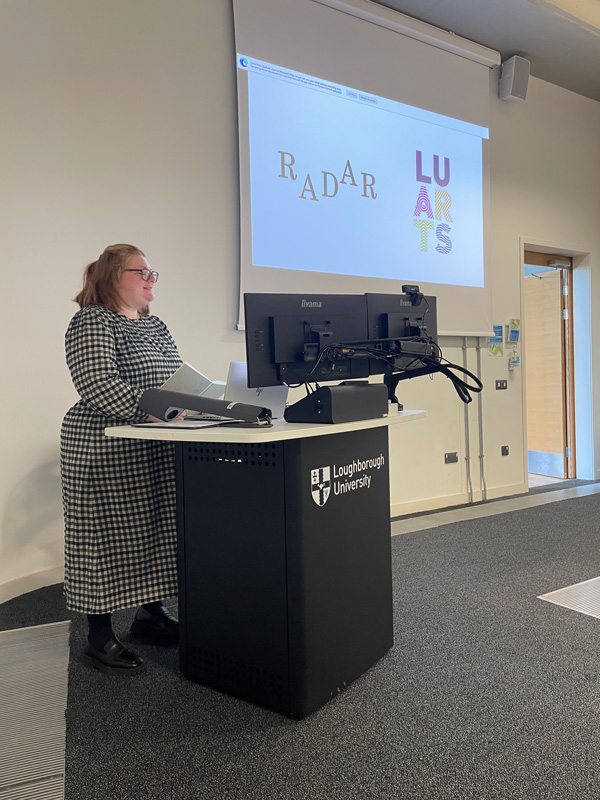
Some of the presenters from Loughborough University
After a short break, the final session was delivered by The Impact Hub research team, under the theme of Mapping Heritage. Dr Robert Harland opened the session by setting the intellectual foundations for the team’s approach to digital mapping. Dr Harland introduced the TOWN Observatory, offering an overview of the broader project and the team members contributing through a range of associated sub-projects. Dr Aline Fernandes Barata followed with a comparative reflection on how heritage is represented across urban observatories in the UK, Brazil, and South Africa. She discussed the different paradigms that inform what is considered ‘heritage’ in each context and how digital platforms must adapt accordingly. Following this, Dr Taimaz Larimian presented how the age and history of buildings in Loughborough are being mapped on the Colouring Loughborough platform. Dr Cristina Kiminami then introduced Heritage Stories, one of the sub-projects featured within the Loughborough Stories platform. She reflected on her experience of working with the Loughborough Local Studies Volunteer Group, whose members actively contributed to the digitisation of the town’s unique and often overlooked heritage.
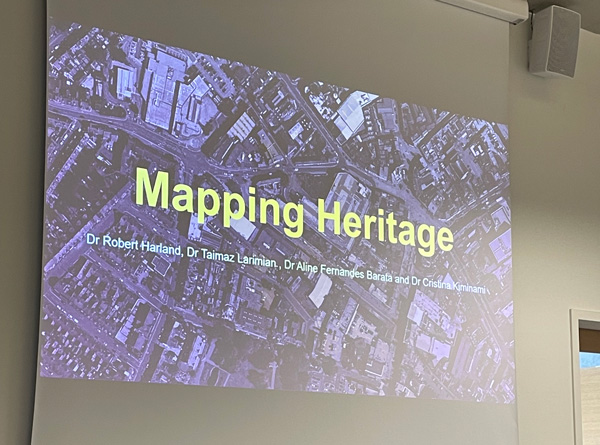
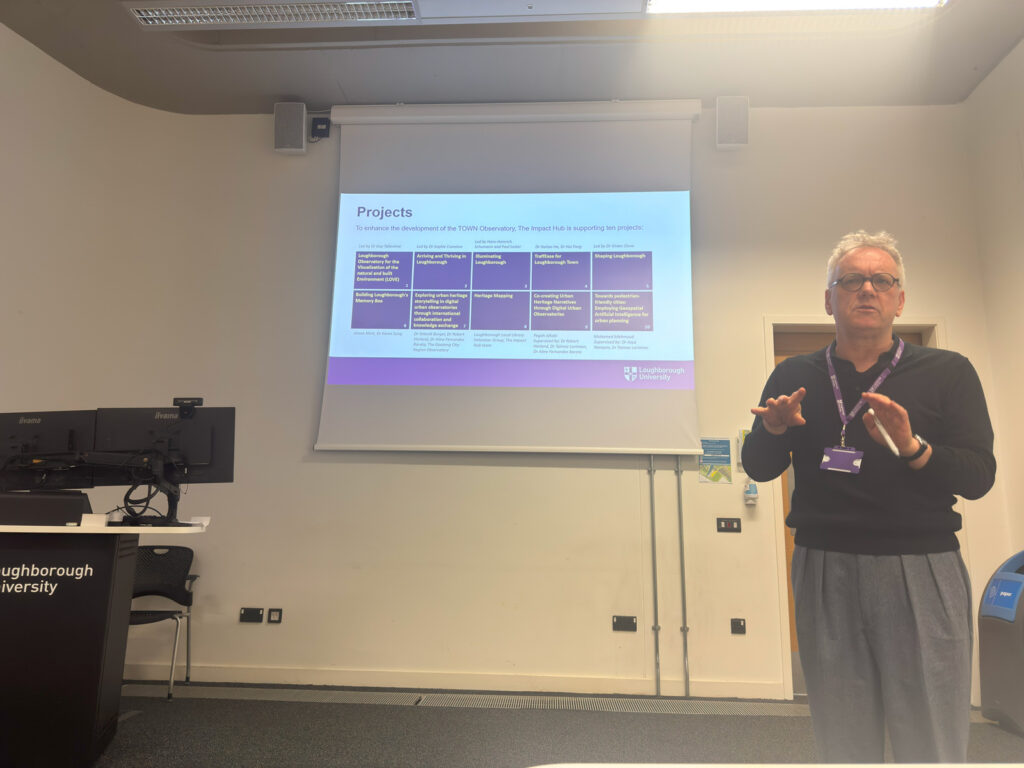
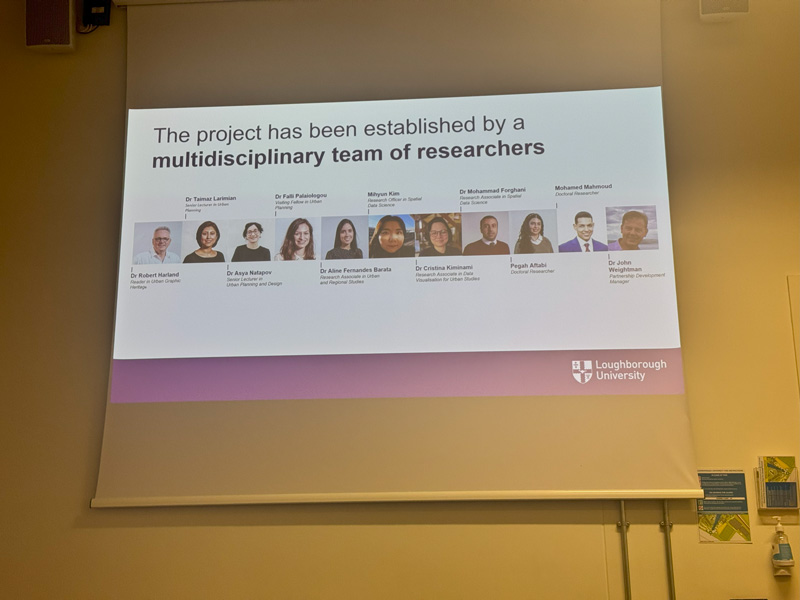


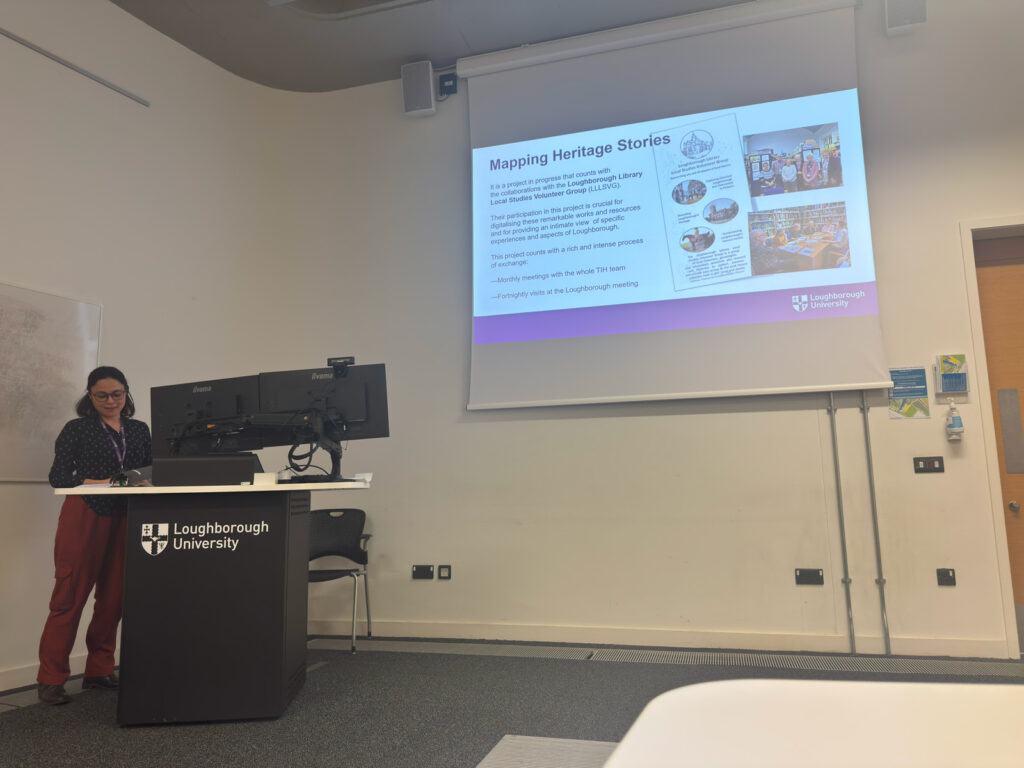
Case study on mapping heritage from The Impact Hub team
The presentations were followed by a half-hour discussion, during which participants were invited to reflect on the regional relevance of the projects and explore opportunities for future collaboration across the Universities Partnership. The event concluded with a networking lunch that provided time for informal dialogue and further exchange among the attendees.

The event stimulated further opportunities to share the extent of Arts, Culture and Heritage activities across the partner organisations in the future.

…
Event review by Pegah Aftabi