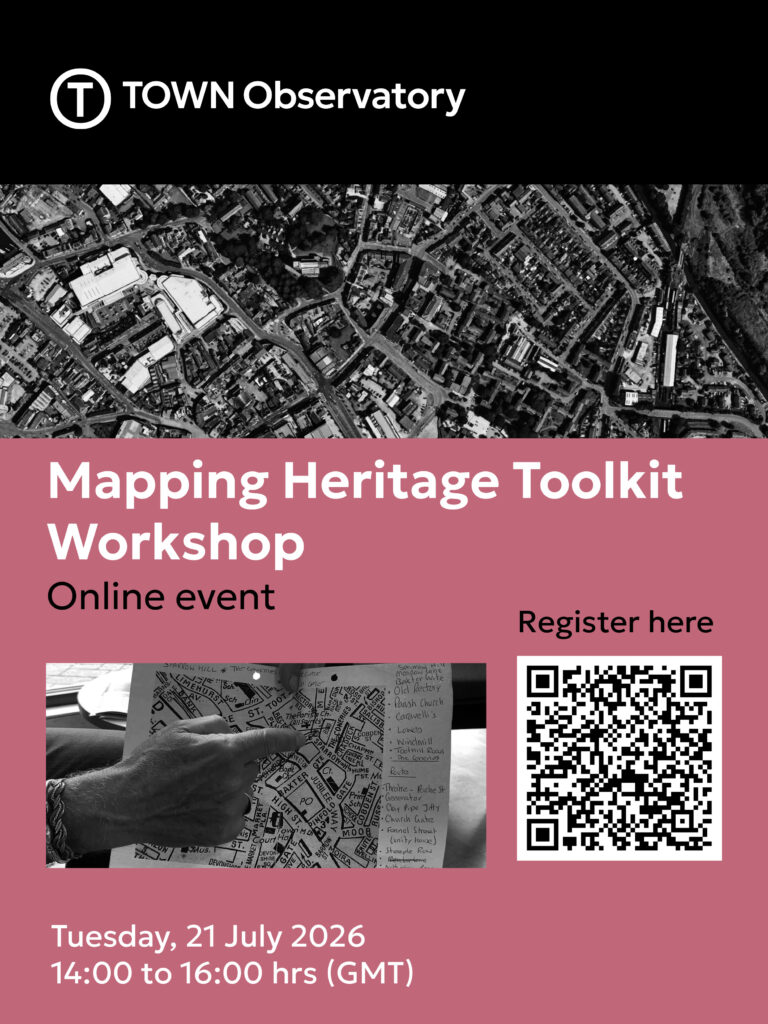
The Mapping Heritage Toolkit Workshop on Tuesday, 21 July, marks the official launch and introduction of the toolkit. If you enjoy local history, lead a community group, or just want to explore how maps and storytelling work together, this toolkit provides a guide through 12 simple steps to co-creating a story map.
The steps were developed by the TOWN Observatory and the Loughborough Library Local Studies Volunteer Group (LLLSVG), drawing on real experience of collaboration to build a story map from the beginning. Each step includes practical examples from LLLSVG projects concerning the Medieval Loughborough trail, Art Deco trail, and the Market Place, to provide insight into how ideas work in practice.
The toolkit presents a clear structure, providing one approach to creating a story map. Each step highlights key points for consideration in the synthesis of local knowledge, analogue resources, idea development, and creative execution using digital platforms.
For details scan the QR code below or register here.
Organising team Dr Robert G. Harland Dr Cristina A. Goldschmidt Kiminami Pegah Aftabi Greta Chen
The TOWN Observatory (TO) participated in the Loughborough Heritage Open Weekend held on September 20th and 21st. During the event, the team was based at the Careers and Enterprise Hub, where they showcased the TO project and shared updates on its latest developments.
Throughout the weekend, the team offered presentations to the public, highlighting ongoing research and inviting visitors to engage in friendly conversations about the advancements and community involvement associated with the observatory.
(1)(2)(3)
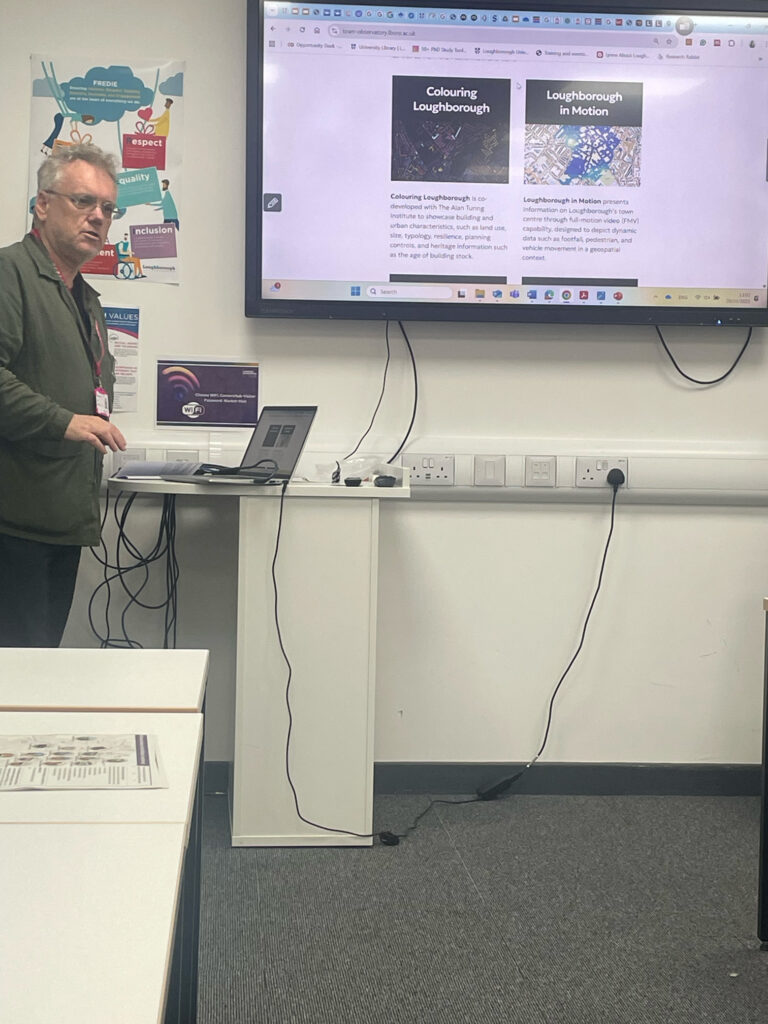
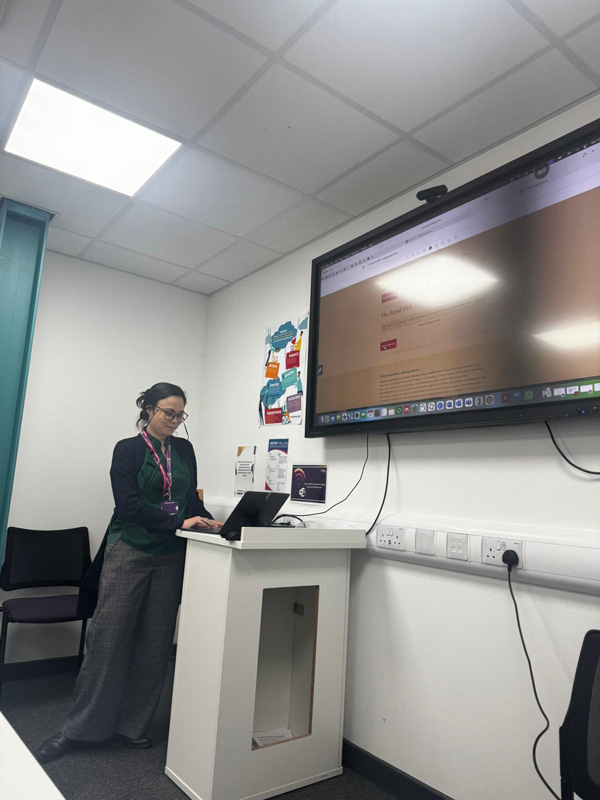
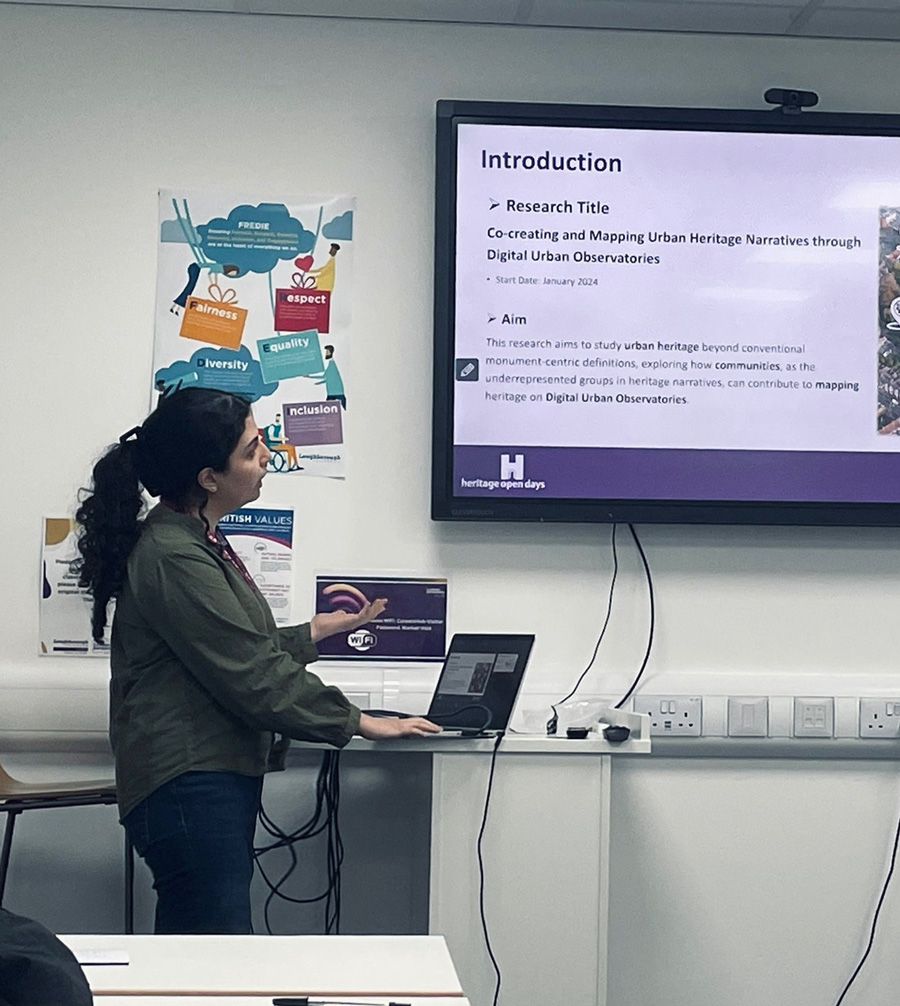
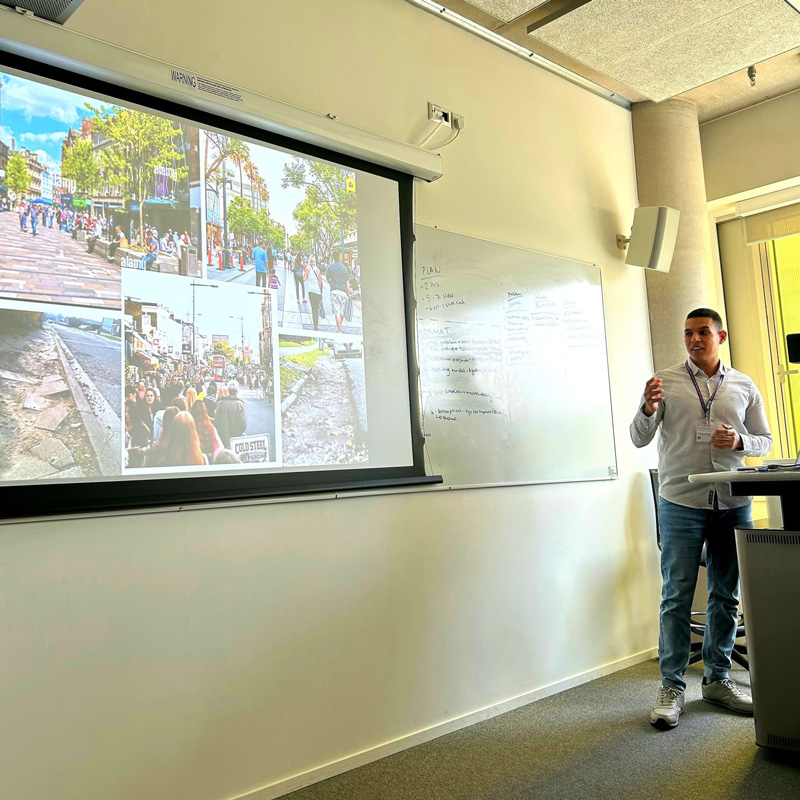
Above (read left to right): (1) Dr Robert Harland presenting the TOWN Observatory; (2) Dr Cristina A G Kiminami presenting the Loughborough Stories platform; (3) Pegah Aftabi presenting about a recent survey on co-creating heritage in Loughborough.
During the event, on Saturday, the TO presented the Loughborough Stories platform, featuring the new Medieval Loughborough initiative undertaken in partnership with the Loughborough Library Local Studies Volunteer Group (LLLSVG). The Heritage Open Weekend also featured an inaugural Medieval Loughborough Walk promoted and hosted by LLLSVG. Following this, the Colouring Loughborough team also shared their work and was available for walk in sessions.
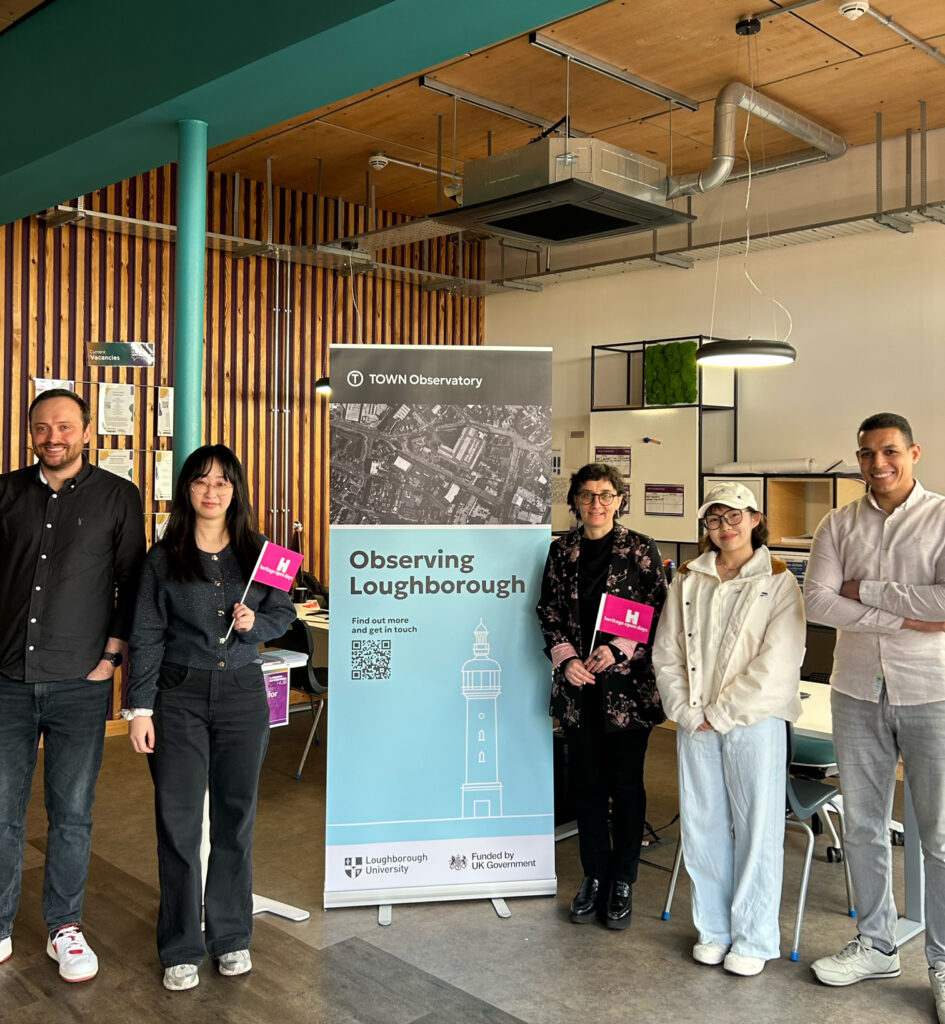
(4) Mihyun Kim, Pegah Aftabi, Dr Cristina A G Kiminami, and Dr Robert Harland at the Careers and Enterprise Hub ready to welcome the public on Saturday
(5)(6)(7)
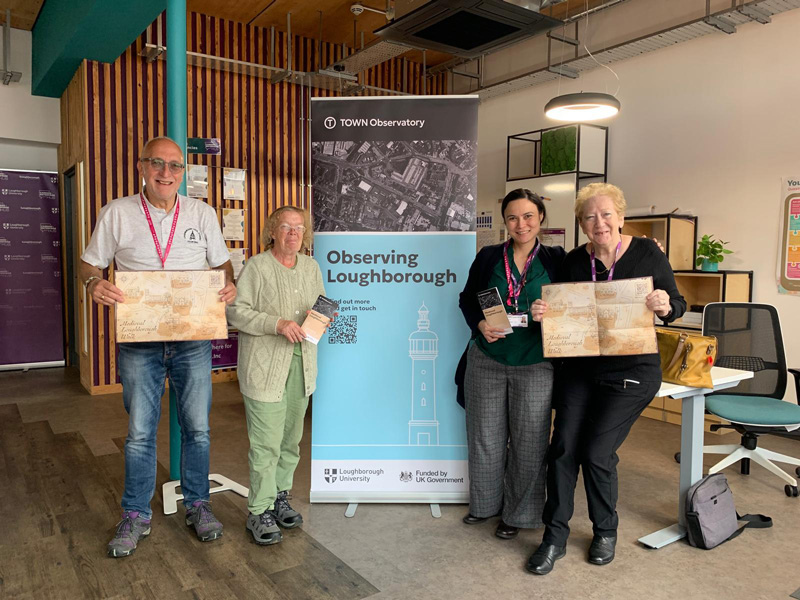
Above (read left to right):(5) David Kirkby, Christina Harris, and Sharon Gray from the LLLSVG team visiting the TOWN Observatory. (6) TOWN Observatory leaflets (including a map) available to the public. (7) The Medieval Loughborough Walk promoted and hosted by LLLSVG
The event also provided the opportunity to showcase innovative PhD research and early findings through interactive mapping activities with the public and ongoing collaborators.
(8)(9)
Above (8 and 9): The interactive mapping activity conducted by Pegah Aftabi at the Heritage Open Weekend. This session involved an investigation of communities interactions with listed buildings in Loughborough.
On Sunday, other members of the TOWN Observatory team were present. The main highlights were the sharing of the Loughborough in Motion and Chat Loughborough platforms. Several other doctoral researchers also showcased their work.
(10)(11)
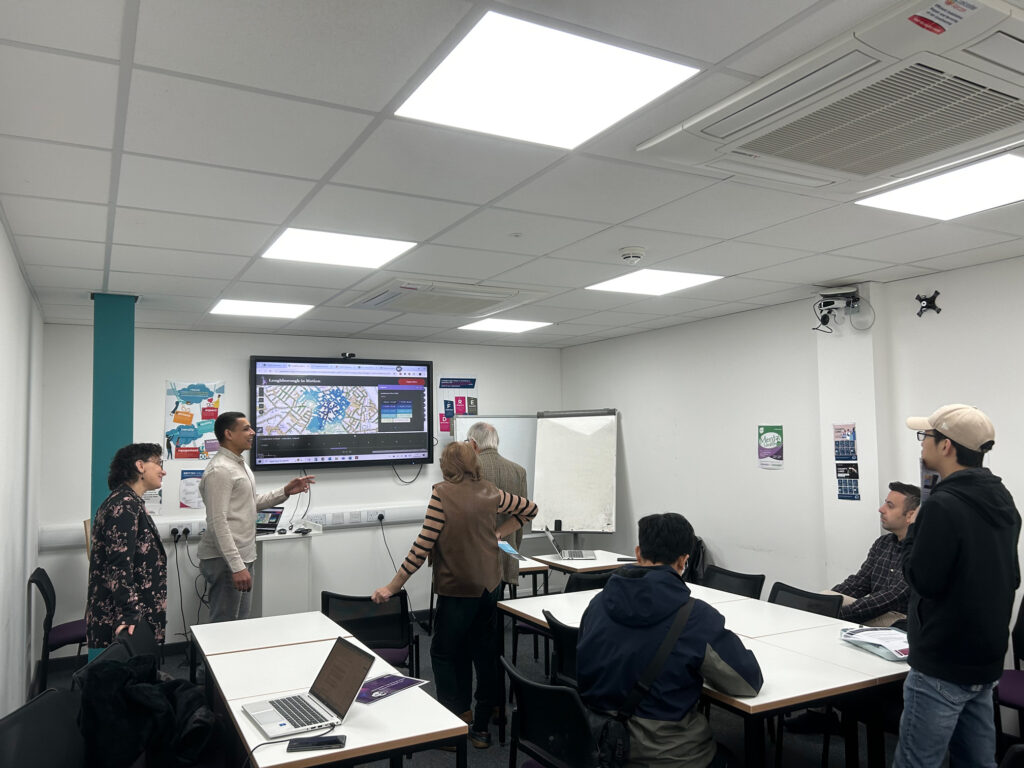
Above (read left to right): (10) Matt Beenchey, Tong Chen, Dr Asya Natapov, Wenjie Chen, Mohamed Shamroukh, (11) The TOWN Observatory team presenting the Loughborough in Motion Platform.
Acknowledgements: Thanks to Jill Vincent, Pete Hitchings, Bhavna Patel and John Weightman for their support in facilitating this activity.
The 19th International Conference on Computational Urban Planning and Urban Management (CUPUM) was hosted by the Bartlett Centre for Advanced Spatial Analysis (CASA) at UCL from 23 to 27 June 2025.
The conference featured more than 480 presentations and posters, showcasing an impressive breadth of research. A particular highlight was Professor Michael Batty’s keynote on the role of AI in urban planning and design, which provided valuable insights for future research directions. Alongside the formal sessions, workshops and networking events offered excellent opportunities to exchange ideas and explore collaborations.
At CUPUM 2025, the workshop “Visual Intelligence and Urban Perception” was co-led by several facilitators, including Dr. Asaya Natapov and Dr. Mohammad Forghani from the Impact Hub team.
Visual Intelligence and Urban Perception workshops led by Dr Asaya Natapov and Dr. Mohammad Forghani from the Impact Hub team
The session introduced a custom QGIS plugin, POI VizNet, developed for visibility network analysis, and explored how visual accessibility and perceptual connectivity in urban environments can be quantified using spatial data, image analysis, and graph theory. Participants engaged in hands-on exercises with sample datasets to generate visibility networks, calculate centrality measures, and interpret patterns of visual isolation and prominence. The workshop fostered valuable discussions on the role of visibility in shaping urban experience and on how visual intelligence tools can support more inclusive and human-centred planning.
Furhtermore, Mohamed Shamroukh participated in CUPUM 2025, the leading international conference on Computational Urban Planning and Urban Management. He presented his paper “Spatio-temporal analysis of pedestrian activity in Loughborough using Wi-Fi data”, co-authored with Asya Natapov and Taimaz Larimian, in a session chaired by Duncan Wilson (UCL CASA).
Mohamed Shamroukh presenting his research “Spatio-temporal analysis of pedestrian activity in Loughborough using Wi-Fi data” at CUPUM 2025
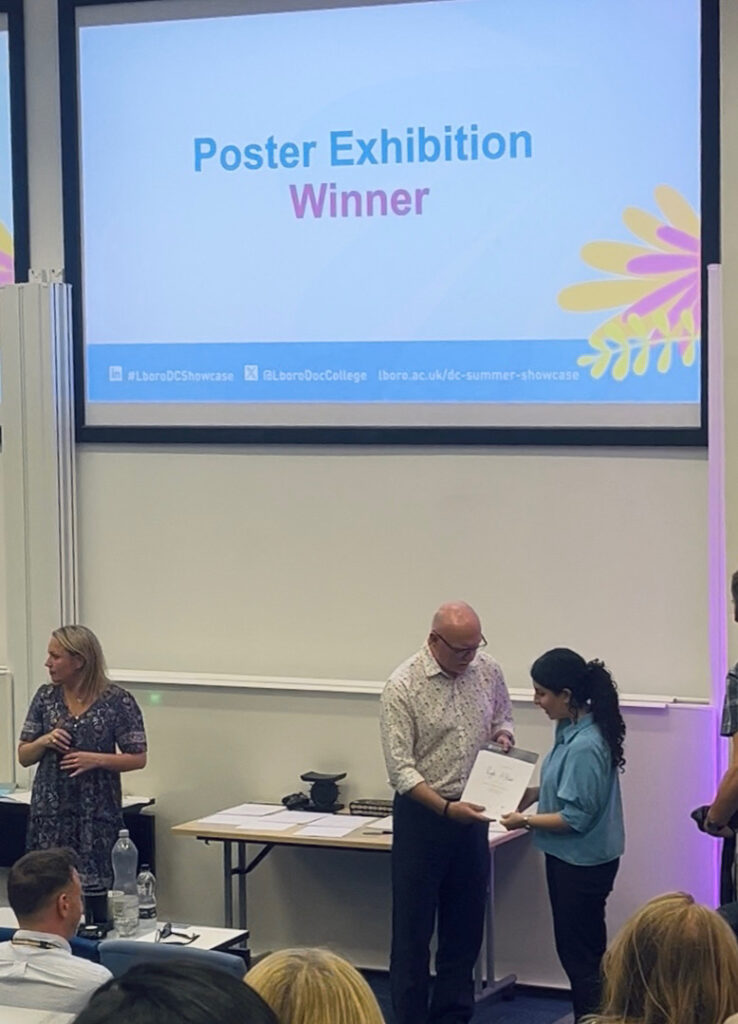
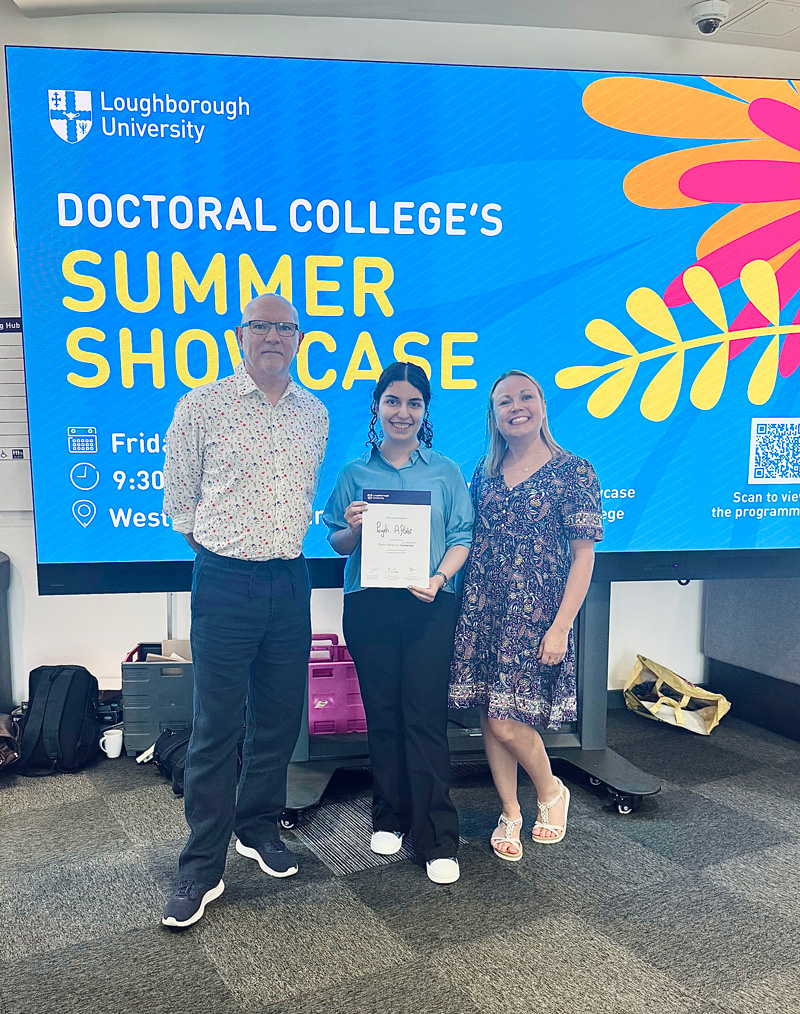
The Doctoral College’s Summer Showcase 2025 took place at Loughborough University on June 20th. This event was organised and held by Professor Steve Christie, Dr Katryna Kalawsky, and the Enhanced Academic Practice team at Loughborough University to celebrate the work of doctoral researchers. It featured several categories that encouraged researchers to present their work in creative and accessible formats. TOWN Observatory doctoral researchers, Pegah Aftabi and Mohamed Shamroukh, presented their projects at the session and were honoured with awards for their outstanding work.
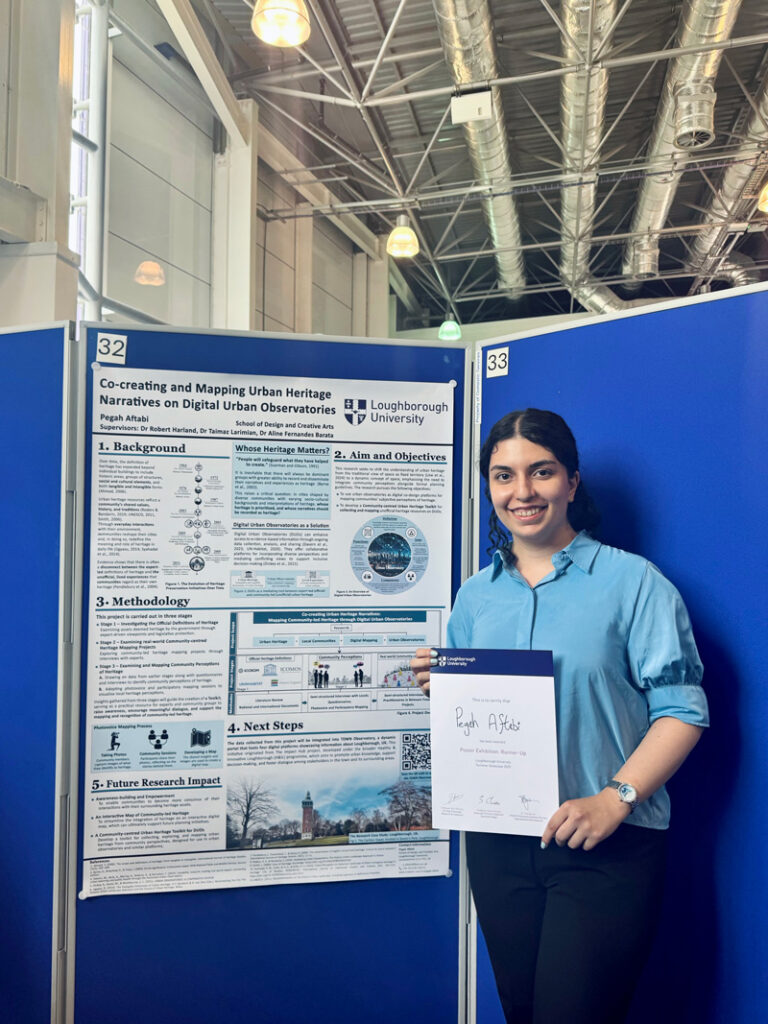
At this even the poster presented by Pegah Aftabi was selected by the judging panel as the winner of the Poster Exhibition at the Doctoral College’s Summer Showcase, chosen from 67 posters presented at the event.
The poster presented by Pegah Aftabi based on her research titled Co-creating and Mapping Urban Heritage Narratives on Digital Urban Observatories
Mohamed Shamroukh presented his poster at the event and won the social media award selected by the audience. He also presented this poster at the SABCE Research Symposium at Loughborough University and won the People’s Choice Award.
The poster presented by Mohamed Shamroukh based on his research titled Towards Pedestrian-Friendly Cities: Employing Geospatial Artificial Intelligence for Urban Planning
As part of Loughborough University’s ongoing contribution to the Civic Universities Partnership on Arts, Culture and Heritage, a morning event was held on Thursday 10 April 2025 at Loughborough University, School of Design and Creative Arts. This session brought together academics and researchers to share insights into the role of the arts, culture, and heritage within research, education, and civic engagement.
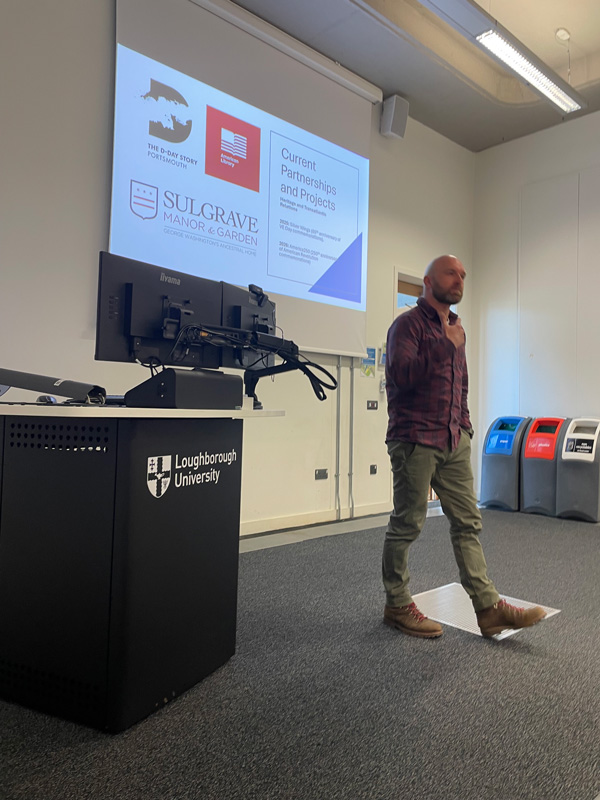
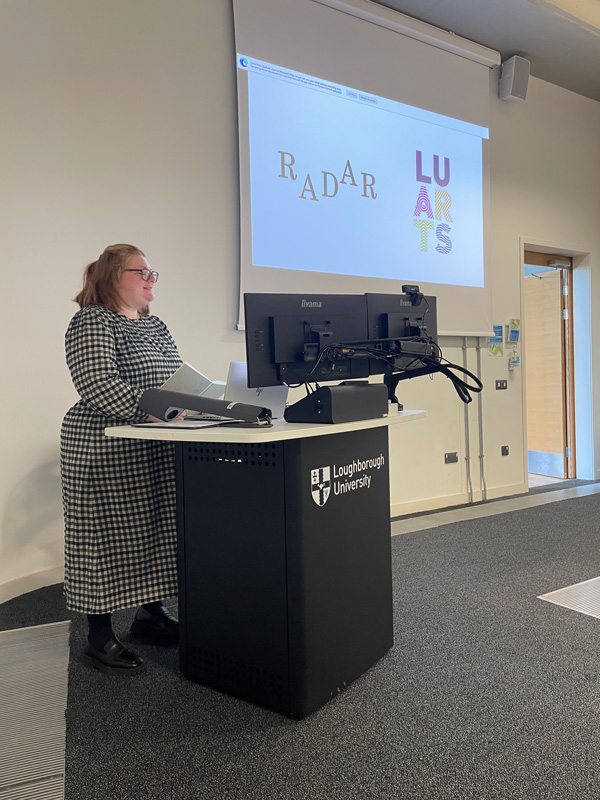
The event began at 09:30 with welcome refreshments, offering an opportunity for networking before the formal programme started at 10:00. Dr Robert Harland started the session by welcoming the audience and providing an overview of the event. The first presenter of the day was Professor Emily Keightley who opened the session by articulating the university’s commitment to vibrant and inclusive communities. Following this, Dr Sam Edwards presented on Heritage, Diplomacy, and Transatlantic Relations: Experiences and Challenges. The third presentation was delivered by Dr Brendan Lawson, whose work examines Using Numbers to Report on Immigration. In the next presentation, Helen Young, from the university’s Library Services, addressed institutional efforts to increase access to our library and archives. Doctoral researcher Pegah Aftabi then presented her research under the title Co-creating Urban Heritage Narratives in Loughborough. Her work explores how heritage can be conceptualised and represented through the lived experiences of local communities, particularly in urban contexts. Finally, Dr Lucy Lopez, Curator of Radar, offered a unique perspective from within the university’s contemporary art programme.
Some of the presenters from Loughborough University
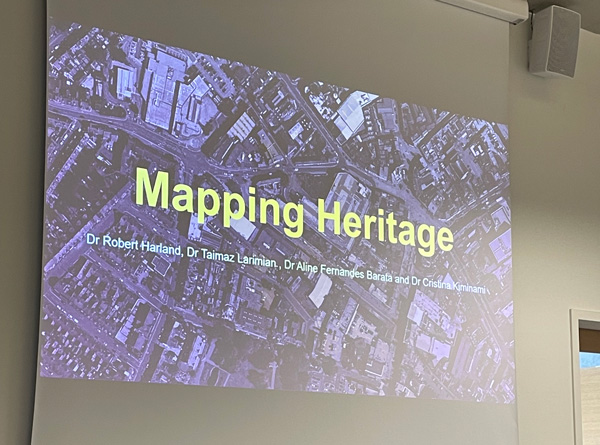
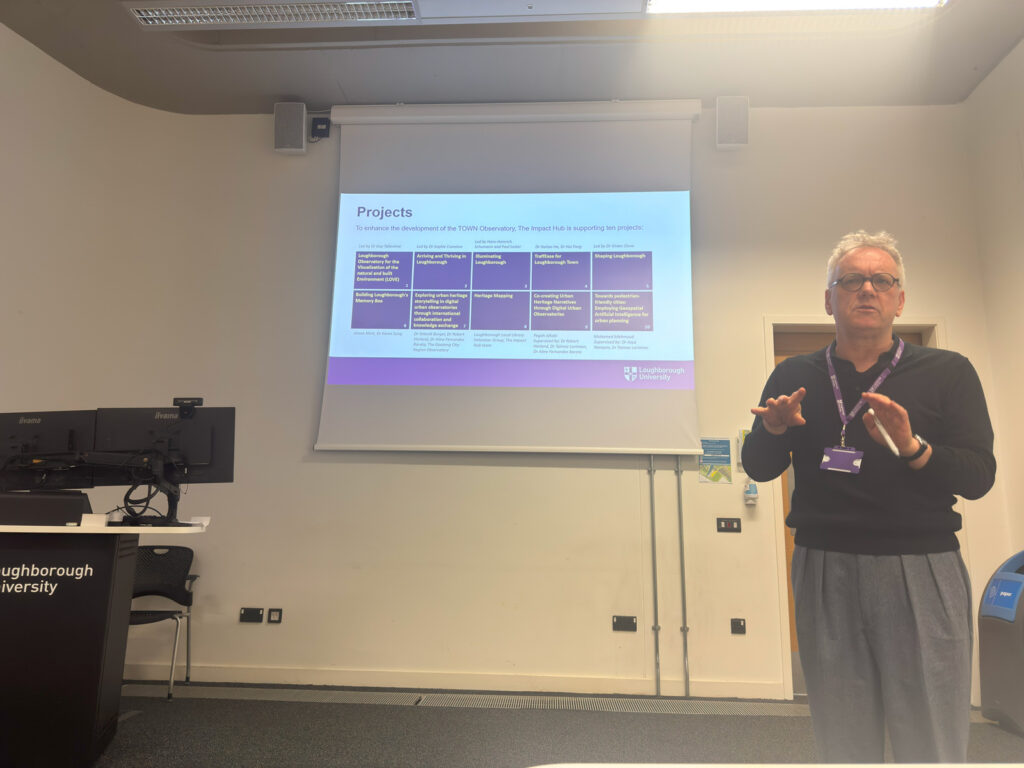
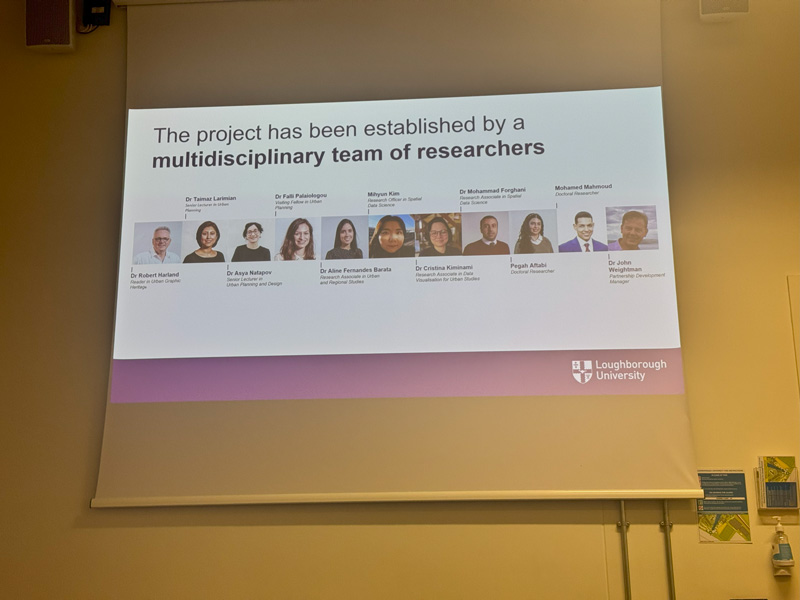
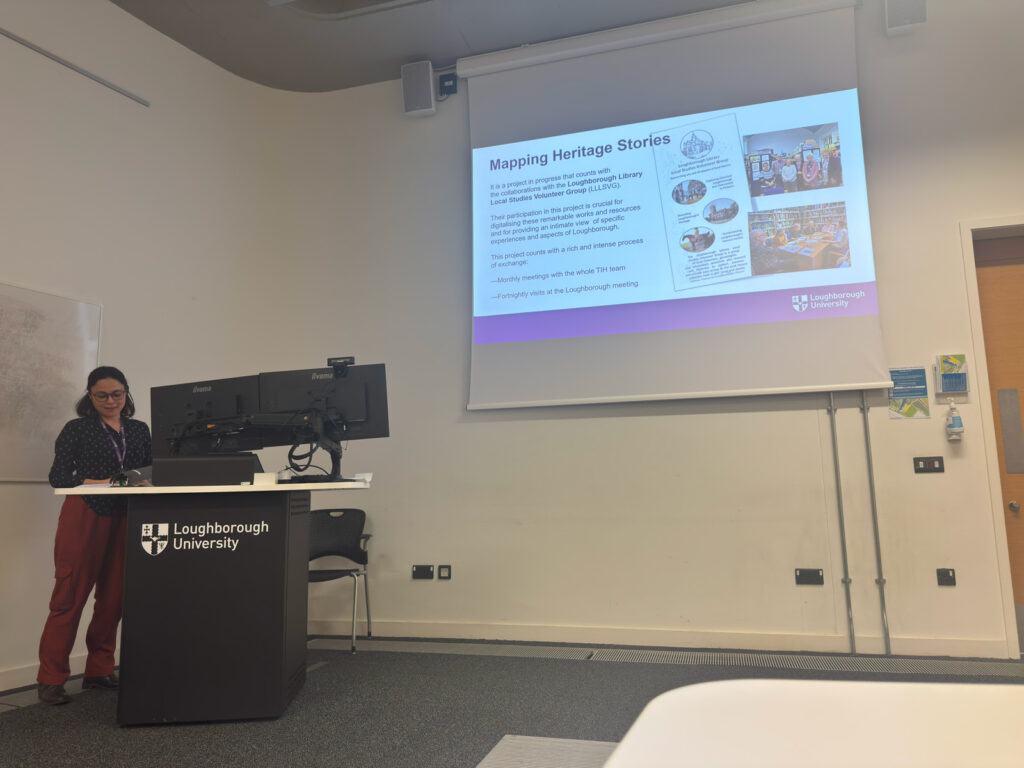
After a short break, the final session was delivered by The Impact Hub research team, under the theme of Mapping Heritage. Dr Robert Harland opened the session by setting the intellectual foundations for the team’s approach to digital mapping. Dr Harland introduced the TOWN Observatory, offering an overview of the broader project and the team members contributing through a range of associated sub-projects. Dr Aline Fernandes Barata followed with a comparative reflection on how heritage is represented across urban observatories in the UK, Brazil, and South Africa. She discussed the different paradigms that inform what is considered ‘heritage’ in each context and how digital platforms must adapt accordingly. Following this, Dr Taimaz Larimian presented how the age and history of buildings in Loughborough are being mapped on the Colouring Loughborough platform. Dr Cristina Kiminami then introduced Heritage Stories, one of the sub-projects featured within the Loughborough Stories platform. She reflected on her experience of working with the Loughborough Local Studies Volunteer Group, whose members actively contributed to the digitisation of the town’s unique and often overlooked heritage.
Case study on mapping heritage from The Impact Hub team
The presentations were followed by a half-hour discussion, during which participants were invited to reflect on the regional relevance of the projects and explore opportunities for future collaboration across the Universities Partnership. The event concluded with a networking lunch that provided time for informal dialogue and further exchange among the attendees.
The event stimulated further opportunities to share the extent of Arts, Culture and Heritage activities across the partner organisations in the future.