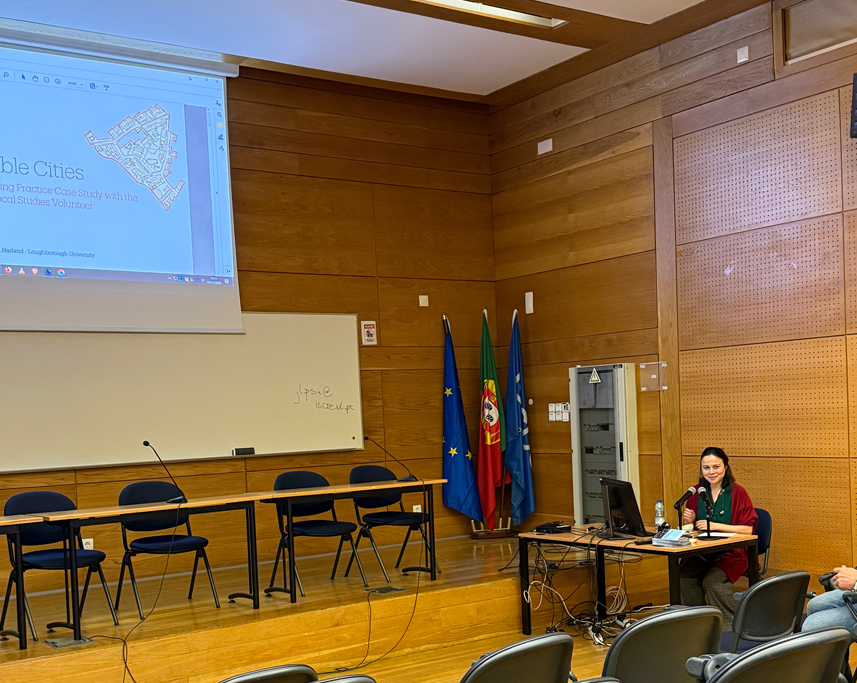
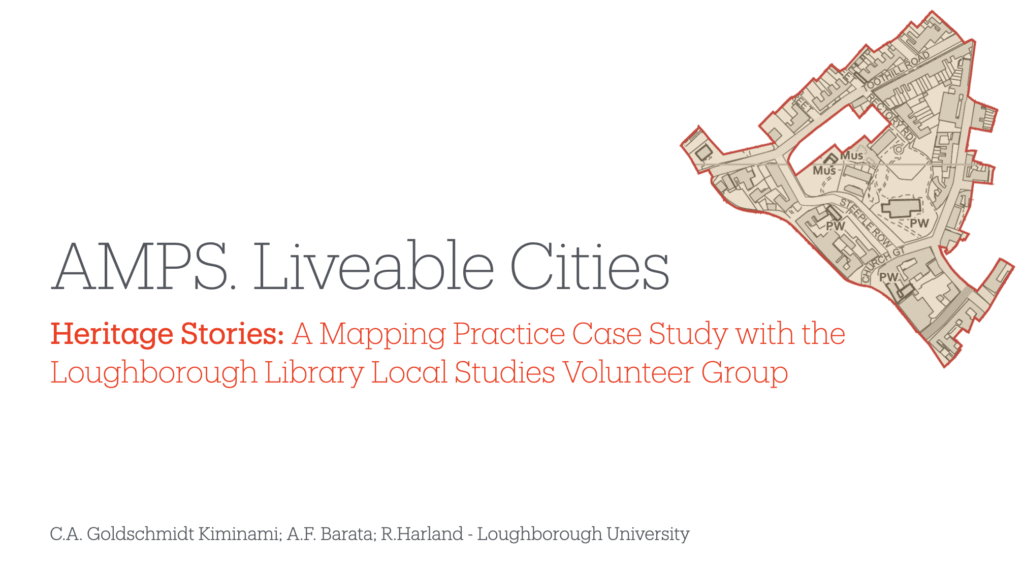
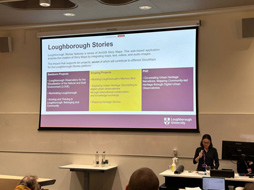
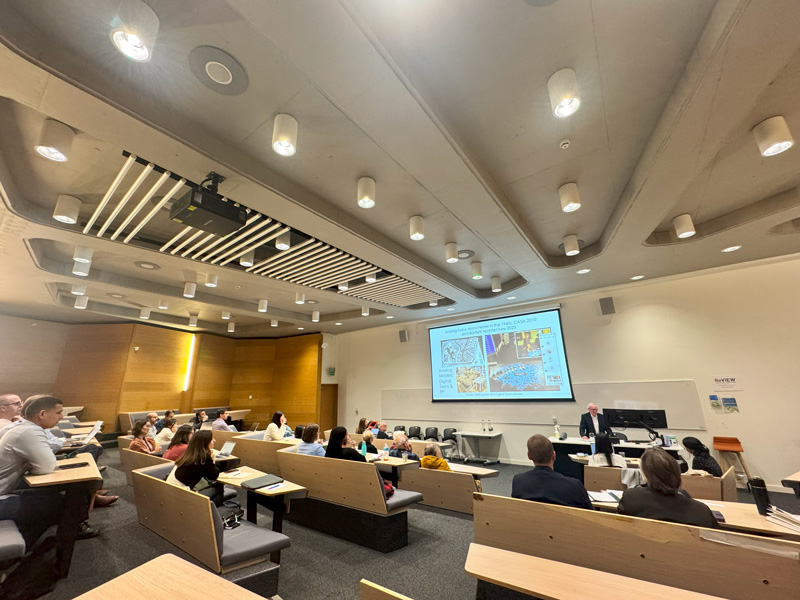
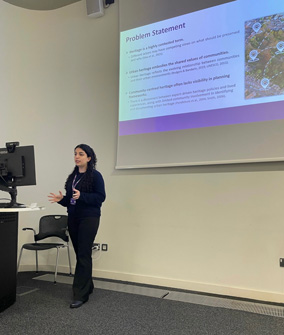
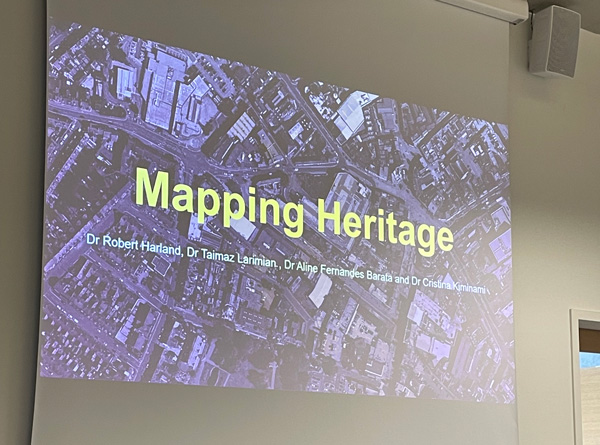
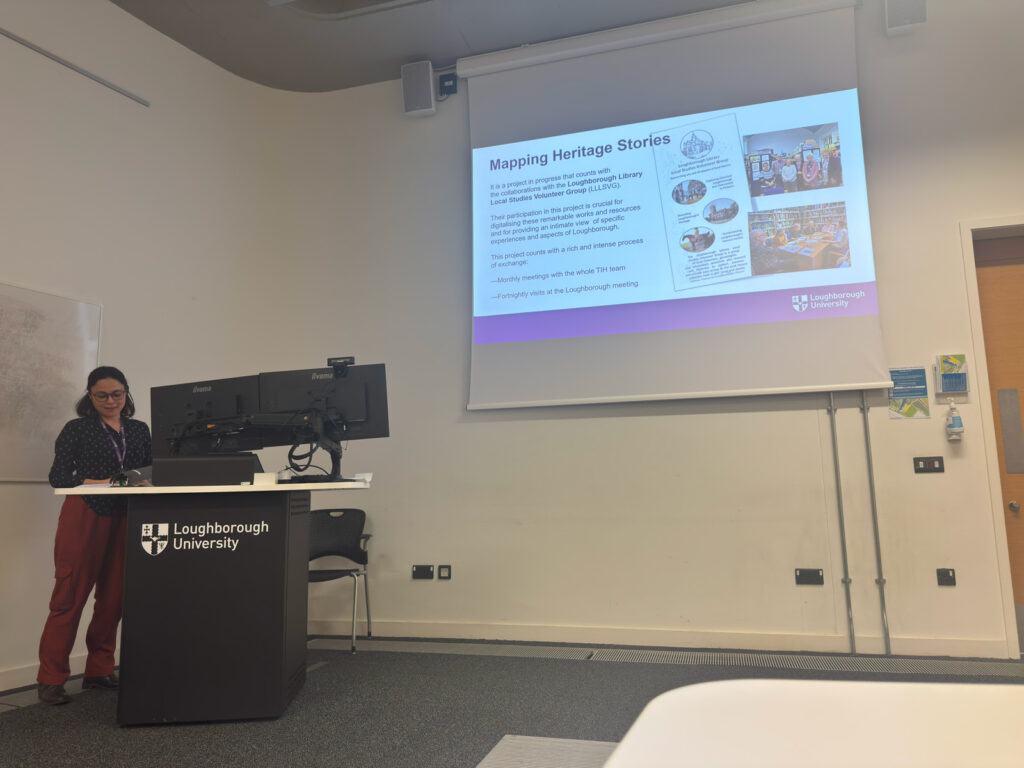
Dr Cristina A. G. Kiminami presenting the paper at the Participatory Culture Panel.
AMPS Livable Cities Lisbon, was staged at the Instituto Universitário de Lisboa (ISCTE). The conference examined the city as a site of livability across times and places, uses the host city as a point of departure for examining the varied issues at play when we think about livability.
Among the many interdisciplinary themes presented in this event, Dr Cristina A. G. Kiminami presented the paper in the Participatory Cultures panel concerning the Heritage Stories: A Mapping Practice Case Study with the Loughborough Library Local Studies Volunteer Group. This paper, co-authored by Dr C. A. G. Kiminami; Dr A. F. Barata and Dr R. G. Harland, is part of an ongoing research impact agenda with the library volunteer group.
The presentation was about a new initiative proposed by the TOWN Observatory team – Medieval Loughborough – a StoryMap developed by one of the scoping projects in collaboration with the Loughborough Library Local Studies Volunteer Group. The presentation shared the process, objectives, and final results achieved through this collaboration.
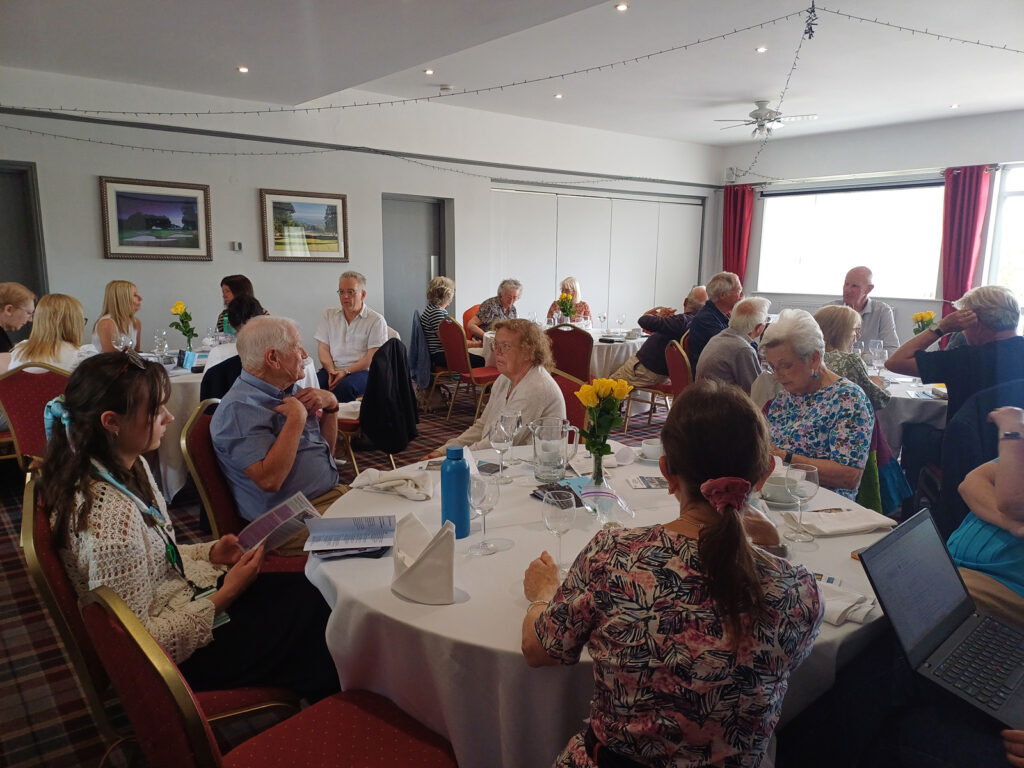
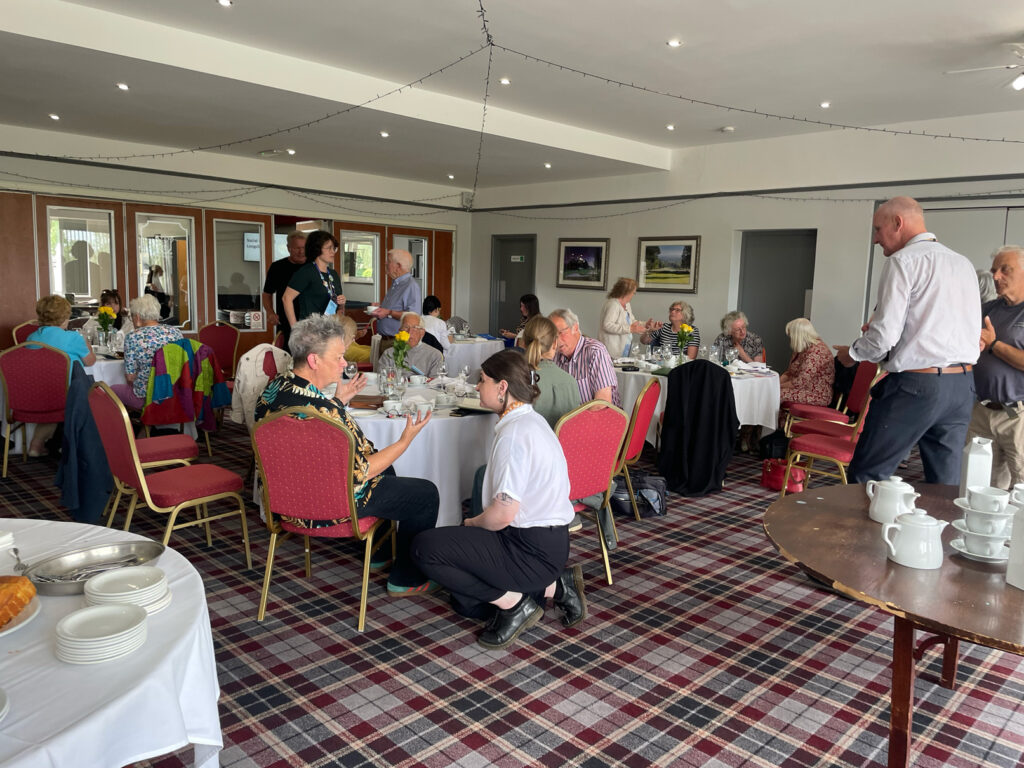
The Loughborough Heritage Forum occurred on June 23rd at the Longcliffe Golf Club. This event serves as an essential gathering for various groups and community members to come together and discuss the rich heritage of Loughborough. The event featured brief updates from regular attendees:
Sharon Gray, Forum Chair, and member of Loughborough Library Local Studies Volunteer Group. Jess Vollar Bell, CEO of the Generator. Nick Shaw, Charnwood Borough Council Events Team, Economic. Development and Regeneration. Elizabeth Woledge, new MD of Taylor’s Bell Foundry Museum. Shirley Novak, Charnwood Arts. John Dimmick, Parish Green Ltd. Lez Cope Newman, Chairof the BID and Love Loughborough. Cllr, Jenni Tillotson, Cabinet member and Deputy Leader Charnwood Borough Council. Roger Wilson, Warden at All Saints Parish Church. John Weitzel, Archivist of the Grammar School. Sue Selfe, Loughborough Library Local Studies Volunteer Group. Pippa Vidal Davies, Culture Leicestershire. Lynne Dyer, Lynneaboutloughborough blog. Lucy Bishop, Loughborough Library. Mel Gould, Carillon. Janine Williams, Director of Tourism at Go Leicestershire. Lisa Burns-Kent, The Loughborough Building Society. Deborah Moxom, Researcher, Alexandra’s Bedspread, and Chair of Friends of the Charnwood Museum. Liz Dunajewska, Friends of Charnwood Museum. Cllr. Anne Gray, Lead Member for Leisure and Tourism at Charnwood Borough Council. Simon Birchall, a Director of the Generator. Jill Vincent, Loughborough Heritage Open Weekend.
Following Dr Aline Moreira Fernandes Barata’s initial contact and attendance at the forum in 2024, invited back were Dr Robert Harland, Dr Cristina Kiminami and Mihyun Kim to provide an update on the activities of the TOWN Observatory. They provided valuable insights on how heritage information about Loughborough is being developed and shared on four digital platforms of the TOWN Observatory. Notably, it was explained how heritage is the main cross-platform theme. An updated pamphlet was circulated.
Jill Vincent opening the event.Lynne Dyer is saying some words regarding her Blog.Participants engaging in important conversations about Loughborough’s heritage.From left to right, Sharon Gray, Dr Robert Harland, and Jill Vincent.Meaningful exchange of ideas and perspectives among attendees.
The atmosphere at the forum was vibrant, fostering a meaningful exchange of ideas and perspectives among attendees. It provided the opportunity for participants to engage in important conversations about Loughborough’s heritage, ensuring the town’s history is honoured and remembered. Such forums are crucial for building community connections and encouraging collaboration to safeguard Loughborough’s unique cultural identity for future generations.
A notable highlights was a comment from Sue Selfe, who kindly acknowledged the enjoyable collaboration between the Loughborough Library Local Studies Volunteer Group, and TOWN Observatory on the series of Heritage Mapping projects, particularly the recent interviews being conducted by Dr Cristina Kiminami with all the volunteers.
Photography: Snapshots of Forum members at the Longcliffe Golf Club, featuring discussion between Sharon Gray, Robert Harland, and Jill Vincent. (Photographs by Cristina Kiminami and Mihyun Kim)
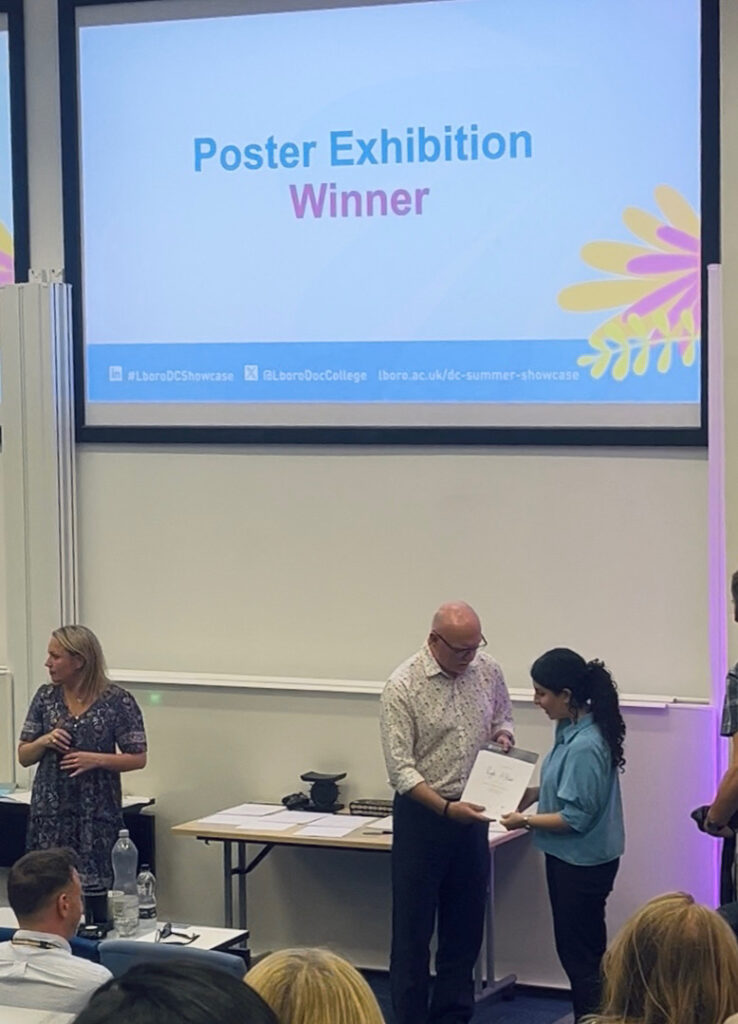
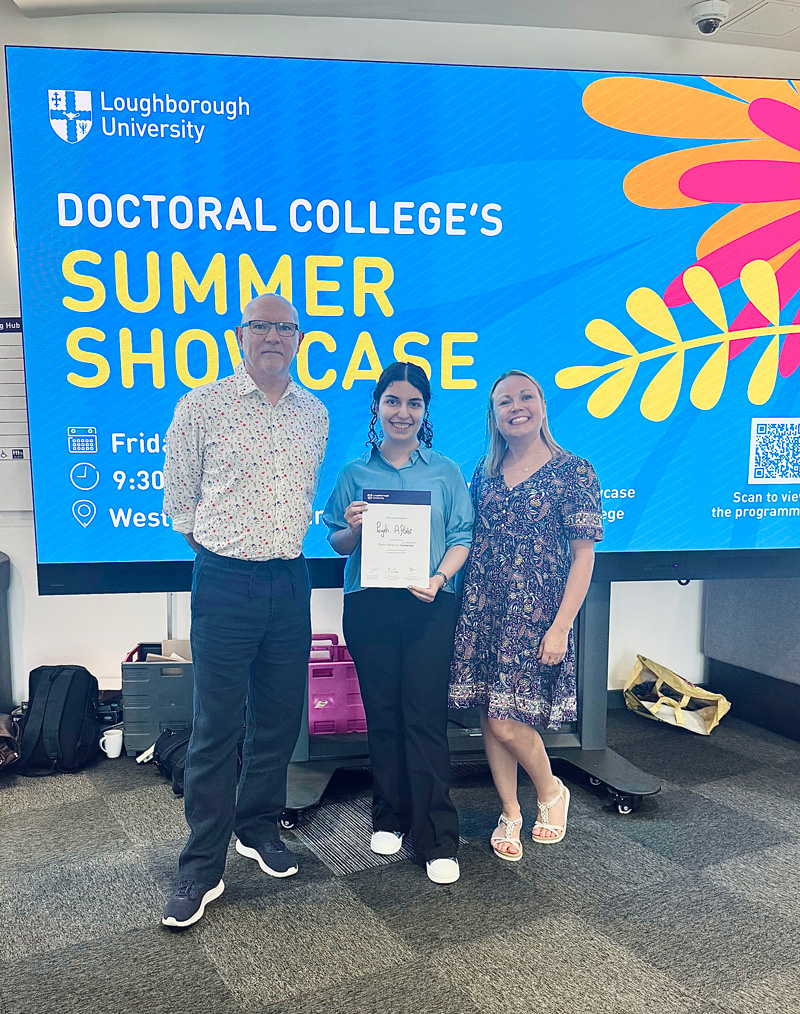
The Doctoral College’s Summer Showcase 2025 took place at Loughborough University on June 20th. This event was organised and held by Professor Steve Christie, Dr Katryna Kalawsky, and the Enhanced Academic Practice team at Loughborough University to celebrate the work of doctoral researchers. It featured several categories that encouraged researchers to present their work in creative and accessible formats. TOWN Observatory doctoral researchers, Pegah Aftabi and Mohamed Shamroukh, presented their projects at the session and were honoured with awards for their outstanding work.
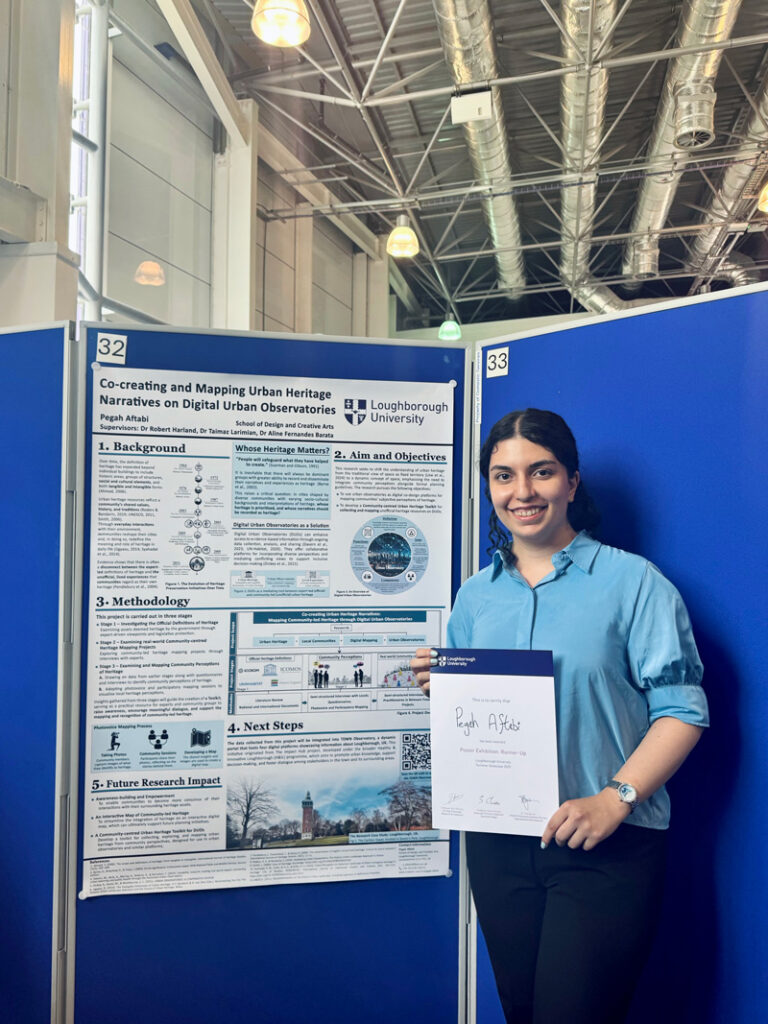
At this even the poster presented by Pegah Aftabi was selected by the judging panel as the winner of the Poster Exhibition at the Doctoral College’s Summer Showcase, chosen from 67 posters presented at the event.
The poster presented by Pegah Aftabi based on her research titled Co-creating and Mapping Urban Heritage Narratives on Digital Urban Observatories
Mohamed Shamroukh presented his poster at the event and won the social media award selected by the audience. He also presented this poster at the SABCE Research Symposium at Loughborough University and won the People’s Choice Award.
The poster presented by Mohamed Shamroukh based on his research titled Towards Pedestrian-Friendly Cities: Employing Geospatial Artificial Intelligence for Urban Planning
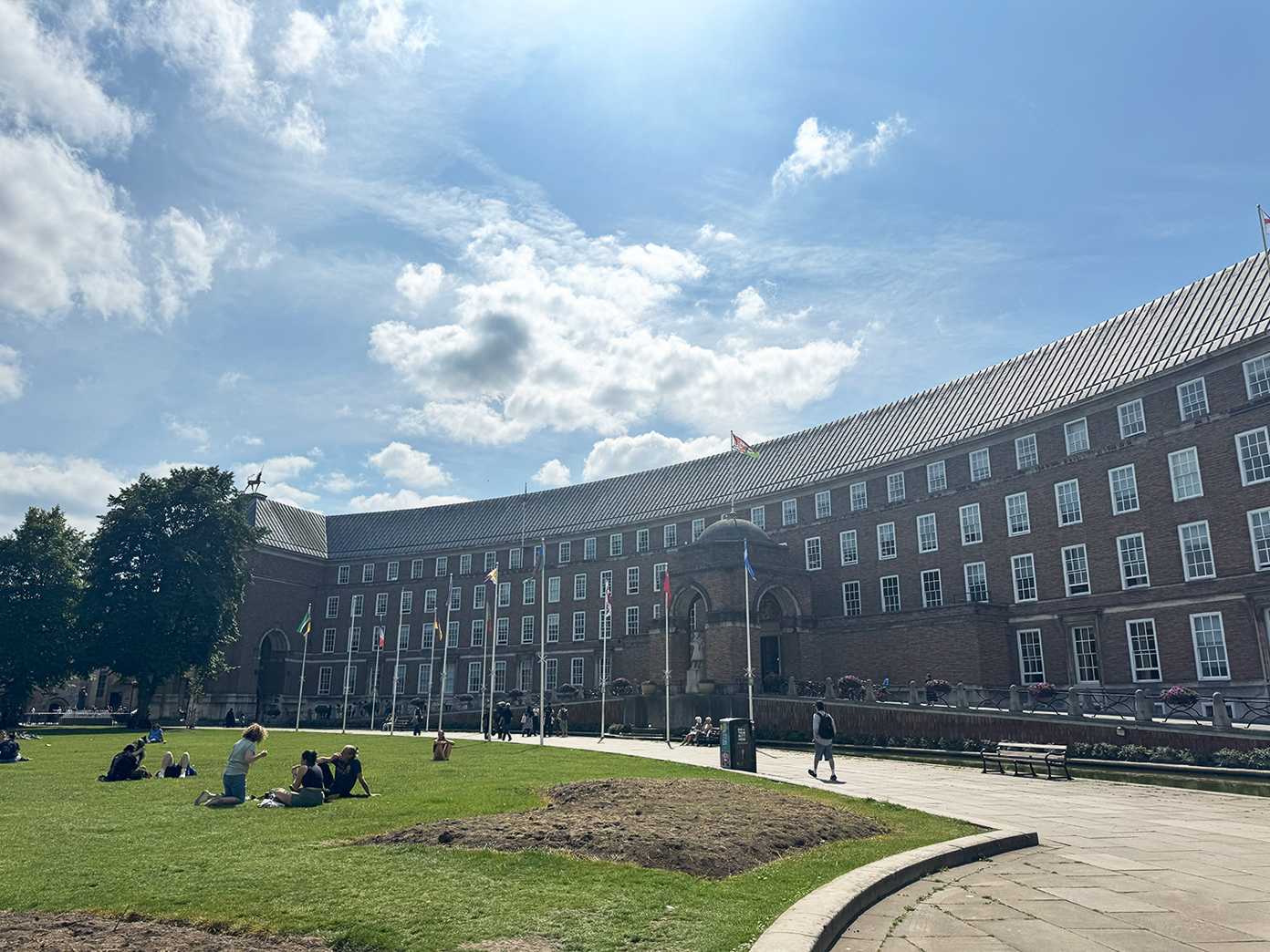
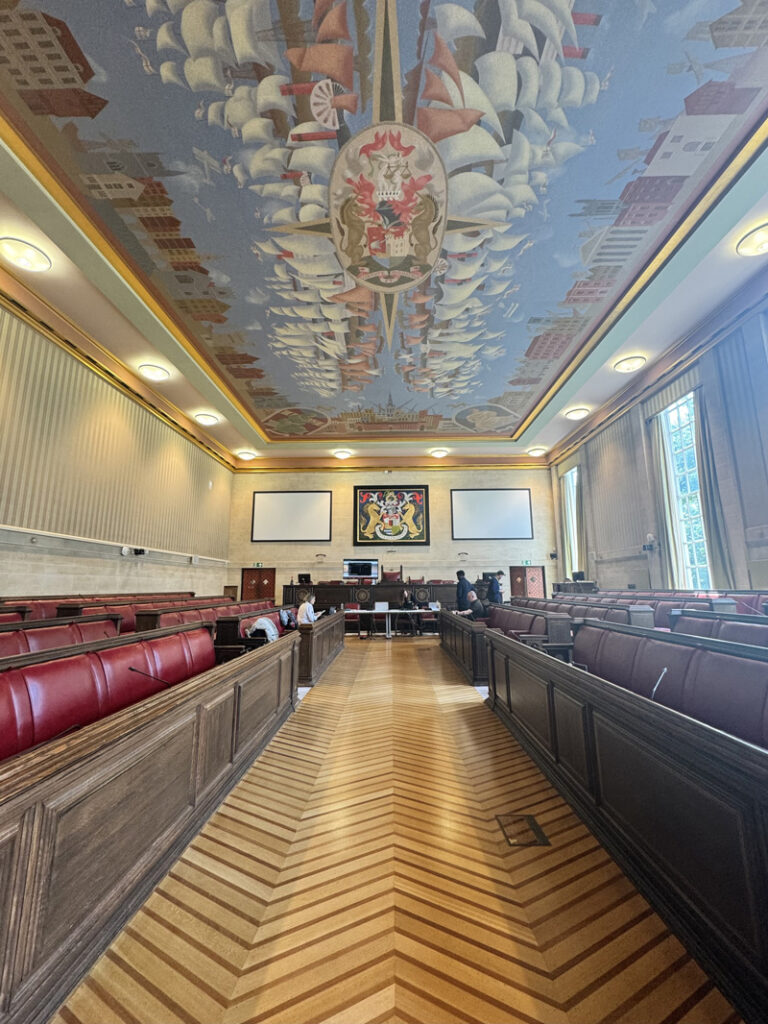
The EURA 2025 Conference, hosted by the Centre for Sustainable Planning and Environments at the University of the West of England (UWE), took place at the iconic Bristol City Hall in June 2025. The overall theme of the conference was Creating Healthy and Sustainable Cities and included nine thematic tracks, alongside mobile workshops and study tours that offered participants the chance to engage with local activists and explore innovative urban developments in Bristol and surrounding areas.
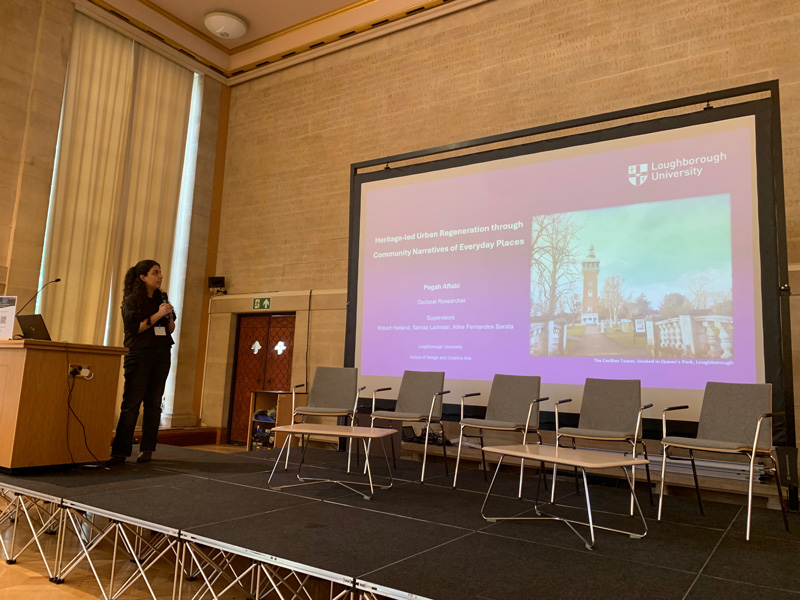
In Track 2, Regenerating the City, Pegah Aftabi presented her paper titled “Heritage-led Urban Regeneration through Community Narratives of Everyday Places,” developed as part of her PhD research at Loughborough University under the supervision of Dr Robert Harland, Dr Taimaz Larimian, and Dr Aline Fernandes Barata.
Pegah Aftabi presenting her research at the Regenerating the City Track
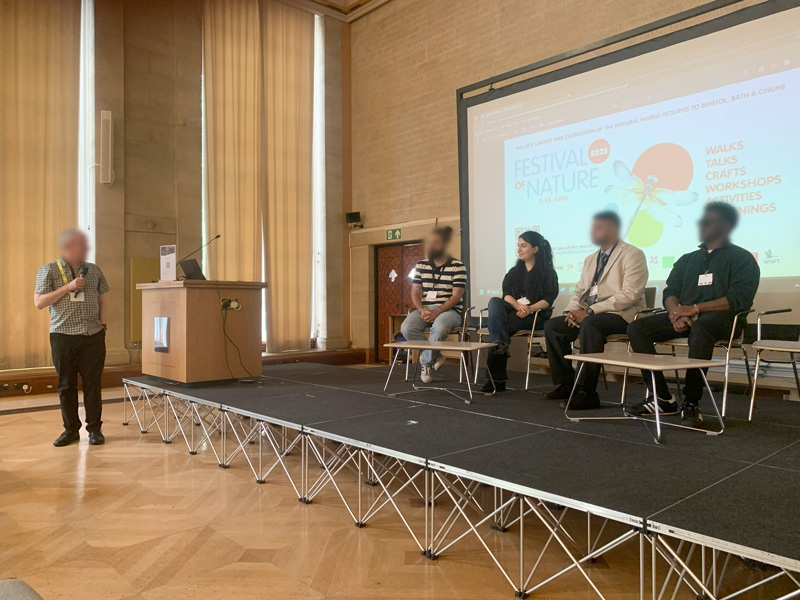
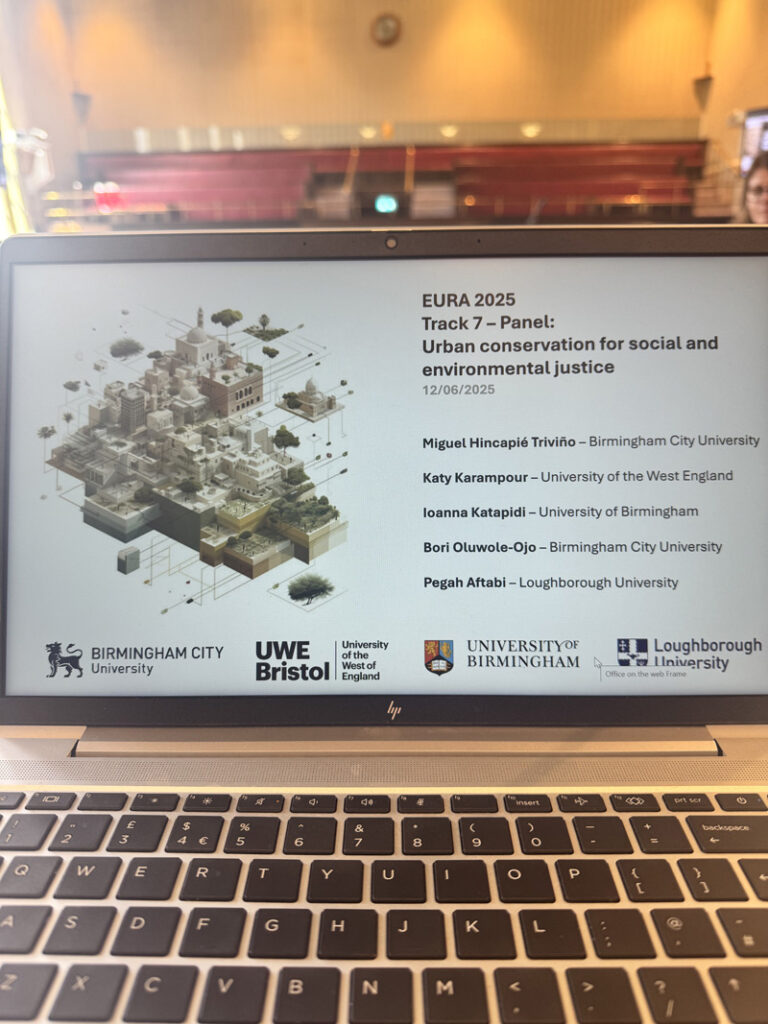
Pegah was also invited as a panelist in the pre-organised panel “Urban Conservation for Social and Environmental Justice,” alongside academics from Birmingham City University, UWE Bristol, and the University of Birmingham, representing Loughborough University and the TOWN Observatory platforms. The panel explored three critical questions, including: How can urban conservation advance justice by amplifying local experiences? What methodologies can capture plural perspectives in managing our shared past? How might conservation serve as a catalyst for social reflection rather than reinforcing cultural hierarchies? The discussion underscored the importance of inclusive and participatory approaches to urban conservation and highlighted the role of community narratives in shaping more equitable and reflective planning decisions.
The Urban Conservation for Social and Environmental Justice Panel held at The Council Chamber, Bristol City Hall
Dr Robert Harland and Dr Taimaz Larimian welcome attendees at The Impact Hub official launch
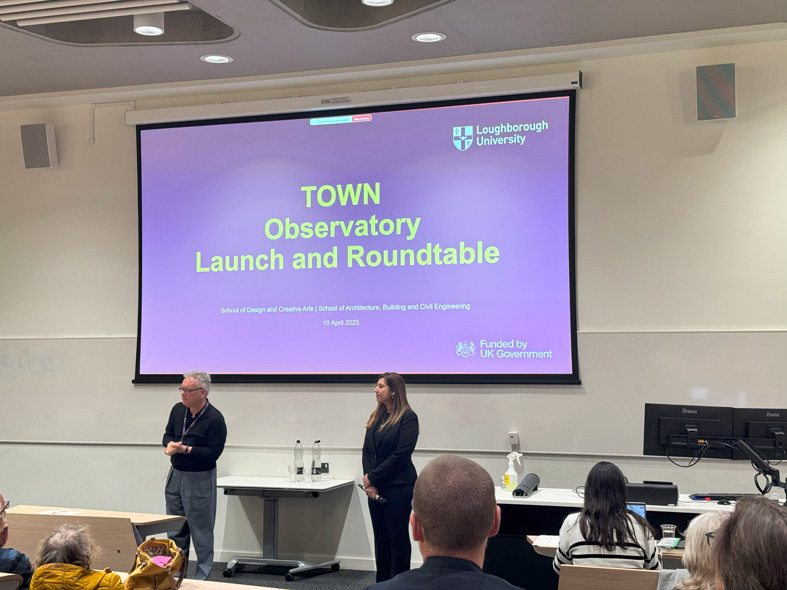
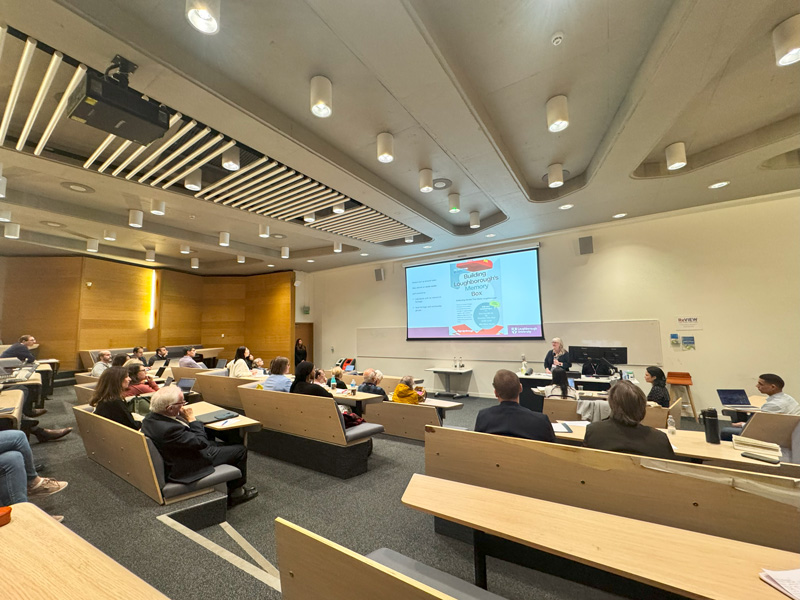
The TOWN Observatory was officially launched on 10 April 2025 at a hybrid event held at Loughborough University, School of Design and Creative Arts. The session, hosted by The Impact Hub team, brought together urban researchers, community partners, and leading academics in digital mapping and spatial research.
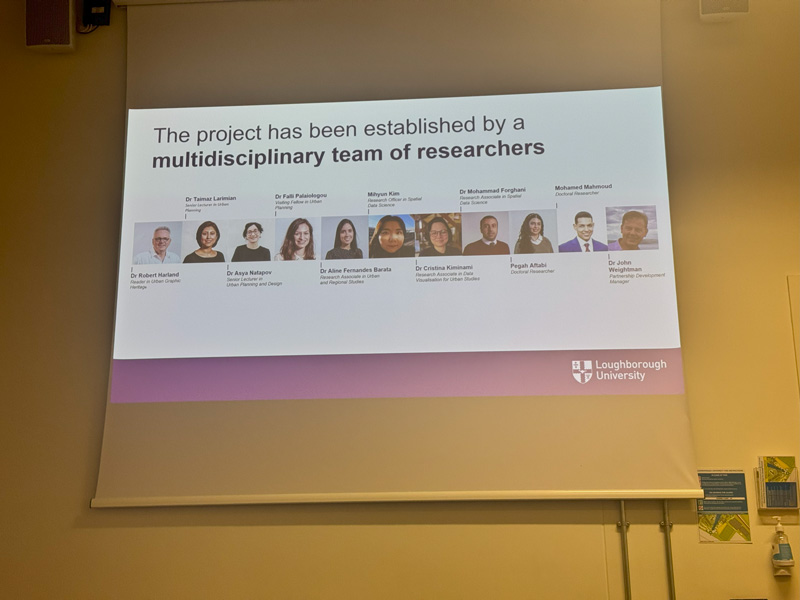
In the opening remarks, Dr Robert Harland and Dr Taimaz Larimian welcomed attendees and introduced the project overview, its primary objectives, and the team members. Following this, Dr Aline Fernandes Barata provided an overview of the TOWN Observatory’s vision and structure. She outlined the broader research team, described the sub-projects (seedcorn, scoping, and the PhD projects), and explained how these initiatives contribute to the TOWN Observatory’s development.
The Impact Team share their insights into the creation of the TOWN Observatory
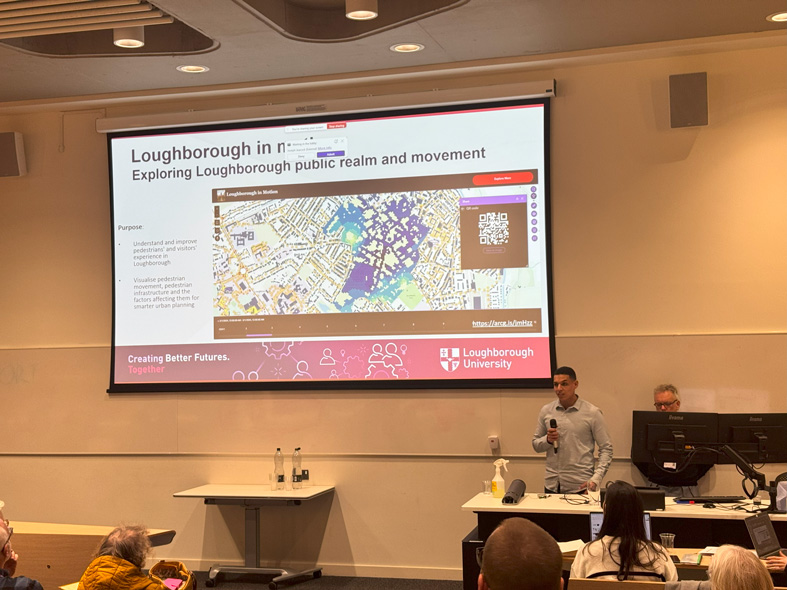
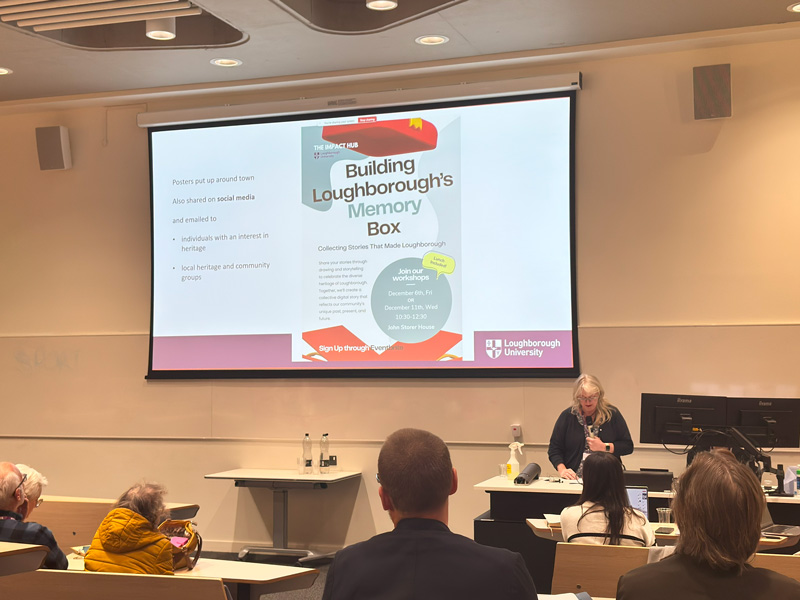
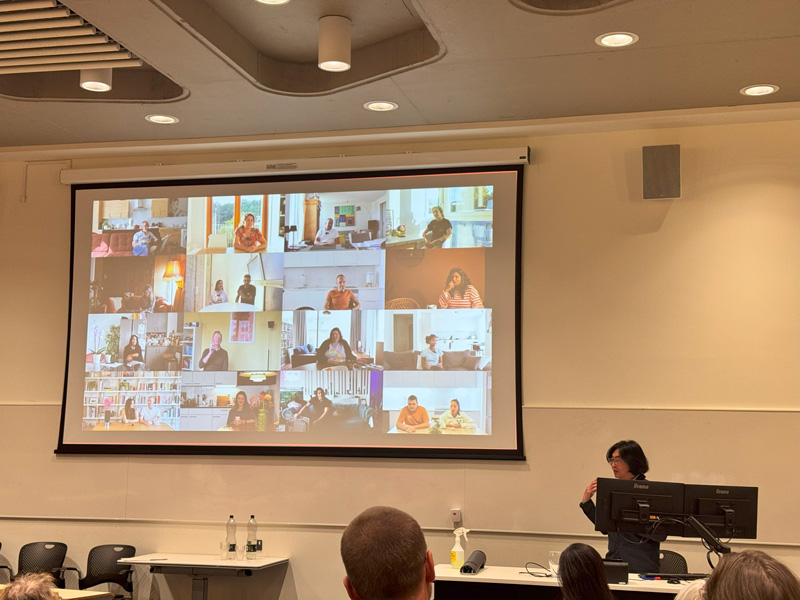
Each of the four platforms was then presented by the members of the research team. Colouring Loughborough, presented by Dr Taimaz Larimian and Mihyun Kim, Loughborough in Motion, presented by Mohamed Mahmoud (with Asya Natapov online), Loughborough Stories, presented by Dr Cristina Goldschmidt Kiminami and Alison Moss, and finally, Chat Loughborough, introduced by Dr Haitao He.
As the formal presentations about the TOWN Observatory concluded, Dr Harland outlined the next steps for the project. This was followed by inviting the audience into a Q&A session about the potential of digital urban observatories.
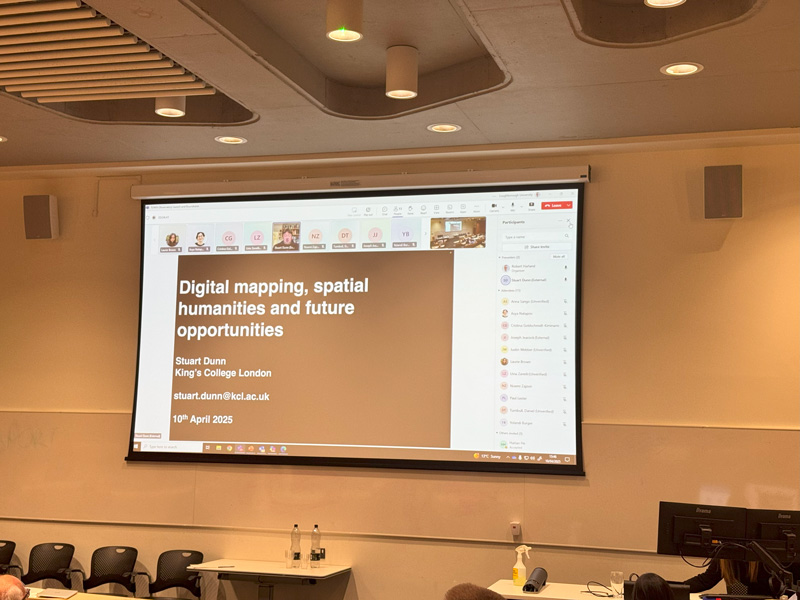
After a short break and refreshments, the session was resumed with a series of expert presentations chaired by Dr Harland. Leading academics and professionals in digital mapping and spatial research joined explore the wider implications of digital urban observatories. Professor Michael Batty (University College London) discussed how digital observatories can be leveraged as drivers for change. Polly Hudson (The Alan Turing Institute) shared insights into how the urban scale of economic, cultural and social activities can be mapped. Professor Sam Jacoby (Royal College of Art) focused on the interface between digital mapping and the lived experience. Finally, Professor Stuart Dunn (King’s College London) further discussed digital mapping, spatial humanities and future opportunities.
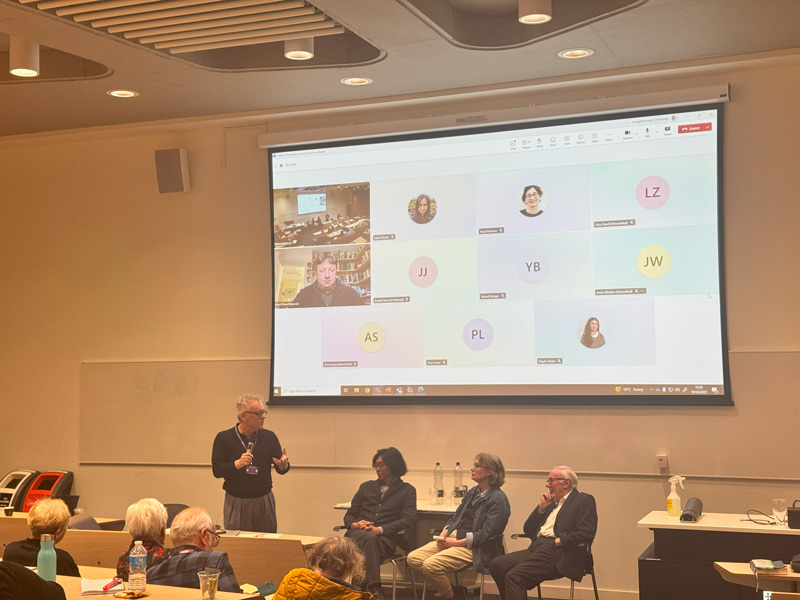
Leading academics and practitioners share insights into the role of digital platforms for urban observatories
Following the expert presentations, the event culminated in a roundtable discussion. Speakers and audience members reflected on the broader implications of their presentations in light of the TOWN Observatory’s aims. This sparked a dynamic exchange between all in attendance, sharing perspectives on the potential for digital platforms to bridge local knowledge with institutional planning and foster more transparent, inclusive governance.
…
Event review by Cristina Goldschmidt-Kiminami and Pegah Aftabi
As part of Loughborough University’s ongoing contribution to the Civic Universities Partnership on Arts, Culture and Heritage, a morning event was held on Thursday 10 April 2025 at Loughborough University, School of Design and Creative Arts. This session brought together academics and researchers to share insights into the role of the arts, culture, and heritage within research, education, and civic engagement.
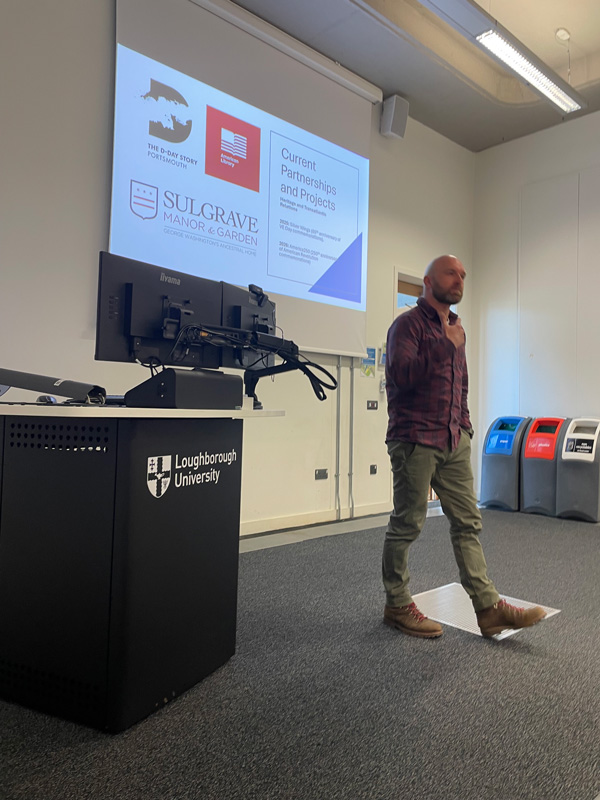
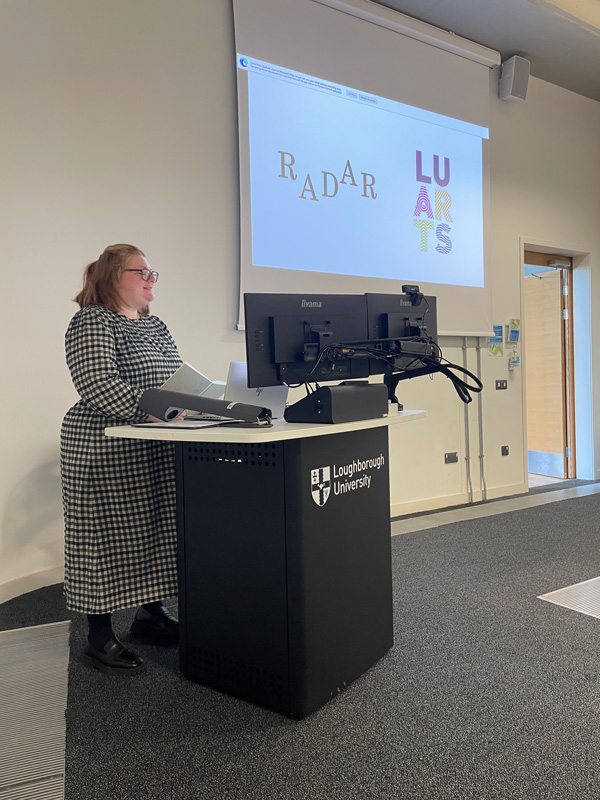
The event began at 09:30 with welcome refreshments, offering an opportunity for networking before the formal programme started at 10:00. Dr Robert Harland started the session by welcoming the audience and providing an overview of the event. The first presenter of the day was Professor Emily Keightley who opened the session by articulating the university’s commitment to vibrant and inclusive communities. Following this, Dr Sam Edwards presented on Heritage, Diplomacy, and Transatlantic Relations: Experiences and Challenges. The third presentation was delivered by Dr Brendan Lawson, whose work examines Using Numbers to Report on Immigration. In the next presentation, Helen Young, from the university’s Library Services, addressed institutional efforts to increase access to our library and archives. Doctoral researcher Pegah Aftabi then presented her research under the title Co-creating Urban Heritage Narratives in Loughborough. Her work explores how heritage can be conceptualised and represented through the lived experiences of local communities, particularly in urban contexts. Finally, Dr Lucy Lopez, Curator of Radar, offered a unique perspective from within the university’s contemporary art programme.
Some of the presenters from Loughborough University
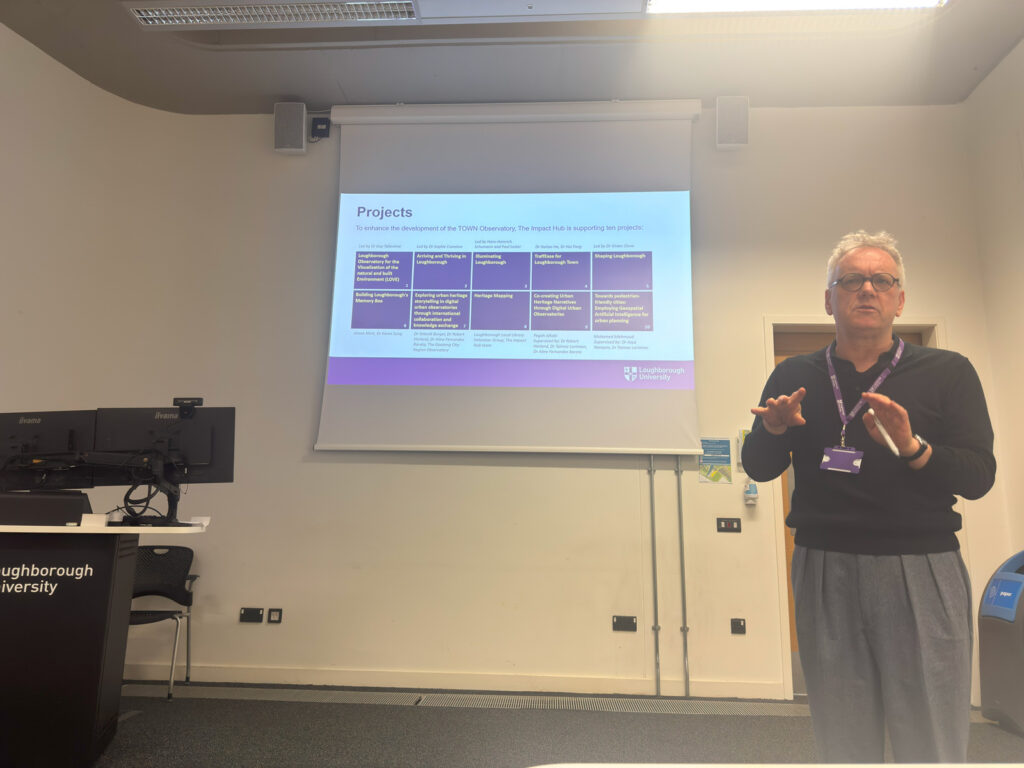
After a short break, the final session was delivered by The Impact Hub research team, under the theme of Mapping Heritage. Dr Robert Harland opened the session by setting the intellectual foundations for the team’s approach to digital mapping. Dr Harland introduced the TOWN Observatory, offering an overview of the broader project and the team members contributing through a range of associated sub-projects. Dr Aline Fernandes Barata followed with a comparative reflection on how heritage is represented across urban observatories in the UK, Brazil, and South Africa. She discussed the different paradigms that inform what is considered ‘heritage’ in each context and how digital platforms must adapt accordingly. Following this, Dr Taimaz Larimian presented how the age and history of buildings in Loughborough are being mapped on the Colouring Loughborough platform. Dr Cristina Kiminami then introduced Heritage Stories, one of the sub-projects featured within the Loughborough Stories platform. She reflected on her experience of working with the Loughborough Local Studies Volunteer Group, whose members actively contributed to the digitisation of the town’s unique and often overlooked heritage.
Case study on mapping heritage from The Impact Hub team
The presentations were followed by a half-hour discussion, during which participants were invited to reflect on the regional relevance of the projects and explore opportunities for future collaboration across the Universities Partnership. The event concluded with a networking lunch that provided time for informal dialogue and further exchange among the attendees.
The event stimulated further opportunities to share the extent of Arts, Culture and Heritage activities across the partner organisations in the future.