Categories
Blog Colouring Loughborough TOWN Observatory

The International Seminar on Urban Form (ISUF) 2025

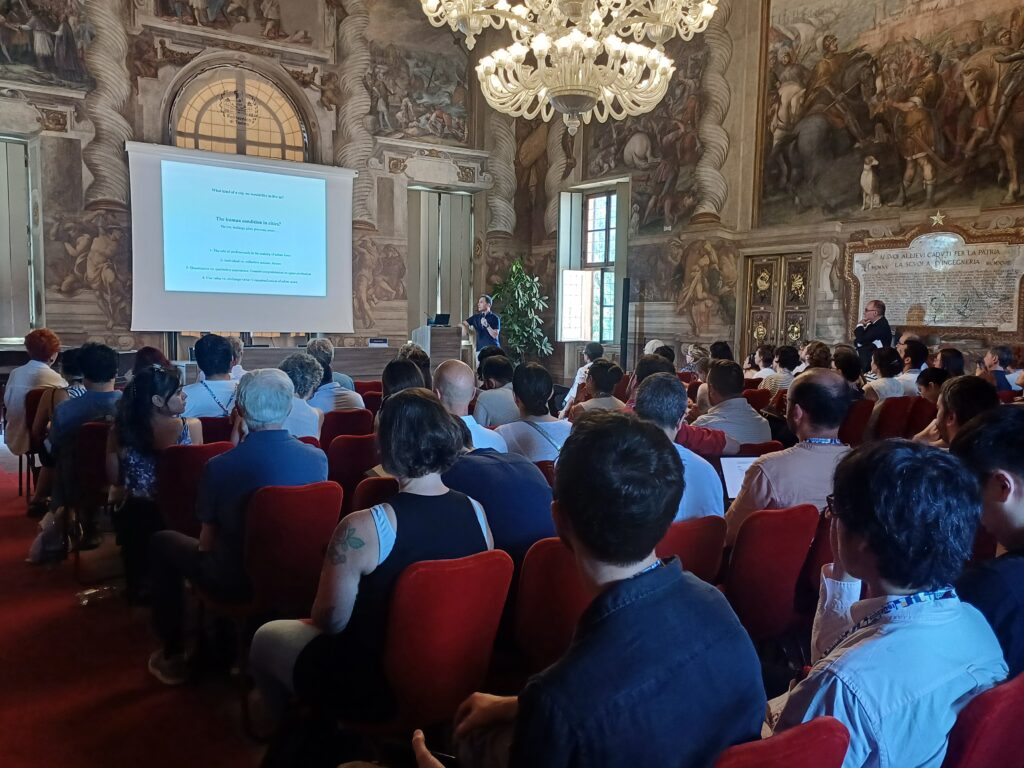
In June 2025, Mihyun Kim, Research Officer in Spatial Data Science, attended The International Seminar on Urban Form (ISUF) 2025 held at Castello del Valentino in Torino, Italy, hosted by the Politecnico di Torino. Her team presented research titled “AI-Augmented Space Syntax: Reframing Spatial Analysis into Multi-Layered Spatial Analysis for Adaptive Urban Form.” This research explores the potential of AI systems to enhance urban management and improve human-informed data collection across multiple spatial scales.

The study is part of the Colouring Loughborough project and aims to integrate AI-driven spatial analysis with multi-source geospatial data to inform adaptive, evidence-based urban design and planning decisions.

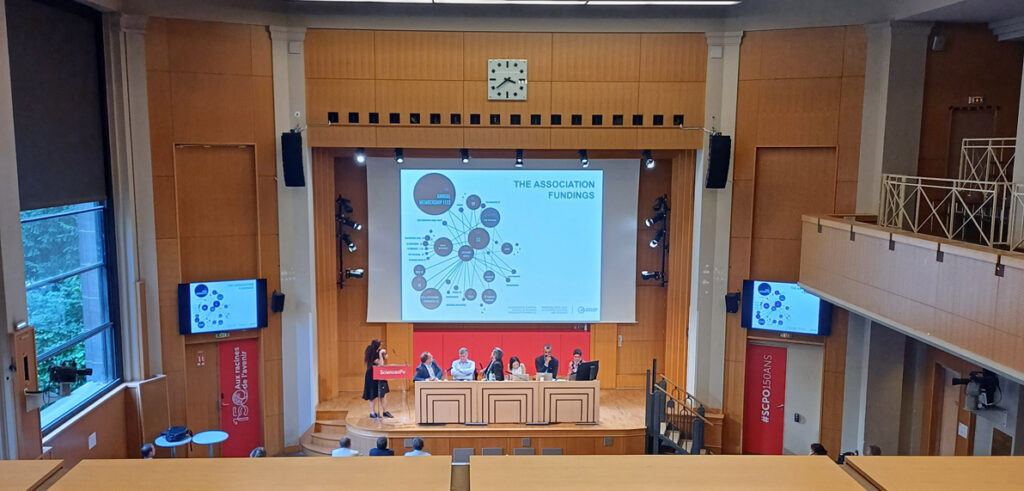
An overview of ISUF 2025, held at Castello del Valentino in Torino and hosted by the Politecnico di Torino, Italy.Photo source: Mihyun Kim
Categories
TOWN Observatory

Urban Latitude: Local Perspectives on Global Objectives

WEBINAR SERIES

All sessions between 14:00–15:00 hrs (UK time) | 16:00 – 17:00 hrs (SA time)

This webinar series brings together researchers from the Town Observatory* (United Kingdom) and the Gauteng City-Region Observatory** (South Africa) to explore how urban data, digital tools, and storytelling practices can shape contemporary understandings of urban heritage and placemaking. Across three thematic sessions, speakers will share comparative perspectives, emphasising the intersection of data governance, digital innovation, and community narratives in urban observatories. Through this international exchange of knowledge, the series aims to foster dialogue on how cities can be more effectively observed, preserved, interpreted, and represented from local to global levels, while encouraging collaborative pathways for future research and practice. 

WEDNESDAY 4 FEBRUARY

GOVERNANCE & URBAN DATA

This session explores the evolving role of governance in shaping urban data practices at the local, regional and global scale, and the influence of data-driven decision-making.

Dr Rob Harland[1] (Reader in Urban Graphic Heritage: TOWN Observatory, United Kingdom) & Dr Taimaz Larimian[2] (Senior Lecturer in Urban Planning: TOWN Observatory, United Kingdom) | Rashid Seedat[3] (Executive Director: Gauteng City-Region Observatory, South Africa) & Shannon Whitaker[4] (Junior Researcher: Gauteng City-Region Observatory, South Africa)

WEDNESDAY 11 FEBRUARY 

DASHBOARDS & AI TOOLS

This session examines how emerging technologies are redefining how urban information is gathered, analysed, co-created and communicated.

Dr Firat Batmaz[5] (Postgraduate Programme Leader for Data Science and Computer Science: Loughborough University, United Kingdom) & Dr Sara Saravi[6] (AI in EDI lead for AIED group: Loughborough University, United Kingdom) | Yashena Naidoo[7] (Junior Researcher: Gauteng City-Region Observatory, South Africa) & Dr Laven Naidoo[8] (Senior Researcher: Gauteng City-Region Observatory, South Africa)

WEDNESDAY 18 FEBRUARY

STORYTELLING & COMMUNITY

This session engages the intertwining of storytelling and community-led lived experience to emphasise dialogic exchange, interdisciplinary approaches and inclusive co-production of place-based knowledge.

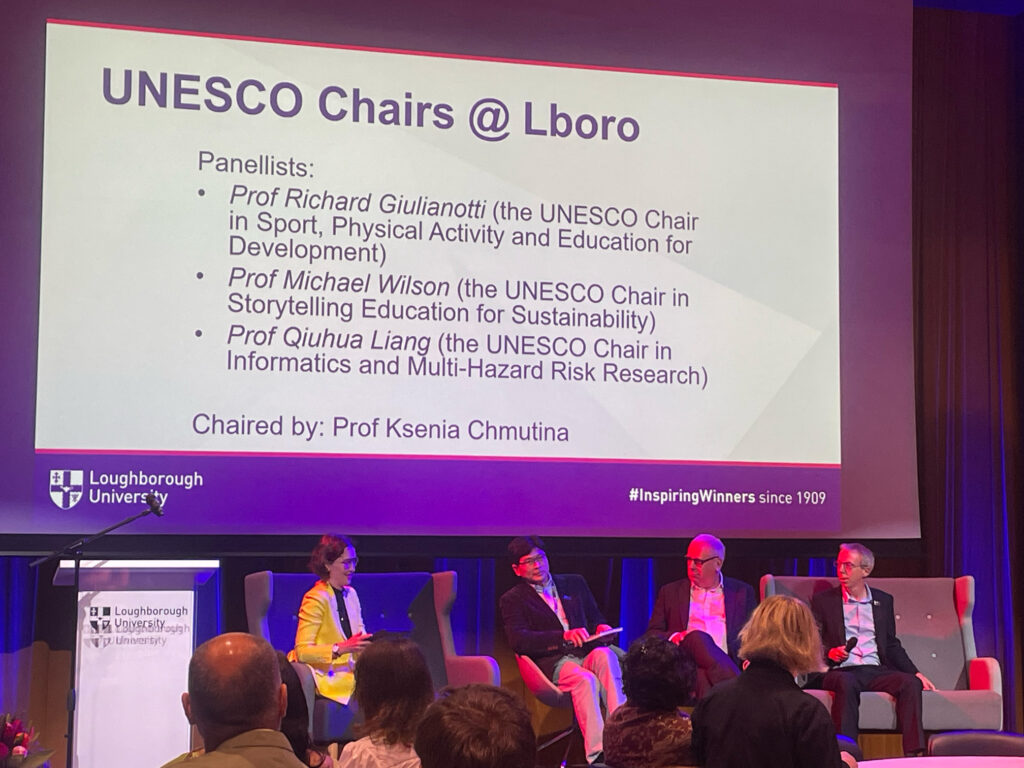
Prof Mike Wilson[9] (UNESCO Chair in Storytelling Education for Sustainability & Director of the Storytelling Academy: Loughborough University, United Kingdom) & Dr Cristina Goldschmidt-Kiminami[10](Research Associate in Data Visualization for Urban Studies: TOWN Observatory, United Kingdom) | Shamsunisaa Miles-Timotheus[11] (Junior Researcher: Gauteng City-Region Observatory, South Africa) & Thembani Mkhize[12] (Researcher: Gauteng City-Region Observatory, South Africa)

FACILITATOR Dr Yolandi Burger


[1] Dr Robert Harland is a Reader in Urban Graphic Heritage at Loughborough University. His research examines urban heritage through the lens of graphic design, and he has led major projects exploring urban graphic heritage with partners locally, nationally, and internationally. He is a member of Loughborough’s renowned Storytelling Academy and deputy lead for the University’s UNESCO Chair in Storytelling Education for Sustainability. In 2025, he co-founded the TOWN Observatory and was soon after invited to join the UN-Habitat Global Urban Observatory steering committee

[2] Dr Taimaz Larimian is a Senior Lecturer in Urban Planning at Loughborough University. Her research spans urban social sustainability, participatory planning, and digital urbanism, with selected outputs in Cities, Sustainable Cities and Society, and Environment and Planning B. She leads the award-winning Colouring Britain platform with the Alan Turing Institute, recognised with the RTPI National Award for Excellence in Digital Planning Practice in 2023. She currently leads a £1.1 million DLUHC funded sub-regional observatory and an EPSRC backed digital twin initiative supporting data-informed urban policy. She serves on the RTPI Policy Committee and the UK Government College of Experts, advising on planning and housing policy. Her participatory urban data work now operates in more than 30 countries through the Colouring Cities Research Network.

[3] Rashid Seedat is the Executive Director of the GCRO where he is responsible for strategic management of the organisation. Most of his career has been in public service in the City of Johannesburg as the head of strategy and in the Gauteng Provincial Government where he headed the Planning Division in the Premier’s Office. He has postgraduate qualifications in development planning and public management.

[4] Shannon Whitaker (previously Arnold) is a political scientist with a focus on Southern Africa. In her previous role as an analyst for the International Crisis Group, she concentrated on elections, political violence, and foreign policy issues in South Africa and Zimbabwe. She holds a Master of Science in Global Leadership and Peacebuilding from King’s College London, where she graduated first in her class and received the academic prize for the best dissertation in her department. Additionally, she earned an MPhil in African Studies with distinction from the Centre for Gender and Africa Studies at the University of the Free State in South Africa.

[5] Dr Firat Batmaz is an academic in the Department of Computer Science at Loughborough University. He leads the Artificial Intelligence in Education (AIED) Special Interest group, focusing on how AI can enhance teaching and learning. His research interests include technology-enhanced learning and AI systems for student feedback

[6] Dr Sara Saravi is a Computer Science academic at Loughborough University with extensive human–computer interaction experience. She leads Equality, Diversity and Inclusion in the department and AI-in-EDI in the AI in Education group. Her work focuses on responsible AI for learning and assessment across higher education. Interests include inclusive design, academic integrity, and human–AI interaction.

[7] Yashena Naidoo is a Junior Researcher at the Gauteng City-Region Observatory and a PhD Fellow in the Wits-Edinburgh Sustainable African Futures Doctoral Programme. She specialises in spatial data science, GIS, and remote sensing to analyse socio-economic dynamics within urban environments. Her research focuses on using machine learning and open data to generate predictive insights that support sustainable and informed decision-making.

[8] Dr Laven Naidoo completed his PhD in Geoinformatics at the University of Pretoria in 2017 and specialised in using Earth Observation technologies to monitor savannah, forest and wetland vegetation. His research at the GCRO focuses on developing advanced AI/machine learning techniques, geospatial data science approaches and novel remote sensing applications within the urban environment and Sustainable Development Goals space. He is also a Y-rated scientist by the South African National Research Foundation, an NRF Rating Specialist Committee Member for the Earth Sciences Panel and holds an Extraordinary Lecturer position at the University of Pretoria.

[9] Mike is Director of the Storytelling Academy and holds the first-ever UNESCO Chair in Storytelling Education for Sustainability. His interests lie broadly within the field of popular and vernacular performance and, in particular, on storytelling as a way of creating democratic spaces for public engagement around major societal challenges.

[10] Dr Cristina A. G. Kiminami is a Research Associate in Data Visualisation for Urban Studies at Loughborough University. She is part of a research team and impact activities for ‘The Impact Hub’ (TIH), an interdisciplinary initiative that has established the TOWN Observatory (TO).

[11] Shamsunisaa Miles-Timotheus is a Junior Researcher at the Gauteng City-Region Observatory (GCRO), where she works on the flagship Quality of Life Survey, analysing patterns of well-being across Gauteng. She also leads the GCRO’s “Coloured” Community in Post-Apartheid Gauteng project, a multi-year research initiative exploring the lived experiences, socio-economic conditions, and subjective well-being of the Coloured community in the province.

[12] Thembani Mkhize is a researcher at the Gauteng City-Region Observatory (GCRO) and a doctoral fellow at the Wits-Edinburgh Sustainable African Futures (WESAF). Mkhize holds a Master of Science by Research (with distinction) in Sustainable African Futures, obtained from The University of Edinburgh in 2024. His wide research interests include local government, critical toponymy, sexuality studies, urban regeneration, social cohesion, and community participation.


FORMAT: 5 min welcome/context | 4 x (8–10 min) lighting talks | 10 min moderated Q&A |
5 min summarise and close

* The TOWN Observatory launched in 2025 at Loughborough University, in partnership with Charnwood Borough Council in the United Kingdom. It is part of Healthy and Innovative Loughborough project, supported by the UK Government funded Loughborough Town Deal (2023–2026), aimed at creating jobs, supporting new businesses, and making local people healthier. For more information visit: https://town-observatory.lboro.ac.uk/about/

** The Gauteng City-Region Observatory (GCRO) is a partnership between the University of Johannesburg (UJ), the University of the Witwatersrand, Johannesburg (Wits), the Gauteng Provincial Government (GPG), and organised local government in Gauteng (SALGA). Behind the motivation for setting up the GCRO is a vision for South Africa’s economic heartland as a region that is functionally integrated, spatially coherent, competitive, environmentally sustainable, and socially and economically inclusive. GCRO helps to build the knowledge base that government, business, labour, civil society and residents all need to make this vision a reality. GCRO collects data and benchmarks the city-region, provides policy analysis and support, undertakes applied research, and publishes critically reflective academic work. For more information visit: https://www.gcro.ac.za/

Categories
Blog Loughborough Stories PhD TOWN Observatory

Creative Photography and Mapping Workshops in Loughborough

As part of her PhD project, Pegah Aftabi organised a series of creative photography and mapping workshops at John Storer House in Loughborough. The workshops aimed to explore how local communities perceive and define heritage in their everyday environments.

A total of 20 local residents participated in the sessions, which combined creative and participatory methods to document places of personal and collective significance. Using a mobile application, participants photographed meaningful locations across the town and shared short stories explaining their importance.

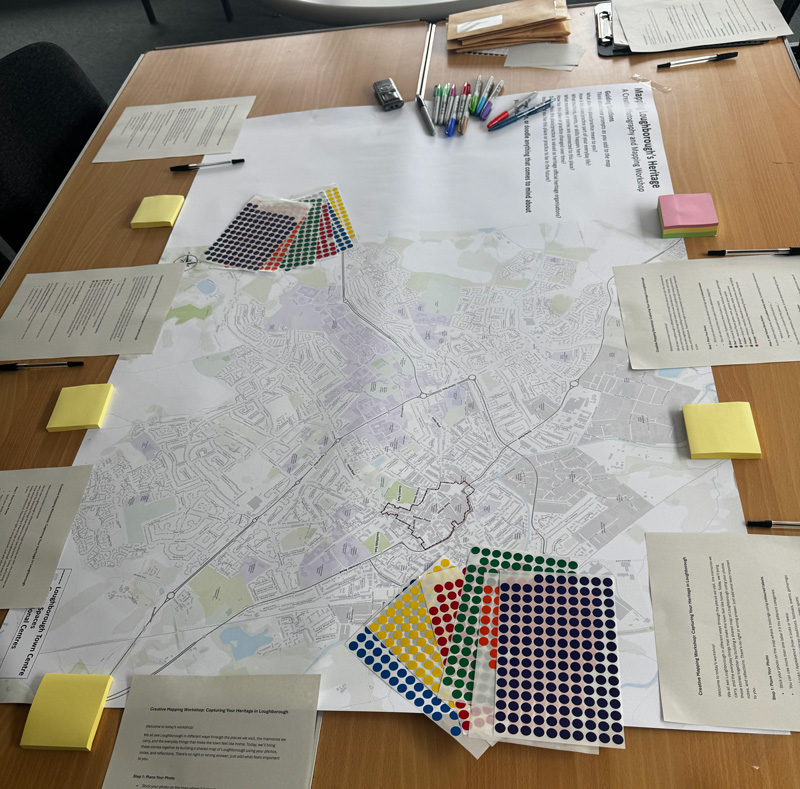
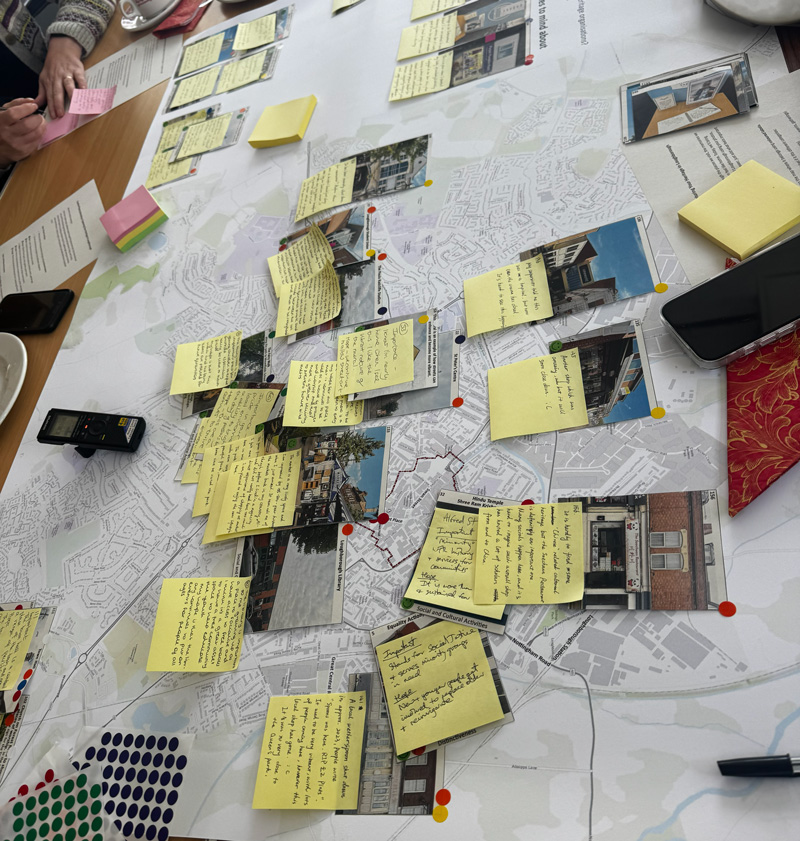
During the workshops, participants also used colour-coded labels to categorise different types of heritage, such as built heritage (buildings, public spaces, streets, and landmarks), natural heritage (green spaces, landscapes and natural settings), and sociocultural practices (social activities, cultural events, and community meet-up points). The classification process allowed participants to visually organise their inputs and visually map their connections to different places in Loughborough. This activity also created opportunities for participants to meet, discuss, and exchange perspectives on what makes Loughborough special to its residents.

The photos above present part of the maps developed collaboratively using participants’ photos and stories

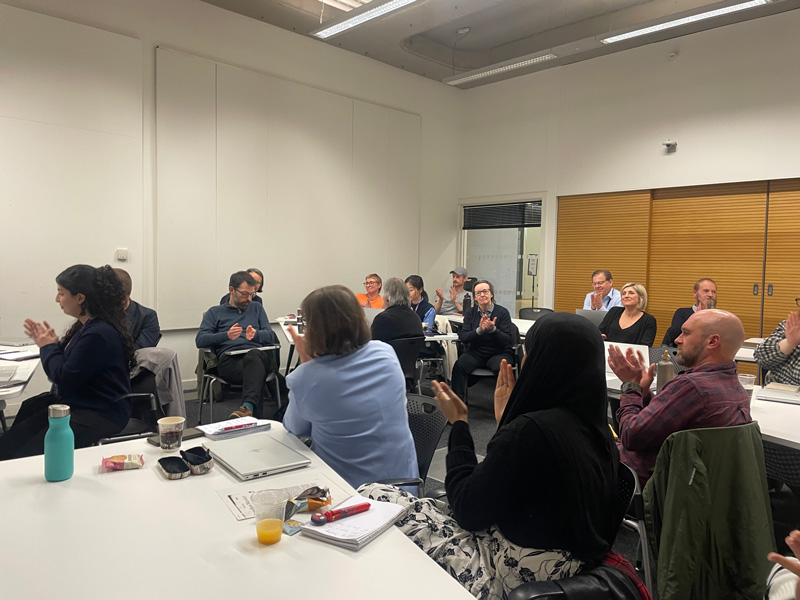
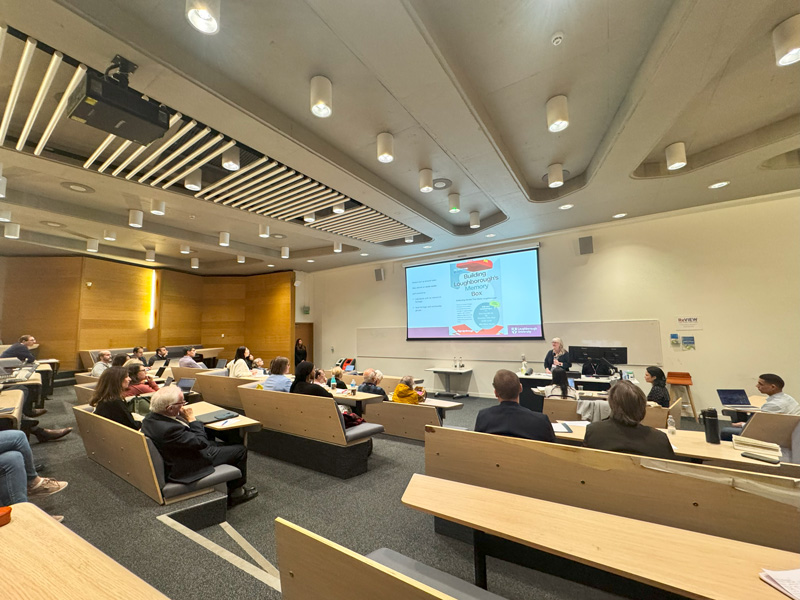
The workshop series was followed by a feedback exercise to evaluate participants’ experiences and reflect on the process as a collective learning exercise. Insights from this session helped assess the workshop’s effectiveness in encouraging dialogue, collaboration, and a shared understanding of urban heritage in Loughborough.

The collected photographs, stories, and mapped data in this workshop will contribute to a digital map of community-centred heritage in Loughborough. These findings will inform the next stage of Pegah’s research on community-centred approaches to urban heritage and planning.

Find out more about this PhD Project here.

Categories
Events Impact The Impact Hub TOWN Observatory

Phase 3

March 2025 until March 2026

July 2025
Advisory Group Meeting, Loughborough University

Categories
Events Impact The Impact Hub TOWN Observatory

Phase 2

January 2024 until February 2025

April 2024
Attendance at an event on Cultural Heritage and the Just City, University of Sheffield

May and June 2024
Online interviews with stakeholders

July 2024
Participation in the Design Sprint of the Branching Out project, University of York

September 2024
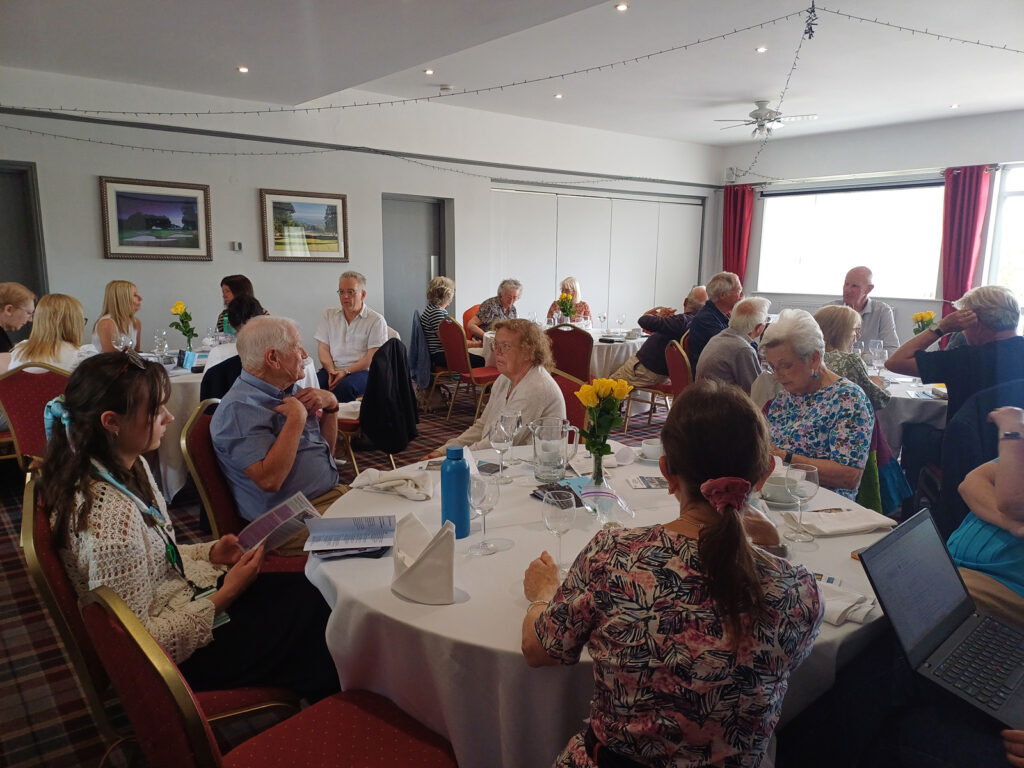
Presentation on The Impact Hub at the Loughborough Heritage Forum, Loughborough Golf Club

November 2024
Presentation at the ICOMOS Scientific Symposium, Ouro Preto, Brazil

Categories
Events Impact TOWN Observatory

Phase 1

May 2023 – December 2023

August 2023

Presentation at the Royal Geographical Society Annual International Conference, London

October 2023
Participation in the Loughborough Heritage Forum, Loughborough Golf Club

November 2023
Presentation on the Healthy and Innovative Loughborough project at ABCE Brown Bag Cafe Seminars, Loughborough University

Categories
Blog Events Impact Loughborough Stories Loughborough University Scoping Project The Impact Hub TOWN Observatory

Empowering the Loughborough Library Local Studies Volunteer Group with AI and Audio Stories

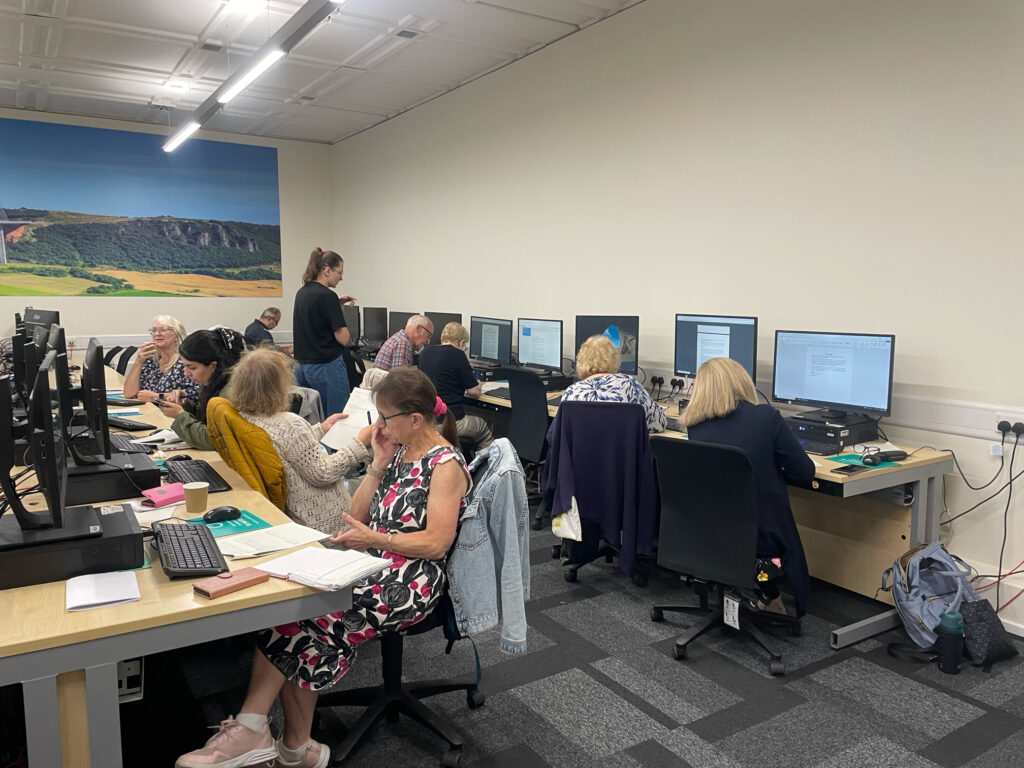
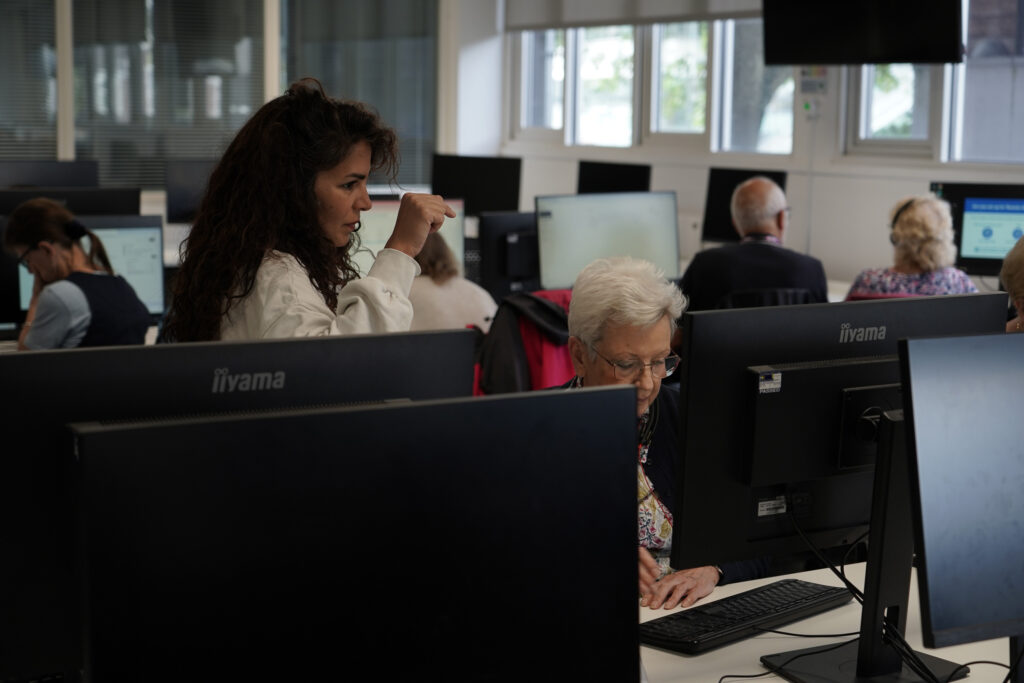
The photo above shows the participants and the instructor, Acka, on the first day of the workshop.

As part of the development of the Heritage Stories Scoping Project, the Loughborough Library Local Studies Volunteer Group (LLLSVG) has shown a keen interest in becoming more autonomous and enhancing their software skills. Inspired by the success of StoryMaps created in collaboration with the TOWN Observatory team, the group expressed a desire to learn new digital storytelling techniques. Recognising this enthusiasm, the TOWN Observatory has actively supported their goals, starting with a tailored 3-session workshop focused on creating AI-generated podcasts and audio stories.

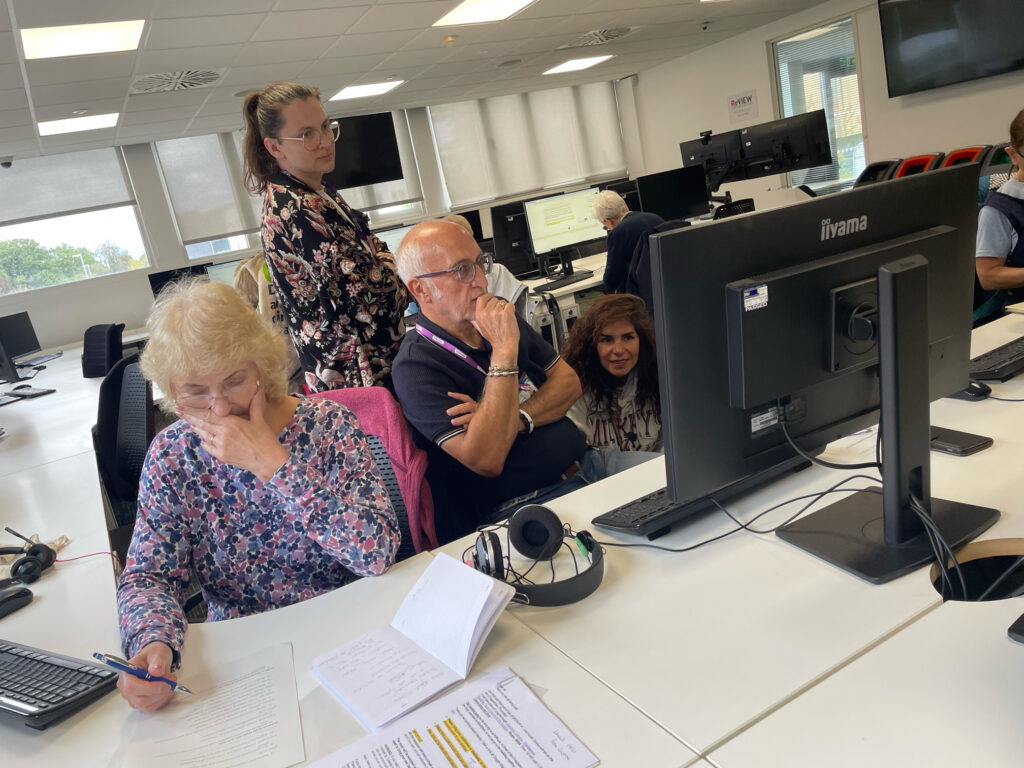
The photo above shows Dr Sara Saravi clarifying questions of one of the participants during the second day of the workshop.

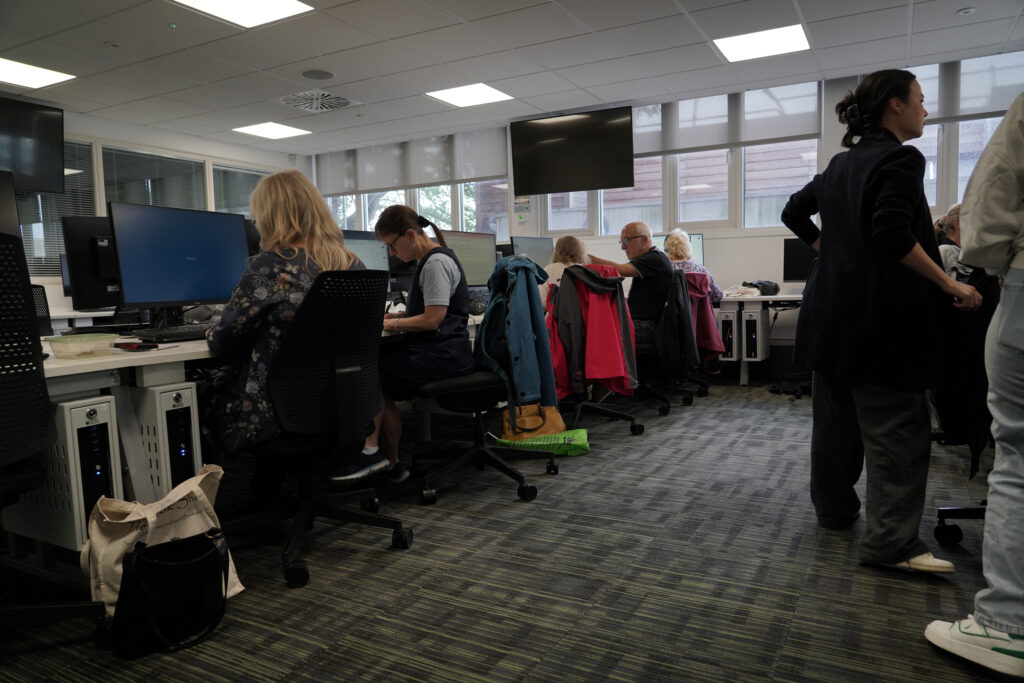
Led by instructor Acka Kruszyc, the workshop brought together 9 participants eager to explore AI-driven storytelling. Over three sessions, they learned how to craft scripts from their own researched and fact-checked texts, and how to use AI voices to bring their stories to life. The involvement of experts, Dr Firat Batmaz and Dr Sara Saravi from the Department of Computer Science added valuable technical guidance, ensuring a comprehensive learning experience. The outcomes of the workshop were highly successful.

Above (read left to right): (1) Dr Sara Saravi and Acka Kruczyk listening to the audio stories created by a participant. (2) Participants engaging with AI tools to create their audio stories. (3) Participants working on their audio stories with Dr Cristina Goldschmidt Kiminami providing guidance and support throughout the session.

The session concluded participants motivated and excited about the countless possibilities that AI and audio storytelling present for their future projects. This milestone not only equipped the LLLSVG with new skills but also opened the door to innovative ways of engaging their activities through storytelling and digital media.

Categories
Blog Events Impact Loughborough University The Impact Hub TOWN Observatory

TOWN Observatory at the Loughborough Heritage Open Weekend

The TOWN Observatory (TO) participated in the Loughborough Heritage Open Weekend held on September 20th and 21st. During the event, the team was based at the Careers and Enterprise Hub, where they showcased the TO project and shared updates on its latest developments.

Throughout the weekend, the team offered presentations to the public, highlighting ongoing research and inviting visitors to engage in friendly conversations about the advancements and community involvement associated with the observatory.

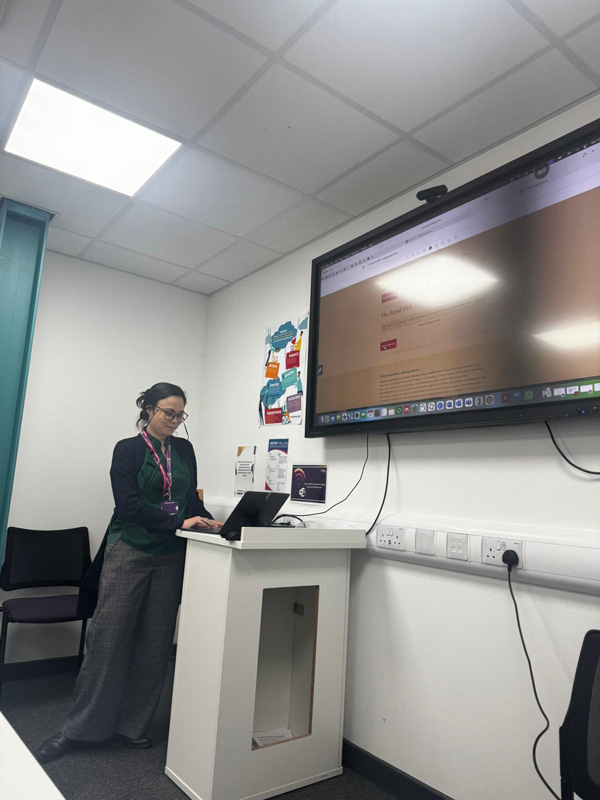
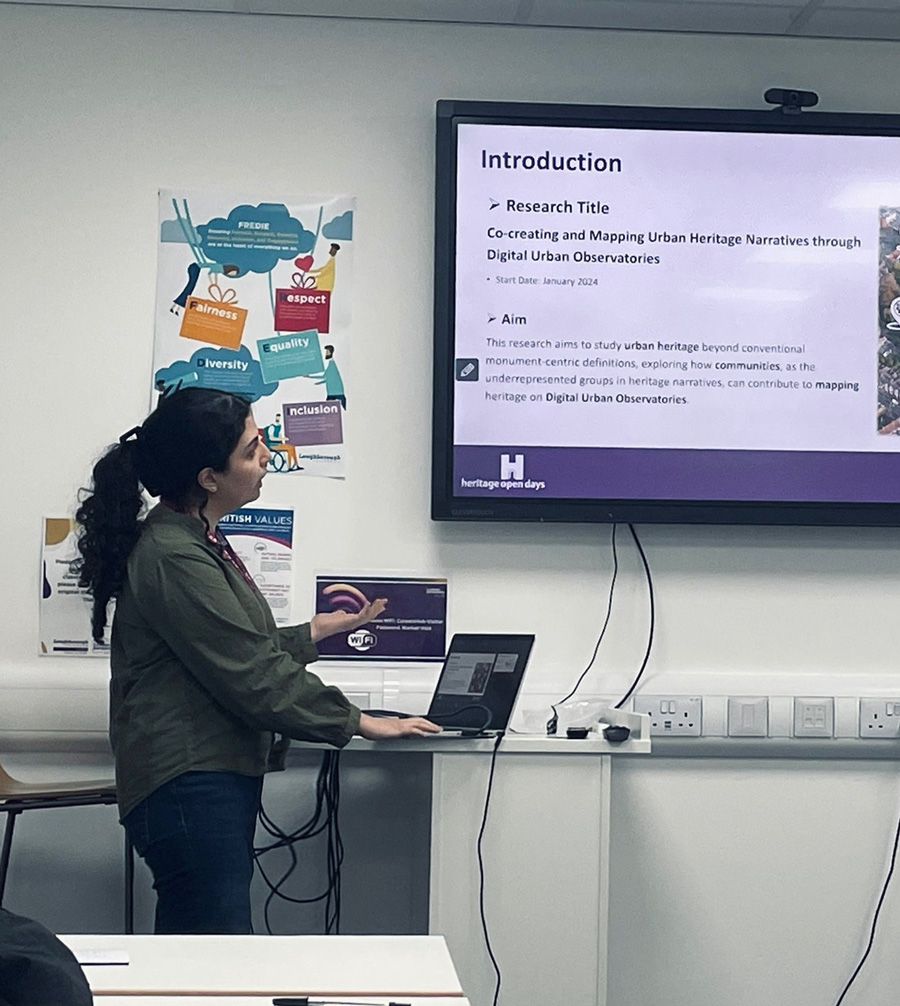
Above (read left to right): (1) Dr Robert Harland presenting the TOWN Observatory; (2) Dr Cristina A G Kiminami presenting the Loughborough Stories platform; (3) Pegah Aftabi presenting about a recent survey on co-creating heritage in Loughborough.

During the event, on Saturday, the TO presented the Loughborough Stories platform, featuring the new Medieval Loughborough initiative undertaken in partnership with the Loughborough Library Local Studies Volunteer Group (LLLSVG). The Heritage Open Weekend also featured an inaugural Medieval Loughborough Walk promoted and hosted by LLLSVG. Following this, the Colouring Loughborough team also shared their work and was available for walk in sessions.

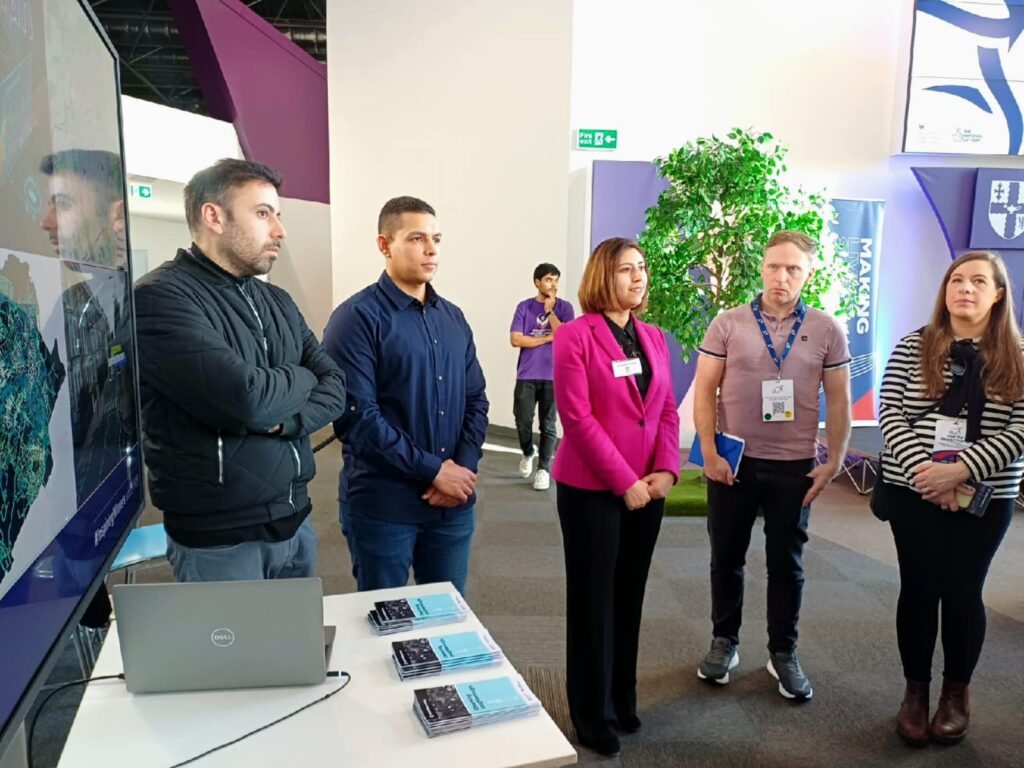
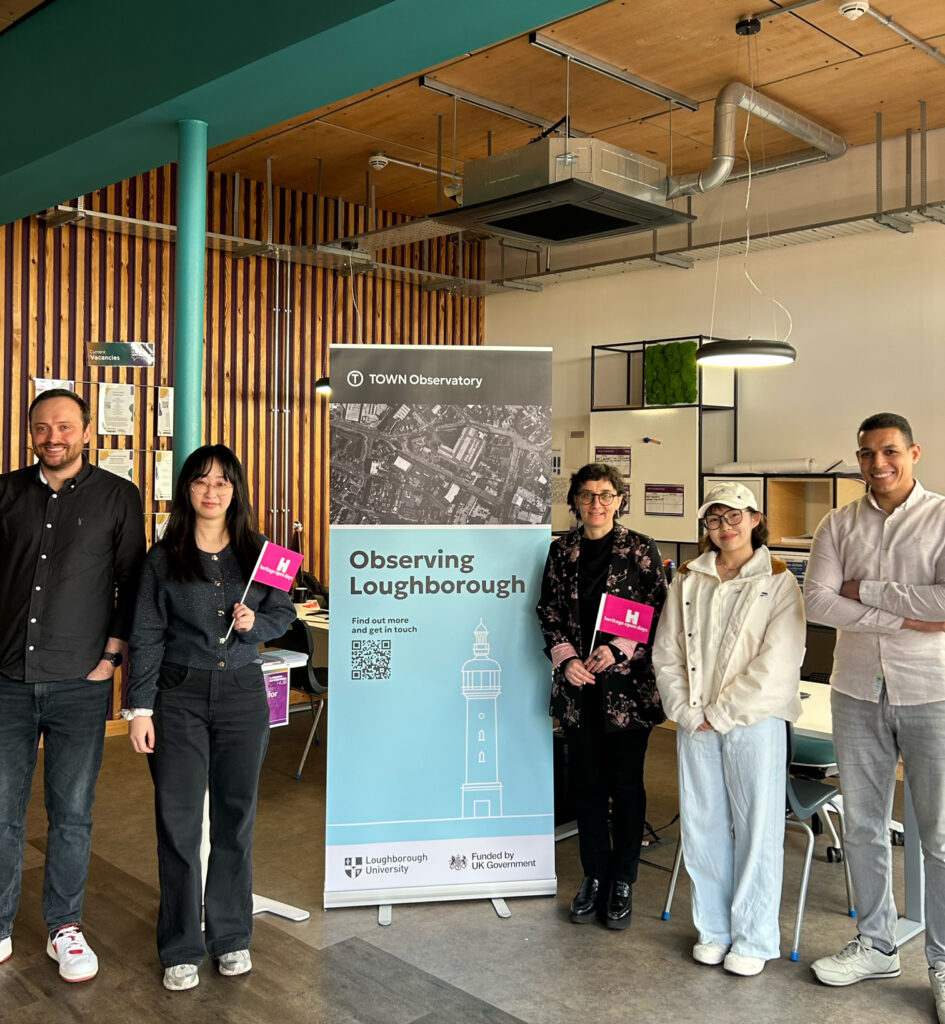
(4) Mihyun Kim, Pegah Aftabi, Dr Cristina A G Kiminami, and Dr Robert Harland at the Careers and Enterprise Hub ready to welcome the public on Saturday

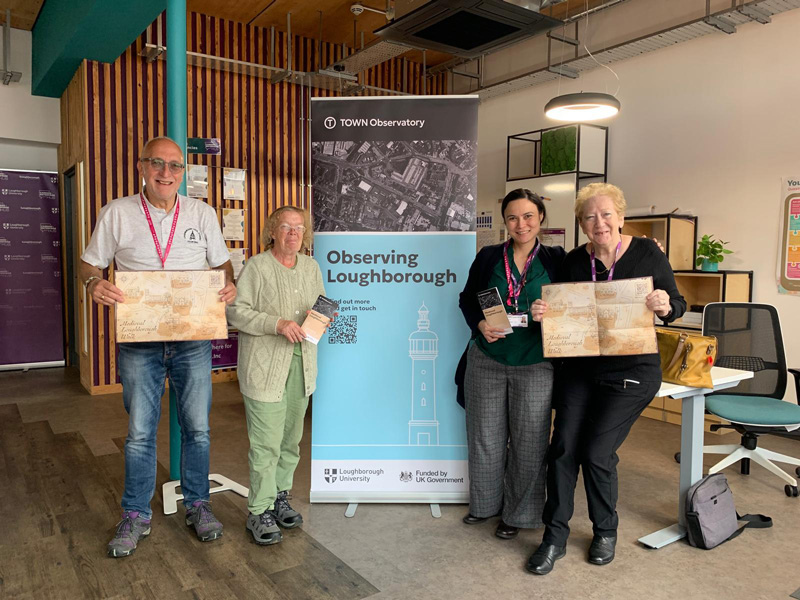
Above (read left to right): (5) David Kirkby, Christina Harris, and Sharon Gray from the LLLSVG team visiting the TOWN Observatory. (6) TOWN Observatory leaflets (including a map) available to the public. (7) The Medieval Loughborough Walk promoted and hosted by LLLSVG

The event also provided the opportunity to showcase innovative PhD research and early findings through interactive mapping activities with the public and ongoing collaborators.

Above (8 and 9): The interactive mapping activity conducted by Pegah Aftabi at the Heritage Open Weekend. This session involved an investigation of communities interactions with listed buildings in Loughborough.

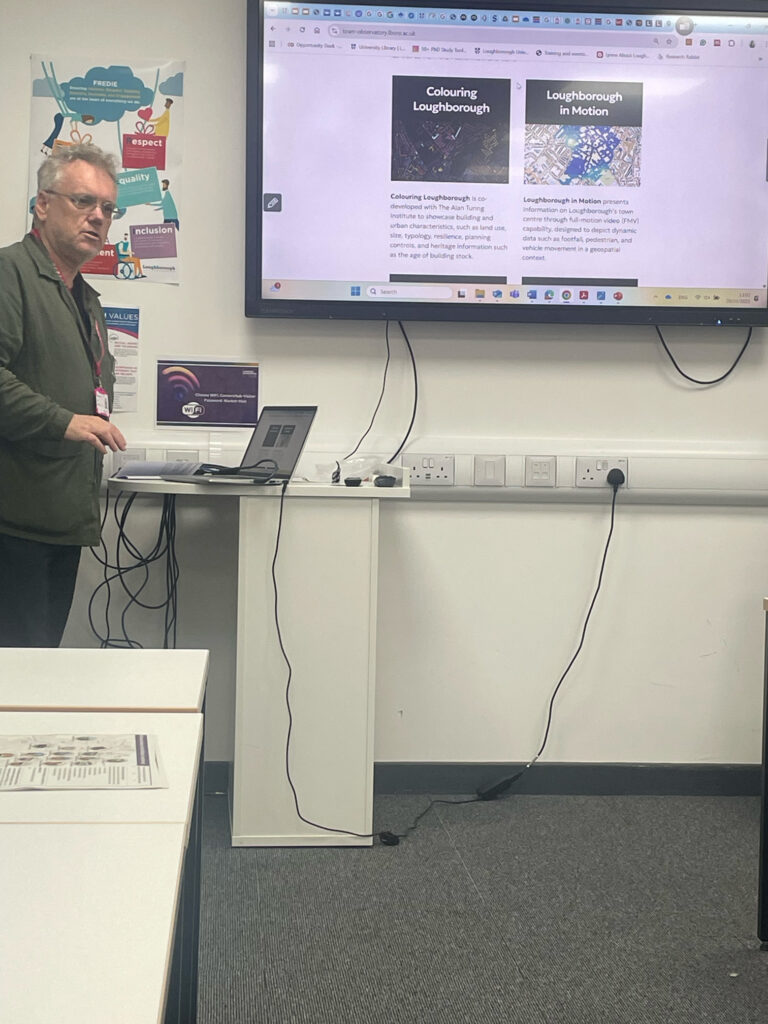
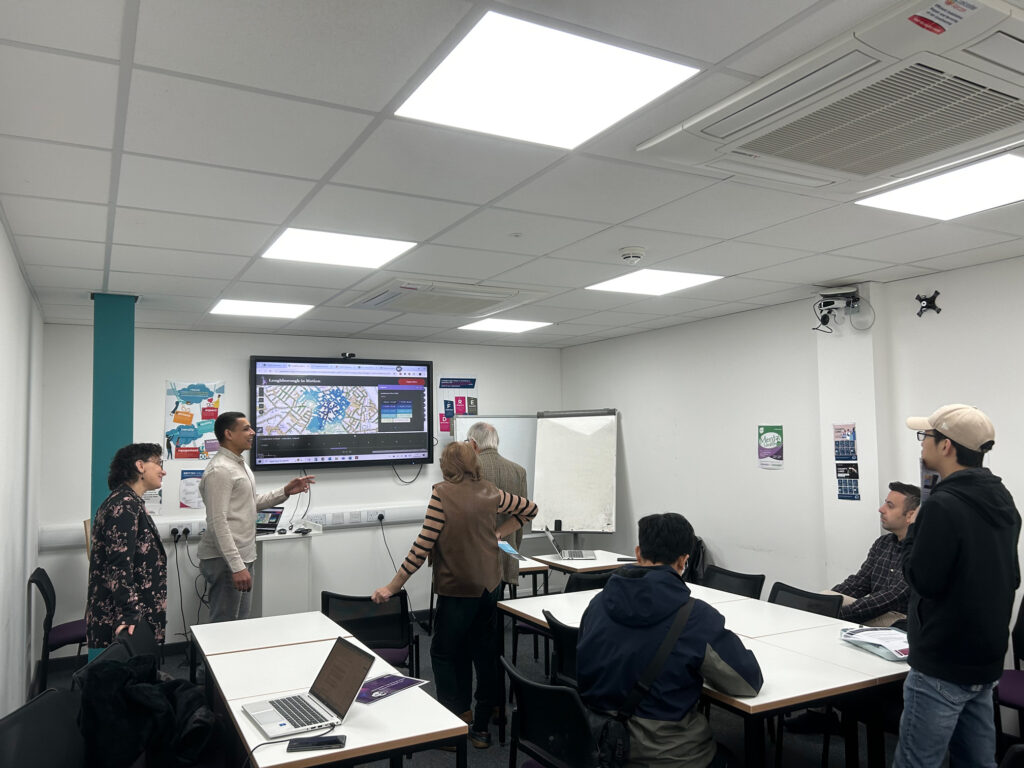
On Sunday, other members of the TOWN Observatory team were present. The main highlights were the sharing of the Loughborough in Motion and Chat Loughborough platforms. Several other doctoral researchers also showcased their work.

Above (read left to right): (10) Matt Beenchey, Tong Chen, Dr Asya Natapov, Wenjie Chen, Mohamed Shamroukh, (11) The TOWN Observatory team presenting the Loughborough in Motion Platform.

Acknowledgements: Thanks to Jill Vincent, Pete Hitchings, Bhavna Patel and John Weightman for their support in facilitating this activity.

Categories
Blog Events TOWN Observatory

T.O. at the Heritage Open Weekend

Heritage open Weekend in Loughborough

Click HERE for Program and Booking for Saturday

10 am TOWN Observatory
Presentation about the TOWN Observatory projects, objectives and future actions.
Presenter: Dr Robert Harland

11 am Platform Loughborough Stories
Presentation about the Loughborough Stories platform and its StoryMaps.Presenter: Dr Cristina A. G. Kiminami

12 pm Co-creating Loughborough’s Heritage
Presentation about a recent survey on co-creating heritage in Loughborough, followed by an interactive mapping activity.
Presenter: Pegah Aftabi

1 pm TOWN Observatory
Presentation about the TOWN Observatory projects, objectives and future actions.
Presenter: Dr Robert Harland

2 pm Platform Colouring Loughborough
Presentation about the Colouring Loughborough
Presenter: Dr Taimaz Larimian

Click HERE for Program and Booking for Sunday

10 am TOWN Observatory
Presentation about the TOWN Observatory projects, objectives and future actions.
Presenter: Dr Asya Natapov

11 am Platform Loughborough in Motion
A series of short talks and an interactive activity looking at how people move around and experience Loughborough. Each speaker will share a different perspective on walking, accessibility, and social life in the town

  • Seeing the town: pedestrian dynamics and heritagePresenter: Dr Mohammad Forghani
  • Pedestrian flow: understanding where and when people walkPresenter: Mohamed Shamroukh
  • Perceived accessibility in LoughboroughPresenter: Torah Chen,
  • Social interaction in public spacesPresenter: Wenjie Chen

12 pm Platform Loughborough in Motion
A series of short talks and an interactive activity looking at how people move around and experience Loughborough. Each speaker will share a different perspective on walking, accessibility, and social life in the town

  • Seeing the town: pedestrian dynamics and heritagePresenter: Dr Mohammad Forghani
  • Pedestrian flow: understanding where and when people walkPresenter: Mohamed Shamroukh

1 pm TOWN Observatory
Presentation about the TOWN Observatory projects, objectives and future actions.
Presenter: Dr Asya Natapov

2 pm Platform Loughborough in Motion & Platform Chat Loughborough
A series of short talks and an interactive activity looking at how people move around and experience Loughborough. Each speaker will share a different perspective on walking, accessibility, and social life in the town

  • Perceived accessibility in LoughboroughPresenter: Torah Chen,
  • Social interaction in public spacesPresenter: Wenjie Chen
  • Chat Loughborough

Categories
Blog Loughborough in Motion The Impact Hub TOWN Observatory

Computational Urban Planning and Urban Management Conference 2025 (CUPUM)

The 19th International Conference on Computational Urban Planning and Urban Management (CUPUM) was hosted by the Bartlett Centre for Advanced Spatial Analysis (CASA) at UCL from 23 to 27 June 2025.

The conference featured more than 480 presentations and posters, showcasing an impressive breadth of research. A particular highlight was Professor Michael Batty’s keynote on the role of AI in urban planning and design, which provided valuable insights for future research directions. Alongside the formal sessions, workshops and networking events offered excellent opportunities to exchange ideas and explore collaborations.

At CUPUM 2025, the workshop “Visual Intelligence and Urban Perception” was co-led by several facilitators, including Dr. Asaya Natapov and Dr. Mohammad Forghani from the Impact Hub team.

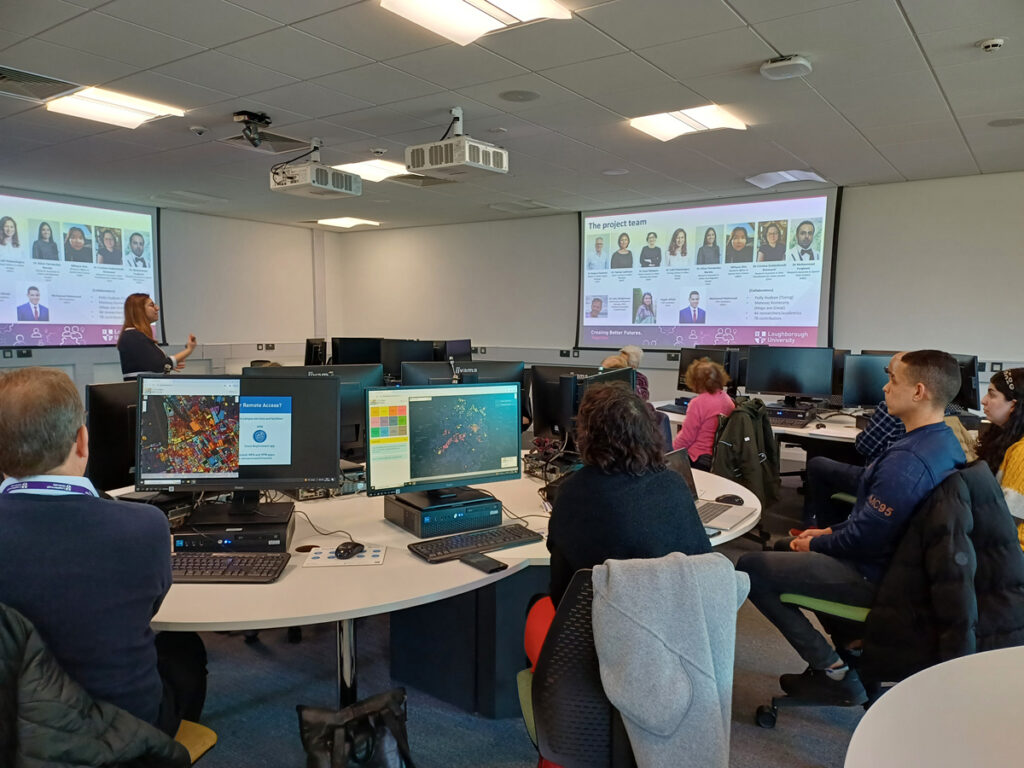
Visual Intelligence and Urban Perception workshops led by Dr Asaya Natapov and Dr. Mohammad Forghani from the Impact Hub team

The session introduced a custom QGIS plugin, POI VizNet, developed for visibility network analysis, and explored how visual accessibility and perceptual connectivity in urban environments can be quantified using spatial data, image analysis, and graph theory. Participants engaged in hands-on exercises with sample datasets to generate visibility networks, calculate centrality measures, and interpret patterns of visual isolation and prominence. The workshop fostered valuable discussions on the role of visibility in shaping urban experience and on how visual intelligence tools can support more inclusive and human-centred planning.

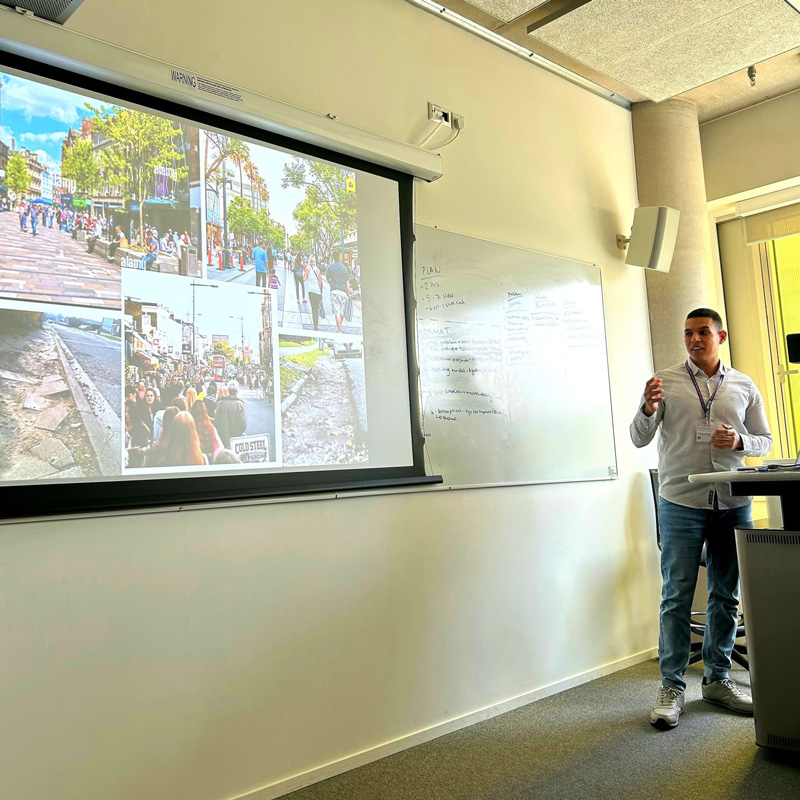
Furhtermore, Mohamed Shamroukh participated in CUPUM 2025, the leading international conference on Computational Urban Planning and Urban Management. He presented his paper “Spatio-temporal analysis of pedestrian activity in Loughborough using Wi-Fi data”, co-authored with Asya Natapov and Taimaz Larimian, in a session chaired by Duncan Wilson (UCL CASA).

Mohamed Shamroukh presenting his research “Spatio-temporal analysis of pedestrian activity in Loughborough using Wi-Fi data” at CUPUM 2025